‘Colour me gone, baby…’


The death of the film director Monte Hellman this month, at the age of 91, occurred exactly 50 years after the full screenplay to Two-Lane Blacktop, his best known picture, was published in the April 1971 issue of Esquire magazine. Its appearance preceded by three months the release of a film that starred James Taylor and Dennis Wilson as two hot-rod racers engaged in a cross-country contest between their ’55 Chevy and a Pontiac GTO with a fantasist played by Warren Oates at the wheel, their three lives complicated by the presence of a footloose hippie chick played by the 18-year-old Laurie Bird, in the first of her three films.
By the time the film was premiered, the published screenplay — by the novelist Rudy Wurlitzer and the actor Will Corry — had been stripped as effectively as the primer-grey Chevy. Quite a lot of it disappeared in the shooting. Some of it was replaced by improvised dialogue: “The wheels didn’t grab off the start” became “The tires didn’t bite out of the hole.” Even more was removed in the eventual studio-enforced final cut from three and a quarter hours to 100 minutes. No bad thing, perhaps, since it removed a lot of car talk; what remains is quite enough.
Far from being, as Esquire claimed, “the movie of the year”, Two-Lane Blacktop was a flop. Most film critics hated it. In particular, they hated Taylor and Wilson. I thought, and still think, that they were perfect for Hellman’s vision of an existentialist road movie peopled by damaged characters — none of them given a name — set in an America undergoing a cultural upheaval so profound that people could hardly communicate with each other. Look at it now and you see a couple of performances of considerable sensitivity by two musicians who had never acted before. The ill-fated Bird provides the perfect complement, while Oates is magnificent as a character caught in nervy bemusement between two eras, his use of already dated argot — including the phrase I’ve used for the headline of this piece — perfectly judged.
Other highlights include one “H. D. Stanton” as a gay hitchhiker who weeps when the GTO driver rejects his advances (apparently Harry Dean initially objected to his character’s sexual orientation). Wurlitzer himself plays a fellow with a ’32 Ford in an early drag-strip sequence shot in Santa Fe, while James Mitchum, lookalike son of Robert, can also be glimpsed in one of the racing scenes. The unresolved ending was something else the critics detested, but it’s exactly the one the film demands.
I bought the April 1971 Esquire when it came out and have hung on to it ever since. It’s amusing to leaf through it now and find a counter-cultural screenplay sharing the issue with a lavish colour feature on golf-course architects, Malcolm Muggeridge’s review of The Female Eunuch, a survey of men’s two-tone shoes for the spring season, and ads for Johnny Carson’s “Carson-eze” polyester/wool blend slacks and Flying Dutchman pipe tobacco (“Lead women around by the nose!”).
A few years ago I also bought a Universal Pictures DVD of the film; its extras include Hellman and Gary Kurtz, one of the film’s co-producers, giving a fascinating off-screen commentary as the film rolls. Among the things they tell us is that although Jack Deerson was credited as the director of photography, he was hired merely to satisfy the union, which had refused a card to Gregory Sandor, who was actually responsible for the brilliant cinematography. Only when two cameras were required was Deerson summoned from the hotel rooms in which he spent the vast majority of the shoot, which ranged from California through Arizona, New Mexico, Oklahoma, Arkansas, Tennessee and North Carolina. A much-requested DVD release of Hellman’s three-hour version was scuppered, they say, by the studio’s refusal to negotiate the rights to the extra music originally included.
Oh, yes. A last thing. Three ’55 Chevys were built: the first for interior shots, with camera platforms built in; the second with roll bars for stunt work, such as the sequence in which the car ends up in a field; and the third as a full-blown race car. I wonder where that last one is now?**
* Here’s the Two-Lane Blacktop trailer: https://youtu.be/Q4onX6ZDsZ0 And here’s an obituary of Monte Hellman by Ronald Bergan: https://www.theguardian.com/film/2021/apr/27/monte-hellman-obituary
** The answer: https://www.hemmings.com/stories/2014/11/26/two-lane-blacktop-1955-chevy-two-door-sedan-heads-to-auction

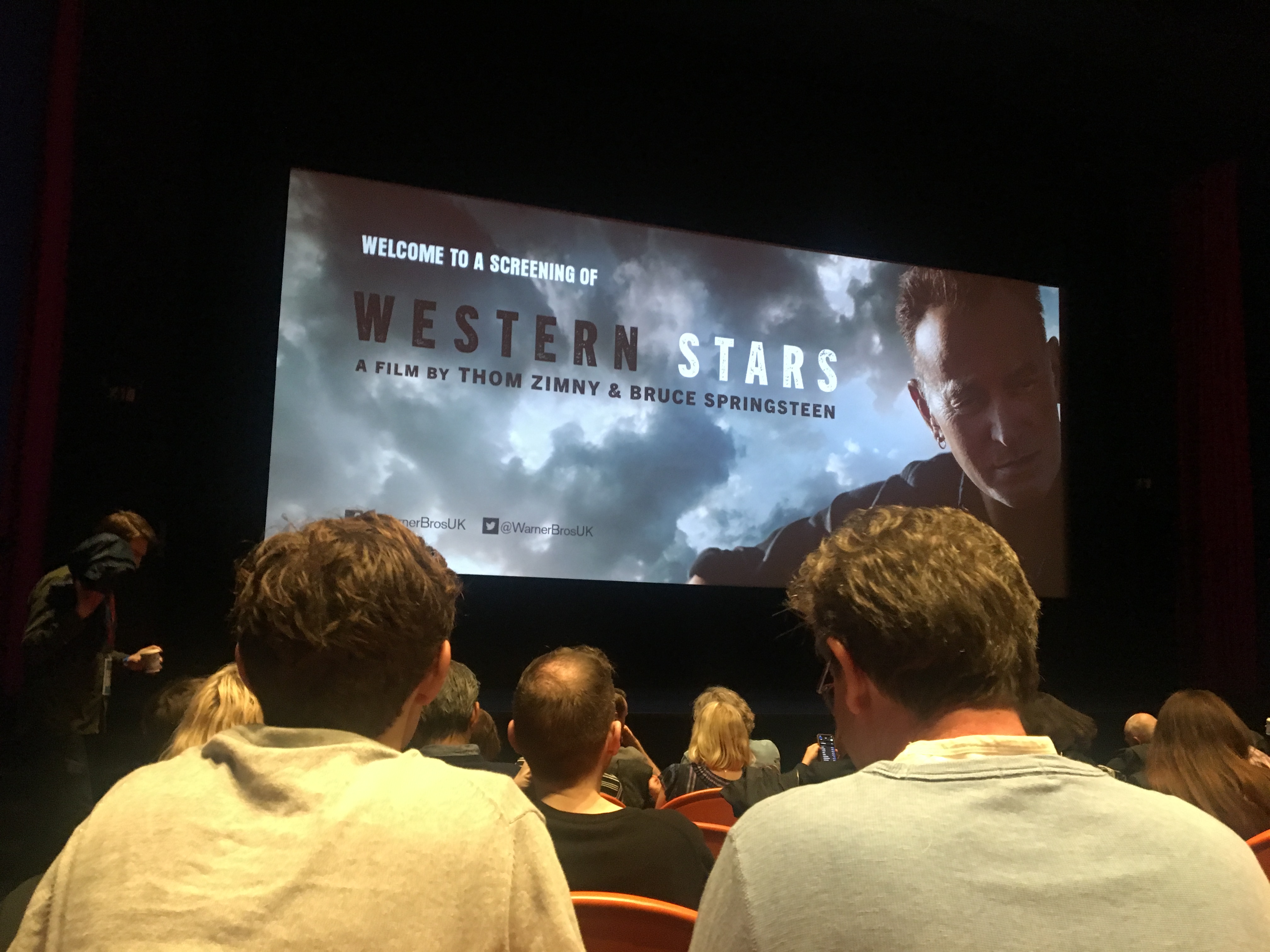


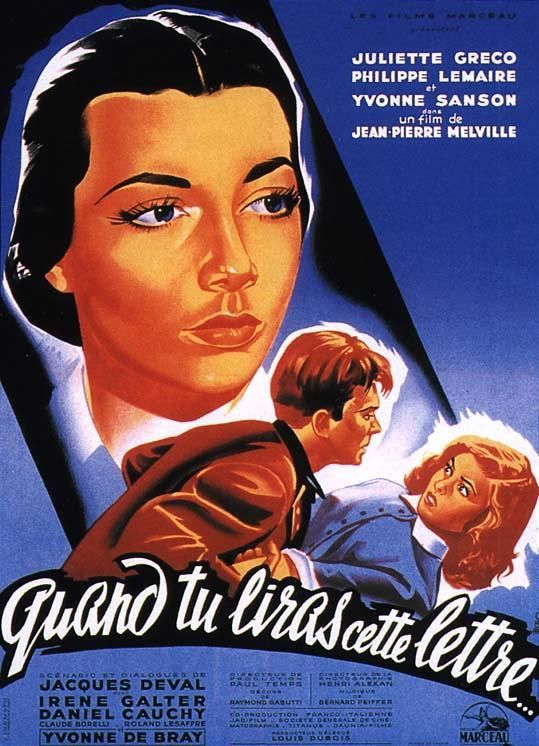 To be frank, I went to see Jean-Pierre Melville’s Quand tu liras cette lettre (When You Read This Letter) at the BFI last night simply out of curiosity to see what sort of a leading actress Juliette Gréco was in 1953. Screened in a beautifully restored 35mm print, the film is an old-fashioned melodrama in which Gréco plays a novice nun who leaves the convent in order to look after her younger sister, the naive victim of a handsome, libidinous rotter. There’s a rape, a murder, an accidental death under the wheels of an express train, a very nice Cadillac Series 62 convertible, and some lovely scenes of the Cannes waterfront before it all got spoiled.
 thebluemoment.com