Skip to content

Posts from the ‘Film’ Category

‘The Ballad of Wallis Island’

It’s a phenomenon you don’t hear a lot about because it’s slightly embarrassing, but many top artists play ludicrously well-paid private gigs for rich people. In the business such shows are known, with a suitable lack of poetry, as “corporates”. The Ballad of Wallis Island is about one such engagement, in which a slightly barmy middle-aged widower uses his lottery-jackpot winnings to persuades a British folk-pop duo, long acrimoniously sundered, to reunite for a single gig at his home on a small Welsh island, at which the audience will consist of him alone.

Tim Key plays the widower with gentle charm. He wrote the story and the screenplay with Tom Basden, who plays the male half of the duo with a barely suppressed resentment at his treatment by the music business. His erstwhile partner is played by Carey Mulligan, who manages to be both beatific and beady-eyed and turns up from Portland, Oregon, where she makes chutney, with her American husband, played by Akemnji Ndifornyen (who doesn’t say much but, close to the end, has the film’s most striking speech).

I saw it the other night and came out of the cinema having been charmed to bits by the whole thing but particularly struck by a scene in which the spectre of the duo’s former romantic engagement is evoked, summoning a sudden irruption of old artistic jealousies and resentments, all unresolved. It reminded me of so many music business stories. And the songs we hear, written by Basden, are very precisely not-quite-good-enough, making you understand how, in a different era, the duo could have enjoyed a brief, perhaps almost accidental popularity without managing to turn it into anything more substantial.

Apparently the film, directed by James Griffiths, cost just over a million and a half dollars to make. There should be many more like it: modest in scope and scale, formally unadventurous but intellligent, witty and well made, and aimed at no particular niche. Go and see it; you won’t be wasting your time.

* The Ballad of Wallis Island came out at the end of May and is still in cinemas. The photo shows Carey Mulligan and Tom Basden.

The Ballad of Dennis Hopper

If anyone contained multitudes, it was surely Dennis Hopper. Wild and crazy guy, but also a proper artist. Incarnated the simmering potential of the ’50s, the multicoloured dream of the ’60s, the long scream of the ’70s, and the all-over-the-place uncertainty of the ’80s.

All those movies: not just Rebel Without a Cause, Easy Rider, Apocalypse Now and Blue Velvet but The Trip, The American Friend and Rumble Fish. And the folie de grandeur of The Last Movie. Married to Michelle Phillips for eight days and to Daria Halprin, co-star of Antonioni’s Zabriskie Point, for a little longer. Great photographer, too (he spent so much time with a camera around his neck that his friend nicknamed him “the tourist”). No wonder Mike Scott decided to make a Waterboys album about him.

I took Life, Death and Dennis Hopper on a road trip last weekend and it kept me entertained and fascinated all the way there and back. Its 25 tracks form a mosaic of a life that began in Dodge City, Kansas in 1936 and ended in Venice, California in 2010. “Kansas”, the opening track, is bookended by the sound of a street parade and a departing steam train: the song itself, sung and co-written by Steve Earle, with just the singer’s guitar and Mickey Raphael’s harmonica, is like something from Nebraska‘s country cousin.

Then Scott enters to sing “Hollywood ’55” — the story of Hopper’s arrival in Movieland — against a finger-snapping beatnik swing and we’re into a sequence of snapshots set to era-adjacent music. “Live in the Moment”, about making it, rolls on Mitch Ryder’s Detroit Wheels. “Andy”, referencing his friendship with Warhol, is a smooth uptown pop mix settling somewhere between Broadway and Hollywood & Vine. “The Tourist”, about Hopper and his camera documenting the short life of hippie dream, could be the Strawberry Alarm Clock or H. P. Lovecraft imitating the Jefferson Airplane. “Riding Down to Mardi Gras”, in which Hopper and Peter Fonda make Easy Rider, is a fine piece of outlaw country-rock. And so on, all the way to “Golf, They Say”, a funny song about the late-life experience of Willie Nelson teaching Hopper to swing a club.

But it’s not just a kind of jukebox musical. There are brief interludes — notably five short impressionistic instrumental pieces of contrasting styles and hues, each dedicated to one of Hopper’s five wives — and a couple of recitatives, one a description of the 1967 Monterey Festival in an English posh-hippie voice, the other a parody of an American TV news report of his death.

The two finest individual tracks are the hard-slugging, thick-textured “Ten Years Gone”, referring to Hopper’s lost decade and closing with a passage spoken by Bruce Springsteen, and “Letter From an Unknown Girlfriend”, a painfully stark voice-and-piano ballad in slow waltz time sung and played by Fiona Apple. They’re followed by a snatch of aural hallucination called “Rock Bottom”, evoking the years Hopper spent in the abyss, and then the gorgeous, achingly redemptive “I Don’t Know How I Made It”, somewhat like the Blue Nile covering Blonde on Blonde.

As Scott suggests, you can listen to the tracks indvidually or in any order, but it’s really made to be heard from start to finish, although not in any burdensome or dutiful way. Congratulations to him and his guests and his co-writers and fellow Waterboys, including Paul Brown, James Hallawell, Aongus Ralston, Ralph Salmins and Greg Morrow. It’s a brave thing, executed with flair and imagination.

* The Waterboys’ Life, Death and Dennis Hopper is out now on Sun Records.

Brutalised

Maybe you saw Daniel Blumberg’s acceptance speech for the best soundtrack award during the Academy Awards ceremony at the weekend. Honoured for his work on The Brutalist, he finishes off with a mention of Cafe Oto, which is less of a surprise when you’ve noticed, among the musical credits, the names of such Oto-adjacent improvisers as the saxophonists Seymour Wright and Evan Parker, the pianist John Tilbury and the trumpeter Axel Dörner.

After seeing Brady Corbet’s ambitious film at the IMAX in London today, I came away with mixed feelings. Sometimes it feels like three different and much shorter films, maybe four, trapped together in a very large sack and left to fight it out for three and a half hours.

But the real reason I went was to find out what use Blumberg had made of Evan Parker’s unique qualities. The saxophonist is featured in a sequence filmed amid the marble quarries at Carrara, in the hills above the Tuscan coast, the source of the material from which Michelangelo’s David was wrought, along with Rome’s Pantheon and London’s Marble Arch.

As a camera hovers over the spectacularly gorgeous hewn terraces of white stone, the air is filled with the sound of Parker’s soprano saxophone. Unbroken skeins of squiggling multiphonic sound are shaped with a sound-sculptor’s skill and imagination, soaring like birds above a sombre low-brass chorale.

Given the film’s narrative requirements, it’s a moment of audio-visual magic that can’t last long. But I could happily have taken three and a half hours of that alone, without all the plot-driven drama that surrounds it. Right there, perhaps, was yet another film struggling to escape: a potential classic of slow cinema.

‘Soundtrack to a Coup d’état’

Sixty years ago Archie Shepp wrote a provocative column for Down Beat magazine in which, if memory serves, he compared his tenor saxophone to a machine gun in the hands of a Vietcong guerrilla. In the early ’60s it seemed that jazz’s New Thing, or whatever you wanted to call it, possessed a powerful political dimension, exemplified by Max Roach and Abbey Lincoln’s Freedom Now Suite, John Coltrane’s “Alabama”, and Shepp’s own “Malcolm, Malcolm — Semper Malcolm”. Even the music that had no explicit political content, such as Ornette Coleman’s “Free Jazz”, somehow seemed to express revolutionary feelings.

It’s with great brilliance that the Belgian film director Johan Grimonprez makes that music (and indeed those very pieces, plus others) into an integral component of his award-winning documentary Soundtrack to a Coup d’état. The two-and-a-half-hour film’s subject is the murder in 1961 of the activist and politician Patrice Lumumba, whose tenure as the first prime minister of the newly independent Republic of Congo — formerly the Belgian Congo — was ended after only three months by a military coup fomented by those with interests in the country’s rich deposits of rare minerals, notably Belgium, the withdrawing colonial power, the United States government of President Eisenhower, and the British government of Harold Macmillan.

Lumumba was a symbol not just of the independence of former colonies but of pan-Africanism. Given the activities of the CIA and the British and Belgian intelligence services, it was no surprise that he welcomed support from Castro’s Cuba and Khrushchev’s Soviet Union, or that he should pay the ultimate price for it, his body hacked to pieces and dissolved in acid by the mercenaries who killed him. Names familiar to those of my generation — Moïse Tshombe, Joseph-Désiré Mobutu, Joseph Kasa-Vubu, Dag Hammarskjöld — stud the narrative, while Grimonprez deploys archive interviews of varying degrees of blatant or sly self-incrimination with participants including Larry Devlin, the CIA station chief, and the MI6 officer Daphne Park.

What makes this film different is the use of music. Grimonprez has spotted the US government’s soft-power deployment of jazz during the Cold War through State Department-sponsored international tours. In 1956 Dizzy Gillespie and an 18-piece band spent 10 weeks touring Europe, Asia and South America. A year earlier Louis Armstrong had pulled out of what would have been the inaugural tour in protest against racial segregation in schools in the Southern states, but in 1960 he travelled to Congo, where he played to an audience of 100,000 people in Léopoldville (as Kinshasa was then known) in the middle of the political disturbances, before returning to Africa in 1961 to perform in Senegal, Mali, Sierra Leone, Liberia, Sudan and the United Arab Republic.

We see Armstrong in Africa in the film, but more novel and powerful is the juxtaposition of the avant-garde jazz of the time with footage of the political events: not so much a soundtrack as an active commentary. So we hear Abbey Lincoln’s anguished screaming, Max Roach firing off snare-drum fusillades, the contorted sounds of Eric Dolphy’s bass clarinet (with Charles Mingus’s group, shortly before his death), Nina Simone simmering through Bob Dylan’s “Ballad of Hollis Brown”, and Coltrane, on fire in “My Favourite Things” and intoning the sorrow of “Alabama”. Fast cutting is usually the enemy of understanding, but Rik Chaubet’s shrewdly paced editing creates a non-stop tapestry of emotions, making the rhythms and the cry of the music mirror the events being depicted.

Direct action also played a part, and if you see this extraordinarily compelling film, you won’t forget the spectacle of Lincoln, Roach and dozens of others courageously disrupting a session of the UN Security Council in New York to protest against the assassination of the figure Malcolm X called “the greatest black man who ever walked the African continent.”

Lumumba’s death was a crime and a tragedy of enormous significance. Grimonprez alludes to its enduring importance through reminding us that the Democratic Republic of Congo, whose mines produced the uranium for the atom bombs that fell on Hiroshima and Nagasaki, remains the world’s major source of coltan, the rare and precious commodity that powers our iPhones. In other words, a country of 100 million people, whose mineral deposits are said to be worth $24 trillion, but where two million children are at risk of starvation, and which currently ranks 179th out of 191 countries in the UN’s Human Development Index, is safe for civilisation.

* Soundtrack to a Coup d’etat is being screened at various independent cinemas.

Before the lights go up

I try to make a habit of staying to the very end of a film’s credits, because you never know what you’re going to hear. I learnt that while sitting through Wim Wenders’ Until the End of the World. The film had seemed determined to live up to its title, but the reward was to discover Robbie Robertson’s magnificent “Breakin’ the Rules”, from his Storyville album, with its exquisitely understated Paul Buchanan second vocal and Wardell Quezergue’s barely-there horn arrangement.

Sitting through three and a half hours of Nuri Bilge Ceylan’s About Dry Grasses last week was no ordeal. Ceylan is possibly my favourite living director, and his new one lives up to Climates, Once Upon a Time in Anatolia, Winter Sleep and the rest. And while the credits were rolling, there was a bonus.

It was this. Philip Timofeyev’s “Adagio for Bassoon” is a piece of fake baroque music, written specially for the film. It’s an obvious homage to the popular “Adagio for Strings and Organ in G minor” supposedly written by Tomaso Albinoni in the 18th century but actually based on fragments of a manuscript left by the Venetian composer, turned into a piece in 1958 by his biographer, Remo Giazotto.

So a fake of a fake, then, in a way. But Timofeyev’s stately composition does its job perfectly. At the end of a dialogue-driven film in which the audience has been encouraged to reflect on all sorts of important issues, not least truth and lies, there is no rupture when the lights come on. We emerge into the street still thinking the thoughts that Ceylan implanted there.

* The still from About Dry Grasses shows the young Turkish actress Ece Bagci, whose performance is among the film’s highlights.

Listening to the music of time

By the time I started listening to Charlie Parker, he’d been dead for five or six years. I was in my early teens, too young to have heard “Parker’s Mood” and “Ko Ko” and the rest of his music as it emerged, first as 78s on the Savoy and Dial labels and then on Verve albums, interacting in real time with everything else around it. That didn’t stop me forming opinions and eventually writing about it. But it was a long time before I realised that older listeners might consider their opinions to be worth more than mine, simply by virtue of their perspective on the music’s initial impact.

I think the penny dropped in the 1970s during a bad-tempered exchange of letters with Derek Jewell, then the jazz and pop critic of the Sunday Times. Twenty years older than me, he tried put me in my place by telling me that he’d been listening to Parker’s records when they were new, while doing his national service in, if I remember correctly, the RAF. With the arrogance of youth, I answered back. But I did so with the uneasy recognition that, however much we both loved Parker’s music, his feelings about it might be intrinsically different from mine, his connection more intimate.

Now, half a century later, it’s my turn to have the sort of feelings that underpinned his words. Occasionally I find myself wondering how someone in their twenties or thirties today can possibly understand the music of Jimi Hendrix, or Martha and the Vandellas, or Albert Ayler, or Anne Briggs, or Curtis Mayfield, or Laura Nyro the way I think I do. I mean, you had to discover “Heat Wave”. “Quicksand”, “Live Wire”, In My Lonely Room”, “Dancing in the Street”, “Wild One” and “Nowhere to Run” in sequence, at the time, to make proper sense of them, didn’t you?

Soon nobody alive will know how it felt to experience that music as it came into the world, all brand new. But people will still want to have opinions about it. And there’s a possibility — heavens above! — that their opinions will be just as valid as mine, and possibly a lot more interesting.

This came home to me while watching Lisa Cortés’s new documentary about Little Richard in order to review it for Uncut magazine (seen above in a page from the June issue). I found it an extraordinary piece of work, on two levels. First, and most obvious, is the enduring charisma of Richard himself, who sets fire to the screen every time he’s shown either performing or giving an interview. The second and more unexpected level is the one on which it made me listen to the director’s choice of talking heads: young academics of colour, female and male, some gay, from American institutions, discussing Richard in terms of his self-presentation — derived from a sexually fluid segment of the black entertainment world — and its wider impact.

White rock critics of my generation, in other words the sort of people who generally get rolled out for such projects, are conspicuous by their absence from this project. But, as I say in the review, I listened to the views of Zandria Robinson, Fredara Hadley, Jason King and others, threaded throughout Little Richard: I Am Everything, with the feeling that I was hearing a new kind of voice discussing a familiar subject from a different and extremely valuable perspective. It gave me a jolt, but an inspiring one.

It’s possible that none of those young academics could list Richard’s first half-dozen Specialty singles in chronological order. Certainly none is anywhere near old enough to remember the precise cultural explosion each one caused on its release, just as I’ll never know how it felt to absorb Duke Ellington’s compositions as they emerged, one after another, on 78s in the 1920s and ’30s. But at this stage, perhaps there are more interesting things to know, and more important things to be said.

* Little Richard: I Am Everything is in selected UK cinemas on 28 April. The June issue of Uncut is out now.

One saint among many

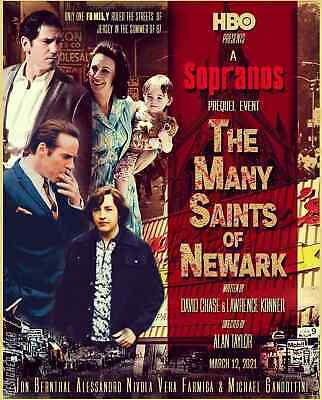
Fans of the The Sopranos will watch The Many Saints of Newark, the new movie prequel to the six-season TV series, expecting to hear some good stuff on the sound track. They won’t be disappointed by a selection that runs from the Marvelettes’ “Danger Heartbreak Ahead” to Van Morrison’s “Astral Weeks”. (And don’t leave before the final song overlaying the closing credits: the exquisite “Calling All Angels” by Jane Siberry with k. d. lang.)

But there was one choice that surprised and even shocked me. I hadn’t read anything about film in advance, entirely on purpose, so I wasn’t aware of the key role played in the narrative by the four days of rioting in Newark, New Jersey during the long hot summer of 1967, when the city’s black population rose up in protest against the beating of a black cab driver by two white police officers.

The sequences depicting the uprising are brilliantly staged and powerfully affecting. They are also subtly accompanied by the strains of John Coltrane’s “Alabama”, the five-minute studio recording made on November 18, 1963 and included the following year on the album Live at Birdland. My spine tingled when I heard it, but it also made me uncomfortable.

The piece is believed to have been composed by Coltrane in response to the bombing by white racists of the 16th Street Baptist Church in Birmingham, Alabama on September 16, 1963, in which four black schoolgirls died as they were changing into choir robes in the church basement. (Say their names: Carole Denise McNair, aged 11, Addie Mae Collins, Cynthia Wesley and Carole Robertson, all 14.) It’s necessary only to mention Rosa Parks and the Freedom Riders to evoke Alabama’s previous role as a key location in the civil rights struggle, but it’s fair to assume that, given the eight-week gap between the church bombing and the recording, Coltrane had that particularly tragedy on his mind.

The result was a piece of music that occupies a special place in the saxophonist’s history. The starkest and most distilled example of what might be called his hymnal mode, it reached his public at a time when the spiritual content of his music was beginning to make itself apparent. A couple of years later A Love Supreme would leave no doubt about his intentions (and after his death, a group of followers in San Francisco would set up the Church of St John Coltrane).

But in addition to its aura of spirituality, “Alabama” had a specific meaning. Ben Ratliff, the author of an excellent Coltrane biography, called it “an accurate psychological portrait of a time, a complicated mood that nobody else could render so well.” If anyone wanted to understand how Coltrane could begin to inspire awe, Ratcliff added, they needed to look no further than this track.

So was it legitimate for Alan Taylor, the director of The Many Saints of Newark, to co-opt this much revered musical prayer, divorcing it from its original meaning in order to underscore the drama of a cinematically rendered scene from a riot three years later in a different city, exploiting the piece’s authentic emotional depth in what is, for all its layers, essentially a Mob movie?

Of course it’s nice to know that it will now be heard for the first time by many of those who go to see the film. Some of them may wonder about the musician behind those few seconds of sound, and might pursue their interest further. And of course you could say that since “Alabama” was inspired by an episode from the civil rights struggle, it has hardly been wrenched out of its context. If I can’t help feeling a little uneasy, then perhaps I’m wrong.

‘Summer of Soul’

So much has been written about the documentary based on unseen footage from the 1969 Harlem Cultural Festival that you won’t really be needing another recommendation from me. But among all the performances assembled by the director, Ahmir “Questlove” Thompson, from the series of concerts in Harlem’s Mount Morris Park — now known as Marcus Garvey Park — during that summer 52 years ago, there are some things in particular that I wouldn’t want you to miss.

The gospel sequence, which begins with the profoundly thrilling sound of Dorothy Morrison’s deep contralto leading the massed Edwin Hawkins Singers on “Oh Happy Day”, stands as the foundation of the whole thing. Its climax comes when Mahalia Jackson, feeling unwell, invites Mavis Staples to start off “Take My Hand, Precious Lord”, which the younger woman does beautifully. But then Mahalia, evidently revived by what she has heard, comes forward to join Mavis — and you can sense the bedrock of Manhattan Island shaking to the majestic roar of their voices.

It’s like one generation handing the torch to another, and there’s quite a lot of that feeling throughout the film: the elaborate stage costumes of the Fifth Dimension and the straw-thin David Ruffin giving way to the hippie threads of Sly and the Family Stone being one example, the contrast between restrained mohair-suited blues of B. B. King and Nina Simone’s closing recital of a challenging poem by the Last Poets’ David Nelson being another. As someone says, this “was when the negro died and Black was born.” (Ruffin, by the way, had just left the Temptations and sings “My Girl” magnificently, wringing the neck of his extraordinary falsetto.)

The director uses standard documentary techniques — a strong gallery of talking heads and the deployment of newsreel footage — but there were times, particularly in the opening sequences, when I thought he’d been influenced by the video montages of Arthur Jafa, whose shows in London and Berlin I’ve written about. That’s a good way to go, although Thompson doesn’t overdo it. The stories parallel to the music are well chosen. The activist Denise Oliver-Velez talks about the Young Lords and the Black Panthers, and Charlayne Hunter-Gault gives a shattering description of her experience in 1961 as the first black female student to be enrolled at the University of Georgia; she went on to become the first black female journalist in the New York Times newsroom.

Of course the deepest impression is left by the knowledge that here are black artists performing to black audiences numbered in the tens of thousands, on their home turf — something on a different scale from the Apollo Theatre a few blocks away. (Harlem was thought to be dangerous territory for white people then, and there are very, very few non-black faces to be seen in these vast crowds.) Sly Stone was also a star at Woodstock that summer, but you can’t watch his “Everyday People” in Harlem without thinking that this spine-tingling performance has gained an extra dimension from the context. And you can see very clearly why Miles Davis (who is not in the film) wanted this audience rather than those who came to see him in European-style concert halls, expecting to hear “My Funny Valentine”.

I remembered, too, the times I’d seen Nina Simone at Ronnie Scott’s or the South Bank, and been irritated and even infuriated by the distance she’d chosen to open between herself and her all-white audiences, expressed in bouts of brusqueness and truculence generally ascribed to a diva’s temperament. To see her in a Harlem park, gently crooning the brand-new “To Be Young, Gifted and Black” to her people, so centred, so serenely beautiful in her Afrofuturist hair and robes and jewellery, made me feel ashamed of those responses from 30-odd years ago. Sure, I loved the music in Summer of Soul, but I also came out of the cinema into a warm London night with a lot to think about.

* Summer of Soul is in cinemas and on the Hulu streaming platform now. Here’s the trailer.

‘Colour me gone, baby…’

The death of the film director Monte Hellman this month, at the age of 91, occurred exactly 50 years after the full screenplay to Two-Lane Blacktop, his best known picture, was published in the April 1971 issue of Esquire magazine. Its appearance preceded by three months the release of a film that starred James Taylor and Dennis Wilson as two hot-rod racers engaged in a cross-country contest between their ’55 Chevy and a Pontiac GTO with a fantasist played by Warren Oates at the wheel, their three lives complicated by the presence of a footloose hippie chick played by the 18-year-old Laurie Bird, in the first of her three films.

By the time the film was premiered, the published screenplay — by the novelist Rudy Wurlitzer and the actor Will Corry — had been stripped as effectively as the primer-grey Chevy. Quite a lot of it disappeared in the shooting. Some of it was replaced by improvised dialogue: “The wheels didn’t grab off the start” became “The tires didn’t bite out of the hole.” Even more was removed in the eventual studio-enforced final cut from three and a quarter hours to 100 minutes. No bad thing, perhaps, since it removed a lot of car talk; what remains is quite enough.

Far from being, as Esquire claimed, “the movie of the year”, Two-Lane Blacktop was a flop. Most film critics hated it. In particular, they hated Taylor and Wilson. I thought, and still think, that they were perfect for Hellman’s vision of an existentialist road movie peopled by damaged characters — none of them given a name — set in an America undergoing a cultural upheaval so profound that people could hardly communicate with each other. Look at it now and you see a couple of performances of considerable sensitivity by two musicians who had never acted before. The ill-fated Bird provides the perfect complement, while Oates is magnificent as a character caught in nervy bemusement between two eras, his use of already dated argot — including the phrase I’ve used for the headline of this piece — perfectly judged.

Other highlights include one “H. D. Stanton” as a gay hitchhiker who weeps when the GTO driver rejects his advances (apparently Harry Dean initially objected to his character’s sexual orientation). Wurlitzer himself plays a fellow with a ’32 Ford in an early drag-strip sequence shot in Santa Fe, while James Mitchum, lookalike son of Robert, can also be glimpsed in one of the racing scenes. The unresolved ending was something else the critics detested, but it’s exactly the one the film demands.

I bought the April 1971 Esquire when it came out and have hung on to it ever since. It’s amusing to leaf through it now and find a counter-cultural screenplay sharing the issue with a lavish colour feature on golf-course architects, Malcolm Muggeridge’s review of The Female Eunuch, a survey of men’s two-tone shoes for the spring season, and ads for Johnny Carson’s “Carson-eze” polyester/wool blend slacks and Flying Dutchman pipe tobacco (“Lead women around by the nose!”).

A few years ago I also bought a Universal Pictures DVD of the film; its extras include Hellman and Gary Kurtz, one of the film’s co-producers, giving a fascinating off-screen commentary as the film rolls. Among the things they tell us is that although Jack Deerson was credited as the director of photography, he was hired merely to satisfy the union, which had refused a card to Gregory Sandor, who was actually responsible for the brilliant cinematography. Only when two cameras were required was Deerson summoned from the hotel rooms in which he spent the vast majority of the shoot, which ranged from California through Arizona, New Mexico, Oklahoma, Arkansas, Tennessee and North Carolina. A much-requested DVD release of Hellman’s three-hour version was scuppered, they say, by the studio’s refusal to negotiate the rights to the extra music originally included.

Oh, yes. A last thing. Three ’55 Chevys were built: the first for interior shots, with camera platforms built in; the second with roll bars for stunt work, such as the sequence in which the car ends up in a field; and the third as a full-blown race car. I wonder where that last one is now?**

* Here’s the Two-Lane Blacktop trailer: https://youtu.be/Q4onX6ZDsZ0 And here’s an obituary of Monte Hellman by Ronald Bergan: https://www.theguardian.com/film/2021/apr/27/monte-hellman-obituary

** The answer: https://www.hemmings.com/stories/2014/11/26/two-lane-blacktop-1955-chevy-two-door-sedan-heads-to-auction

‘One Night in Miami’

Sam Cooke would have turned 90 today, had he not been shot to death by Bertha Franklin, a motel manageress, during a dispute in South Central Los Angeles on December 11, 1964, when the singer seemed on the brink of the kind of transition from popular hitmaker to cultural spokesman that the equally ill-fated Marvin Gaye would make with What’s Going On seven years later.

According to Franklin, his last words were: “Lady, you shot me.” She is one of the witnesses summoned to speak in The Two Killings of Sam Cooke, a documentary available on Netflix. Its director, Kelly Duane de la Vega, does an excellent job of piecing together Cooke’s story, although perhaps too much emphasis is placed on the conspiracy theories that accumulated after his murder.

His real last words, however, were the lyrics to “A Change Is Gonna Come”, the song that he was inspired to write by hearing Bob Dylan’s “Blowing in the Wind” and which duly became an anthem for the civil rights movement when released as an A-side a fortnight after his death. A probably romanticised version of how he came to compose it is contained in One Night in Miami, a new filmed version of a stage play by Kemp Powers in which Cooke, the NFL star Jim Brown and Malcolm X join Cassius Clay in a motel room on the hours after Clay’s first defeat of Sonny Liston on February 25, 1964.

The meeting did take place, and the invented conversations between the four men are intense and compelling. Malcolm is on the brink of completing Clay’s conversion, but has yet to reveal that he himself is about to break with Elijah Muhammad and the Nation of Islam. In individual confrontations, the men challenge each other about how to proceed in their dealings with the white world. Brown wants to give up the NFL — in which he represents a role model for black kids — to become a Hollywood star. Cooke is told that it’s time to stop pandering to white audiences. Clay is hours away from becoming Muhammad Ali. But Malcolm, too, is confronted with his own issues.

I lost a bit of faith in the film when Malcolm pulls out a copy of The Freewheelin’ Bob Dylan and plays “Blowing in the Wind” on a handy record player, telling Cooke he should be ashamed that it takes a white boy to write a song addressing their concerns. As far as I can see “A Change Is Gonna Come” was recorded on January 30, 1964, a month before the first Clay-Liston fight. Here the dramatist’s imperative seems to have taken precedence over the actual truth, whatever that may have been.

Otherwise the film — available on Amazon Prime — is beautifully fashioned by its director, Regina King, deeply atmospheric in its mood and its detail, although traces of its stage origins remain. There are excellent performances from the four leads: Kingsley Ben-Adir as Malcolm, Eli Goree as Clay, Aldis Hodge as Jim Brown, and Leslie Odom Jr as Cooke. Michael Imperioli — The Sopranos‘ Christopher Moltisanti — turns up as Angelo Dundee, Clay’s trainer.

I recommend it highly, to be followed immediately by The Two Killings, in which — among other things — we see Cooke’s attempts to retain ownership of his work. Dr Mark Anthony Neal, a professor of African studies at Duke University, says of him: “What we know is that we never got to see him as a fully mature artist, thinker and activist who, had he lived, would have had a dramatic impact on the next generation of artists, thinkers and activists.” That seems plausible.

Another of the documentary’s talking heads, Renée Graham of the Boston Globe, considers “A Change Is Gonna Come” and remarks: “It’s the shame of this nation that this song should still be so relevant.” But you have the feeling that another generation, perhaps more than one, will come and go before the change of which Cooke sang becomes definitive.

* Some of Cooke’s recordings — including Sam Cooke at the Copa and Ain’t That Good News — are newly available on vinyl, released on the ABKCO label. His finest albums, Night Beat and One Night Stand! Live at the Harlem Square Club, were reissued on CD by RCA Legacy in 2005.