Skip to content

Posts from the ‘Blues’ Category

Aces high in Camden Town

On the first floor at the Hawley Arms, a pub in Camden Town, Ted Carroll is spinning the discs. He’s started the session with the Bobbettes’ “Mr Lee”, a record that changed his life when he bought an original copy on the London label. He’ll go on to play Bo Diddley’s “Bo Diddley”, Inez and Charlie Foxx’s “Mockingbird” and other choice stuff before resuming his conversations with guests at last night’s 50th birthday celebration for Ace Records, which he and his co-founders, Roger Armstrong and Trevor Churchill, turned into the most prolific and consistently rewarding of reissue labels.

I used to visit Ted’s stall at the back of 93 Golborne Road, up at the then-untrendy north end of Portobello Road, soon after he opened it in 1971 with a stock built around 1,800 London 45s from the ’50s and ’60s. The equivalent of New York’s Village Oldies and House of Oldies, it attracted a clientele of people — some of them famous — looking for rare old R&B, rock and roll and doo-wop vinyl. He added a stall in Soho later in the decade before opening the Rock On shop on Kentish Town Road, next door to Camden Town tube station, from where he also ran the Chiswick label.

Ace began with the acquisition of Johnny Vincent’s label of the same name, out of Jackson, Mississippi. That was the first of many such deals made with some of the great American post-war record men, including Art Rupe of Specialty, Hy Weiss of Old Town and the Bihari brothers of Modern, a species now extinct. Carroll, Armstrong and Churchill had set off on their mission of creating high-class reissues of neglected music, assembled with love, care, and thousands of hours spent in tape vaults across the US. Among later additions would be the Fantasy group of labels, which included Stax/Volt, thus enabling Armstrong, as he told me last night, to stumble open-mouthed upon the session tapes of “Sitting on the Dock of the Bay”.

Personally, I’m profoundly grateful to such compilers as Mick Patrick, Ady Croasdell, Tony Rounce, John Broven, Dean Rudland and Alec Palao for the enthusiasm and scholarship behind dozens of wonderful CDs devoted to stuff I care about. There’s the imaginatively programmed songwriters’ and producers’ series, covering the works of Goffin & King, Leiber & Stoller, Greenwich & Barry, Mann & Weil, Jackie DeShannon, Randy Newman, Laura Nyro, P. F. Sloan & Steve Barri, Bob Gaudio, Dan Penn & Spooner Oldham, Bert Berns, Jerry Ragovoy, and others. There’s the four-volume Sue story, put together by Rob Finnis, and the epic five discs of the late Dave Godin’s Deep Soul Treasures. There’s Ady Croasdell’s beautiful Lou Johnson anthology, his two-volume This Is Lowrider Soul, and his compilation of Doré label tracks called L. A. Soul Sides, including Rita and the Tiaras’ magical “Gone With the Wind Is My Love”. There’s Mick Patrick’s collection of Teddy Randazzo’s great productions and, going back to 1984, Where the Girls Are, his first compilation and one of many devoted to the beloved girl-group genre.

That’s just scratching the surface. And whether pop, blues, R&B, Northern Soul, funk, gospel or jazz, the packaging of Ace’s releases has always been exemplary, thanks to the informative and enjoyable annotations and picture research by the compilers, and to intelligent artwork by designers including Neil Dell, who worked on many of the CDs I’ve mentioned.

The label was sold a couple of years ago. Its new owners, a Swedish company called Cosmos Music, seem committed to continuing on the same path, with the same managers and contributors. A lot of them were at last night’s very convivial party, which started well for me when I walked in to the sound of Dean Rudland playing Oscar Brown Jr’s “Work Song” off a French EP, followed by Ray Charles giving the Raelettes’ Margie Hendrix her finest hour — well, 16 bars — on “You Are My Sunshine”.

Ted, who followed Dean on the decks, now runs a new incarnation of Rock On in the lovely market town of Stamford in Lincolnshire, just off the A1; a bit different from Camden Town — where, as I walked back to the tube, a trio called Thistle were trying to convince their audience that the ground-floor room of the Elephants Head pub was CBGB, this was 1975, and the next band on the bill would be the Patti Smith Group.

Fifty years ago Ted, Roger, Trevor and their helpers did a great thing by starting Ace. When a label introduces you to such gems as Margaret Mandolph’s ” I Wanna Make You Happy” (on Croasdell’s Tears in My Eyes compilation from 1985) and the Vogues’ “Magic Town” (on Glitter and Gold, the first of Patrick’s two Mann & Weil CDs), you can only raise a glass to the work they’ve done and thank them for the happiness it continues to bring.

Everybody Loves a Train

About twenty years ago, my friend Charlie Gillett was compiling a series of themed CDs for a Polygram label called Debutante, under the aegis of the former Island A&R head Nick Stewart. Charlie asked me if I’d like to put one together, and if so, what the theme might be. “Trains,” I said, after about ten seconds’ thought, and then I went away to assemble a running order. It took a while, because I enjoyed the process so much.

Sadly, the series came to a sudden end before my contribution could see the light of day. But I’d edited together a disc of how I wanted it to go. I called it Everybody Loves a Train, after the song by Los Lobos. It has all sorts of songs, some of which speak to each other in ways that are obvious and not. I avoided the most obvious candidates, even when they perfectly expressed the feeling I was after (James Brown’s “Night Train” and Gladys Knight’s “Midnight Train to Georgia”) and instrumentals, too (see the footnote).

Every now and then I take it out and play it, as I did this week, with a sense of regret that it never reached fulfilment. Here it is, with a gentle warning: not all these trains are bound for glory. Remember, as Paul Simon observes, “Everybody loves the sound of a train in the distance / Everybody thinks it’s true.”

  1. Unknown: “Calling Trains” (From Railroad Songs and Ballads, Rounder 1997) Forty-odd seconds of an unidentified former New Orleans station announcer, recorded at Parchman Farm, the Mississippi state penitentiary, in 1936, calling from memory the itinerary of the Illinois Central’s “Panama Limited” from New Orleans to Chicago: “…Ponchatoula, Hammond, Amite, Independence… Sardis, Memphis, Dyersburg, Fulton, Cairo, Carbondale…” American poetry.
  2. Rufus Thomas: “The Memphis Train” (Stax single, 1968) Co-written by Rufus with Mack Rice and Willie Sparks. Produced by Steve Cropper. Firebox stoked by Al Jackson Jr.
  3. Los Lobos: “Everybody Loves a Train” (from Colossal Head, 1996) “Steel whistle blowin’ a crazy sound / Jump on a car when she comes around.” Steve Berlin on baritone saxophone.
  4. Bob Dylan: “It Takes a Lot to Laugh, It Takes a Train to Cry” (from Highway 61 Revisited, 1965) “Don’t the brakeman look good, mama, flaggin’ down the Double E?”
  5. Joe Ely: “Boxcars” (from Honky Tonk Masquerade, 1978) A Butch Hancock song. Ponty Bone on accordion, Lloyd Maines on steel guitar.
  6. Counting Crows: “Ghost Train” (from August and Everything After, 1993) “She buys a ticket ’cause it’s cold where she comes from / She climbs aboard because she’s scared of getting older in the snow…”
  7. Rickie Lee Jones: “Night Train” (from Rickie Lee Jones, 1979) It was a plane she took from Chicago to LA to begin her new life in 1969, and an old yellow Chevy Vega she was driving before she cashed the 50K advance from Warner Bros ten years later. But, you know, trains.
  8. The Count Bishops: “Train, Train” (Chiswick 45, 1976) London rockabilly/pub rock/proto-punk. Written by guitarist/singer Xenon De Fleur, who died a couple of years later in a car crash, aged 28, on his way home from a gig at the Nashville Rooms. Note that comma. I like a punctuated title.
  9. Julien Clerc: “Le prochain train” (from Julien, 1997) My favourite modern chansonnier. Lyric by Laurent Chalumeau.
  10. Blind Willie McTell: “Broke Down Engine Blues” (Vocalion 78, 1931) Born blind in one eye, lost the sight in the other in childhood. Maybe he saw trains in time to carry their image with him as he travelled around Georgia with his 12-string guitar.
  11. Laura Nyro: “Been on a Train” (from Christmas and the Beads of Sweat, 1970) One song she didn’t do live, as far as I can tell. Too raw, probably.
  12. Chuck Berry: “The Downbound Train” (Chess B-side, 1956) When George Thorogood covered this song, he renamed it “Hellbound Train”. He didn’t need to do that. Chuck had already got there.
  13. Bruce Springsteen: “Downbound Train” (from Born in the USA, 1984) “The room was dark, the bed was empty / Then I heard that long whistle whine…”
  14. Dillard & Clark: “Train Leaves Here This Morning” (from The Fantastic Expedition of Dillard & Clark, 1968) Written by Gene Clark and Bernie Leadon: “1320 North Columbus was the address that I’d written on my sleeve / I don’t know just what she wanted, might have been that it was getting time to leave…”
  15. Little Feat: “Two Trains” (from Dixie Chicken, 1973) In which Lowell George extends the metaphor of Muddy Waters’ “Still a Fool (Two Trains Running)”: “Two trains runnin’ on that line / One train’s for me and the other’s a friend of mine…”
  16. B. B. King: “Hold That Train” (45, 1961) “Oh don’t stop this train, conductor, ’til Mississippi is out of sight / Well, I’m going to California, where I know my baby will treat me right”
  17. Paul Simon: “Train in the Distance” (from Hearts and Bones, 1983) Richard Tee on Fender Rhodes. “What is the point of this story? / What information pertains? / The thought that life could be better / Is woven indelibly into our hearts and our brains.”
  18. Vince Gill: “Jenny Dreams of Trains” (from High Lonesome Sound, 1996) Written by Gill with Guy Clark. Fiddle solo by Jeff Guernsey. Find me something more beautiful than this, if you can.
  19. Muddy Waters: “All Aboard” (Chess B-side, 1956) Duelling harmonicas: James Cotton on train whistle effects, Little Walter on chromatic.
  20. Darden Smith: “Midnight Train” (from Trouble No More, 1990) “And the years go by like the smoke and cinders, disappear from where they came…”
  21. The Blue Nile: “From a Late Night Train” (from Hats, 1989) For Paul Buchanan, the compartment becomes a confessional.
  22. Tom Waits: “Downtown Train” (from Rain Dogs, 1985) “All my dreams, they fall like rain / Oh baby, on a downtown train.” A New York song.

Closing music: Pat Metheny’s “Last Train Home” (from Still Life (Talking), 1987) to accompany the photo of the Birmingham Special crossing Bridge No 201 near Radford, Virginia in 1957 — taken, of course, by the great O. Winston Link. Other appropriate instrumentals: Booker T & the MGs’ “Big Train” (from Soul Dressing, 1962, a barely rewritten “My Babe”) and Big John Patton’s “The Silver Meter Pts 1 & 2” (Blue Note 45, 1963, a tune by the drummer Ben Dixon whose title is a misspelling of the Silver Meteor, a sleeper service running from New York to Miami).

‘The Black Chord’

David Corio is a fine British photographer whose book The Black Chord, with text by the writer Vivien Goldman, first appeared in the UK 25 years ago. A new edition, published by Hat & Beard, a Los Angeles-based imprint, presents his images of black musicians via a much more elegant design.

Corio was born in London in 1960 and had his first work published when he was 18. Where he differs from Roy DeCarava and Val Wilmer, two other great photographers of black music, is that most of his subjects are caught in performance, on or off stage. DeCarava and Wilmer both sought particular kinds of intimacy, spiritual or domestic. Corio’s images tend to look outward, making a direct address to the viewer, which means they work well in magazine features and on album covers, and the 200-odd photographs here, beautifully reproduced, combine to make an exhilarating book.

The subjects range from the drummers of Burundi and a Santeria ceremony in Cuba through John Lee Hooker, Fats Domino, Bobby Bland, Aretha Franklin, Art Blakey, Celia Cruz, Fela Kuti, Abbey Lincoln, Ray Charles, Barry White, Millie Jackson, Lee Perry, Ornette Coleman, Al Green, Toots Hibbert, Salif Keita, De La Soul, August Darnell, Sade, the Last Poets, Alton Ellis, PM Dawn, Miles Davis, Foday Musa Susa, Nile Rodgers, Don Cherry, Missy Elliott, and of course Bunny, Tosh and Bob. And many, many others. Goldman’s love of this music, from blues to jazz via R&B, soul, reggae, salsa, afrobeat and hip-hop, originally on view in her work in the 1970s for Sounds, the Melody Maker and the NME, infuses the lively essays that intersperse the groupings of photographs.

One of the pictures I like best contains no performers: over a double-page spread, half a dozen boys perch together around a sound system in London in 1978, shot from below, exuding life and possibilities despite the implicit challenge of the world around them. It has poetry in it. As, more obviously, does the portrait of Nina Simone seen above and also on the book’s cover, taken during a performance at Ronnie Scott’s in 1984, a photograph to make you think a lot about troubled genius. That, too, is Corio at his best.

* The Black Chord by David Corio with text by Vivien Goldman is published by Hat & Beard (hatandbeard.com), price $60.

Val Wilmer: ‘Blue Moments, Black Sounds’

Val Wilmer is one of the most remarkable people I know, and you’ll know that too if you’ve seen her photographs. Whether it’s Muddy Waters playing cards with Brownie McGhee backstage at the Fairfield Halls in 1964, Archie Shepp sitting beneath a Jimi Hendrix poster in his New York apartment, or a joyful couple whose names we’ll never know at a blues dance in Bentonia, Mississippi half a century ago, she finds the essence of the human spirit.

Those three images are among the several dozen included in Blue Moments, Black Sounds, an exhibition of her photographs which opened this week. It’s on until the end of November at a very nice little gallery in Queen’s Park, North London, which specialises in music photography and where you can also go to get your own pictures framed.

I was particularly moved by the only photograph in the show that has an extended caption, written by Wilmer, in which she tells of going to see Louis Armstrong at Earl’s Court in 1956, when she was a 14-year-old schoolgirl. When Armstrong and the All Stars left the country, catching a plane to Ghana, she and her brother went to see them off at the airport. She took her mother’s Box Brownie camera, asked Louis if she could take his photograph, and got a lovely shot that put her, as she says, “on my way to a lifetime of learning.”

Then she adds something interesting and important: “Through getting to know the musicians, I learnt the importance of positive representation.” That doesn’t mean she learnt how to take PR photographs. It means she learnt to appreciate the importance of immersing herself in the world of her subjects, in order to portray them with greater sensitivity to their lives and to the art that came from it, and to realise that pictures of Ornette Coleman playing pool with Anthony Braxton or members of the Count Basie orchestra snoozing on the band bus can actually tell us more than photos of them on stage.

Those photographs, like most of the ones in the new show, could only have been taken by someone possessing not just painstakingly acquired technical skills but a deep sympathy with the music and the lives of those who make it, and with the courage and humility to take her own place in their world, and to find her unique vantage point.

* Val Wilmer’s Blue Moments, Black Sounds is at the WWW (Worldly, Wicked & Wise) Gallery, 81 Salusbury Road, London NW6 6NH until 30 November: wwwgallery@yahoo.com. Deep Blues 1960-1988, a pamphlet of Wilmer’s photographs from the world of the blues, edited by Craig Atkinson, has just been published by Café Royal Books: caferoyalbooks.com. Wilmer’s As Serious As Your Life: Black Music and the Free Jazz Revolution 1957-1977 is published by Serpent’s Tail.

Meeting Ma Rainey

As films depicting imaginary incidents from a real life go, Ma Rainey’s Black Bottom doesn’t cut it. A version of August Wilson’s 1982 stage play, it falls into just about every trap laid for those who attempt to translate theatre to cinema. Viola Davis, as Rainey, is sensationally good, and Chadwick Boseman, playing the last role of his life as an angry young cornet-player, scarcely less marvellous, but that’s really all there is to recommend it. Even the music, directed by Branford Marsalis, seems tame.

It did remind me, though, of encountering Ma Rainey as a major figure in the first book I ever read about jazz. Rudi Blesh’s Shining Trumpets was first published in the US in 1946 and in the UK three years later. Towards the end of the next decade there was a copy in my school’s library, which I could read during lunch breaks and the free periods we were given for study. At that stage my knowledge of the music had moved beyond The Glenn Miller Story, but not all that far, particularly in terms of the music’s origins. So Shining Trumpets, subtitled “A History of Jazz”, was a revelation, despite being written by a man who considered the music of Duke Ellington to be “decadent” and saw Billie Holiday as “merely a smart entertainer”. By then I knew enough to question those views, while recognising the value of Blesh’s belief that jazz was a form of high art which owed pretty much everything to its African origins. In that sense he set a boy of 13 or 14 on the right track, although his path was straighter and narrower than mine would become.

Rather bracingly, his book began with a tabulated comparison between “African survivals” in jazz and what he called “Deformations”, illustrated by the contrast, for example, between Tendency to use any melody or harmonic pattern as a basis for free improvisation of melody (admirable) and Straight playing of melody (or) mere embellishment or rhapsody (deplorable). His ideal of “hot jazz” featured the use of intonation free of the fixed European scale, vocalised instrumental tones, displaced accents and polyrhythms, collective improvised antiphony and polyphony. He particularly disliked the infusion of influences from European classical music. He died in 1985, aged 86, and I have no idea what he made of Charles Mingus, Ornette Coleman and Albert Ayler, who restored those characteristics to jazz at a time when bebop, “progressive jazz” and the West Coast sound had taken the music into areas that would have earned his wholehearted disapproval. Or if he even heard them.

Nevertheless he was responsible for implanting in the mind of this listener the useful idea that the music came from West Africa via slave ships, cotton fields and chain gangs, and that there was a direct line from gospel singing and field hollers to whatever was on the cover of the latest issue of Down Beat. His arguments were backed up by musicology that was impressively diligent and open-minded. The book’s appendices include musical examples quoted in the text, carefully transcribed for Blesh by the modern classical composer Lou Harrison (a student of Schoenberg); another contemporary composer, Virgil Thompson, provided encouragement. And the author never for a moment attempts to divorce the music from its social and cultural contexts.

Shining Trumpets was where I first met the protagonist of Ma Rainey’s Black Bottom. She was one of his heroes, representing to him a perfect example — like Jelly Roll Morton, Baby Dodds and King Oliver — of the application of great artistry to the raw materials of which he approved. “Ma Rainey’s singing, monumental and simple, is by no means primitive,” he wrote while discussing recordings such as “Shave ‘Em Dry Blues” and “See See Rider”. “It is extremely conscious in its use of her full expressive means, definitely classic in its purity of line and its rigid avoidance of the decorative. Such art as this must, of necessity, transcend the level of the spontaneous and purely instinctive. Thus her effects are carefully calculated and full of meaning; they are neither naïve nor spurious, sentimental nor falsely sophisticated. Rainey’s voice is sombre but never harsh, and its sad and mellow richness strikes to the heart.”

I hadn’t read the book for almost 60 years until I came across a second-hand copy last year and bought it for purely nostalgic reasons. I’d forgotten, if I ever realised it, how well Blesh wrote, and how hard he, an Ivy League graduate, tried to get to what he saw as the music’s essence. He could dismiss Holiday’s “Strange Fruit” as “an atmospheric bit of musical stuff too gauzy to hold a tragic content”, but he could also write this about what he heard while listening to the 78 of Blind Willie Johnson’s “Jesus Make Up My Dying Bed”: “In the record grooves are frustrated loneliness, hungry poverty, fanatical devotion to heaven, and the ascetic waiting for it. He enunciates cruel and peremptory phrases in a voice harsh and burred; in one that is thick, rough and crooning, he answers with pathetic melodic downward turns that are like appeasements, conciliations, solaces, and pardons. Throughout, the guitar, sweet and ringing, weaves a polyphony with the singer. These are, by implication, the voices of many people.”

You don’t get the sense that, unlike some of his contemporaries, Blesh wanted to freeze the music at the point he loved it best. He was keen for it to continue its development, as long as it adhered to the standards he upheld. Inevitably he sometimes patronised the musicians of whom he wrote, committing the error of wanting them to do things his way rather than theirs. He believed he had seen the truth of their condition, and was prepared to advise them on how best to express it in their art. Although he adored Louis Armstrong’s early work, he claimed that the trumpeter failed to understand the responsibility of accepting the baton handed on in turn by Buddy Bolden, Freddie Keppard and King Oliver: “Had Armstrong understood his responsibility as clearly as he perceived his own growing artistic power — had his individual genius been as deeply integrated into that of the music, and thus ultimately with his destiny, of his race — designated leadership would have been just.” Sadly, he felt, Armstrong had been diverted by the tides of commerce, as exemplified by his recordings with the big bands which did away with the principle of collective improvisation birthed in New Orleans. Blesh’s conclusion: “Jazz itself is revolutionary: Armstrong’s act was that of counter-revolution.”

At this distance, the offence is more picturesque than distasteful, but it does make me think of the best line in Ma Rainey’s Black Bottom. “White folks don’t understand about the blues,” Rainey says. “They hear how it comes out, but they don’t know how it got there.” No matter how deeply one loves the music, how closely one studies its history and how genuinely one admires its creators, that’s always something to reckon with.

* Ma Rainey’s Black Bottom is on Netflix. Rudi Blesh’s Shining Trumpets was published by Alfred A. Knopf in the US and by Cassell & Co in the UK.

** Due to authorial carelessness, the original version of this post gave the name of the actress playing Ma Rainey as “Viola Wills”. The film was also mischaracterised as a “biopic”. Both these errors, pointed out by readers, have been corrected.

Back on Highway 61

Generally speaking, I prefer Bob Dylan to make his own cover versions, just the way he’s been doing for the best part of 60 years. There are maybe not even a dozen exceptions, mostly the obvious ones: Presley’s “Tomorrow is a Long Time”, Jimi’s “Watchtower”, Stevie’s “Blowing in the Wind”, the Fairports’ “Si tu dois partir”, Ferry’s “Hard Rain”, Betty LaVette’s “Things Have Changed”. But now there’s a definite addition to the list: Dave Alvin’s version of “Highway 61 Revisited”, a highlight of From an Old Guitar, his new album of rare and unreleased stuff.

To be honest, I haven’t followed the career of the singer/guitarist from Downey, California who started out at the very end of the ’70s with the Blasters and more recently led bands known variously as the Guilty Ones and the Guilty Women. My bad, as the young people say. From an Old Guitar is full of great stuff, drawing on country, blues, R&B and, in Lil Hardin Armstrong’s “Perdido Street Blues”, old-time jazz, with other songs from Mickey Newbury, Earl Hooker, Doug Sahm and Marty Robbins.

Dylan’s parable is set to a low-riding shuffle beat, the layered guitars of Alvin and Greg Leisz howling, nudging and screeching from multiple perspectives as the magnificent verses are recited in appropriately biblical tones. Alvin’s voice is one that wears its bruises, scars and calluses lightly, weighting and timing every line perfectly, drawing out the dark humour, simultaneously absurdist and apocalyptic. The video is well assembled and cut, particularly the chase towards the end between a hot rod and a Highway Patrol car on a two-lane blacktop.

My other favourite is a song called “Peace”, credited to Willie Dixon. It bears no resemblance to a song of the same name that gave the title to a 1971 Dixon album, but it carries the hallmarks of the composer of “Hoochie Coochie Man” and “The Seventh Son”. The buried hook — the thing that makes we want to listen to it again, straight away — is a funky little chorded figure from Joe Terry’s electric piano: peeping through two or three times, it seems to want to take the song in a different direction before thinking better of it and withdrawing.

I can happily listen to this album from start to finish, and then over again. Even better, I imagine, would be to wander into some bar or other — Dingwalls, perhaps, or the old Tramps on 15th Street in NYC — and drink a beer or two while listening to Alvin and his band working their way through the whole thing. One day, maybe. But whatever, that “Highway 61” is going to stick around.

* Dave Alvin’s From an Old Guitar is out now on the Yep Roc label.

Stepping out with Bobby Parker

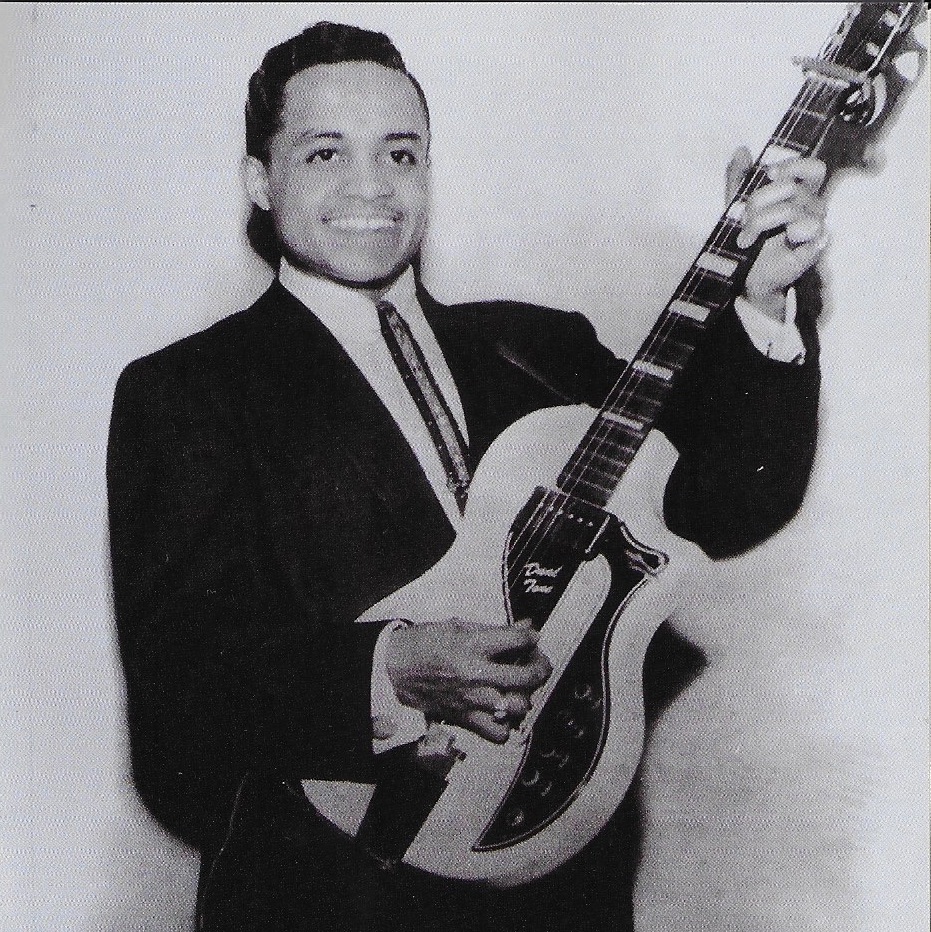
Bobby Parker

The blues singer and guitarist Bobby Parker’s fame rests on a single record: the 1961 classic “Watch Your Step”, whose driving riff inspired the Beatles’ “I Feel Fine” and Bob Dylan’s “Tell Me, Momma”. I wrote about it here when he died seven years ago. Now there’s a 2-CD anthology of his recordings from 1954 to 1995, called Soul of the Blues and reflecting not only his own career but changes in black music styles during those decades.

It begins with both sides of a 78rpm single by the Emeralds, recorded in Los Angeles in 1954 and released on the Kicks label. Parker’s family had moved to California from Louisiana when he was a small boy; he picked up the guitar in his early teens, formed the Emeralds with friends, and played school dances. In hallowed doo-wop fashion, the A-side is an up-tempo dance tune with a Latin beat, written by the 16-year-old Parker, while the flip is a wonderfully gloopy ballad. It’s a fine start to a lovingly compiled set.

A year later Parker was playing guitar with Bo Diddley: there are three studio tracks here and a version of “Bo Diddley” itself from the Ed Sullivan Show. He moved on to be a featured singer and guitarist with the band of the saxophonist Paul Williams, famous for “The Hucklebuck”: studio recordings from New York in 1956, including “Blues Get Off My Shoulder”, show his proficiency in a variety of styles. Four instrumental tracks, two under Williams’s name and two under that of the tenorist Noble “Thin Man” Watts (including “South Shore Drive”), are perfect examples of the idiom.

“Watch Your Step” is there, of course, is all its incendiary glory, along with an alternate take, and the discography included in the booklet gives me some information I’ve always wanted: it was recorded at the Edgewood Recording Studio in Washington DC in 1961, and the drummer holding down that fantastic Latin rhythm for a very good studio band was one “TNT” Tribble Jr. I’m afraid I’d never heard of him, but I’m glad to know his name now.

Within these 52 tracks you’ll find jump blues, novelty blues, rock ‘n’ roll blues, Chicago-style blues, gospel blues and funky blues. There are some wonderful obscurities, including the philosophical “Talkin’ About Love”, recorded in Columbus, South Carolina for the True Spot label in 1966 or ’67. In 1968 he was in England, recording for Mike Vernon’s Blue Horizon label: two tracks, “It’s Hard But Fair” and “I Couldn’t Quit My Baby”, were cut with a British band including the saxophonists Steve Gregory, Johnny Almond and Bud Beadle, but the mix is messy and the playing lacks the punch of the best of the American recordings. There are also six tracks recorded in front of a New York audience in 1995 for the House of Blues radio show with a very good five-piece horns-and-rhythm band, in which Parker gets all the space he needs to show that he was a guitarist in the class of Albert and Freddie King and Albert Collins.

The CD case also reproduces the poster for an all-day dance in June 1957 at the Bluefield Auditorium in Bluefield, West Virginia, a coal town in the Appalachians. The bill included the Coasters, Ruth Brown, Bo Diddley, the Drifters, the 5 Satins, Smiley Lewis, the Schoolboys, Paul Williams & the Hucklebuck Orchestra, and “Mr Bobby Parker — Blues Guitar”. The compere was the singer Johnny Hartman. Admission $2.50. “Entire balcony reserved for white spectators,” it says.

* Bobby Parker’s Soul of the Blues is released on the Rhythm and Blues label. The photograph is from the booklet, which states that 50 per cent of the profits from the set will go to the Bobby Parker Foundation.

** In the first version of this piece, I got “TNT” Tribble Jr mixed up with his father, Thomas “TNT” Tribble Sr, also a drummer. Now corrected.

Chris Barber turns 90

5d654f0341869b004e096c6a_Chris-Barber-and-Muddy-Waters-et-al_news

Chicago, 1959: Muddy Waters, St Louis Jimmy Oden, Chris Barber and Ottilie Patterson

Chris Barber is 90 today. Few people have had a more profound impact on the course of my generation’s musical tastes in the six and a half decades since he encouraged his banjoist/guitarist, Lonnie Donegan, to continue the habit — started when they were both members of Ken Colyer’s Jazzmen — of breaking up an evening of New Orleans music with a skiffle turn in the intervals, thus leading directly to “Rock Island Line” and all else that followed.

That was no fluke. Barber had broad taste and was a lifelong proselytiser for great music and great musicians. He loved the blues, and in the late ’50s he brought Sister Rosetta Tharpe and Muddy Waters to Britain. The legend goes that purists turned up to hear Muddy sing the “authentic” Delta blues on an acoustic guitar and were scandalised when he plugged in his Telecaster and let rip with the electrified Chicago version. Luckily, at least as far as history goes, the purists were in the minority. Barber also brought over Big Bill Broonzy and Sonny Terry and Brownie McGhee, thus helping to shape the tastes of a generation who would soon become Rolling Stones, Yardbirds, Blues Breakers and thousands more.

Barber’s own ensembles veered gently away from the strict New Orleans format, adding an electric guitarist and extra horns (including saxophones, anathema to traddies). Later Paul Jones was often the featured singer with the Big Chris Barber Band, which I last saw playing in the park in central Baden-Baden on a sunny summer afternoon during the 2006 World Cup. On that occasion the bandshell was only 100 yards or so from the five-star hotel where the wives and girlfriends of the England team were staying, staked out by Fleet Street’s paparazzi, but I don’t recall any of them leaving their poolside loungers to listen.

Last year Chris announced his retirement. On his 90th birthday, I’d like to thank him for all he did, directly and indirectly, to guide so many of us towards the music that changed our lives. And, of course, to wish him many happy returns.

‘Mercy’

87231110_601807310600115_5444768176836143691_n

I’d imagine that a large number of people, on reading Duffy’s Instagrammed description of her recent problems, will have reminded themselves of what a great record “Mercy” was, and still is. When it came out in 2008, I must have heard it dozens of times before the penny dropped: it’s actually a 12-bar blues.

Well, not quite. The verse is a 12-bar which stays on the tonic in bars 5 and 6 and is extended to 16 by repeating bars 9-12. The chorus is a straight 12-bar. And I love that the tune, the singing, the weird hard-rubber bass, the cheap organ sound and the guitars — including that devastating bent double-stop against silence after the breakdown — are all drenched in the blues, an updated version of the Thames Delta sound of the early ’60s.

OK, have a guess: how many times has a 12-bar blues topped the UK pop chart? Off the top of my head, I could think of only the Stones’ “Little Red Rooster” — straight from the Thames Delta! — in 1964. So I looked through all the UK No 1s from 1952-1999, and I could find only Mungo Jerry’s “In the Summertime” and “Baby Jump” and T. Rex’s “Hot Love” that fit the spec (before you ask, “Hound Dog” only made it to No 2 for Elvis in 1956). Curious, isn’t it, that the basic foundational template of so much popular music should be so thinly represented?  If someone else wants to check through the last 20 years, be my guest — and please let me know if you find anything.

Anyway, all best wishes to Duffy. That “Mercy” link has been clicked almost 80 million times. And maybe, to paraphrase Ornette Coleman, this is when the blues leave.

Memories of the Boogie Man

John Lee Hooker 1

You might have trouble believing this little story, but here it is. On the Friday morning in June 1964 when John Lee Hooker’s “Dimples” was released in the UK, three of us — strangers to each other — were queuing up to buy it as a record store prepared to open its doors in the centre of Nottingham. This wasn’t the new Beatles or Stones single. This was a record made eight years earlier by a middle-aged American blues singer, and yet it seemed like the newest and most essential thing you could spent that week’s 6/8d on. And we three weren’t alone. “Dimples” made No 23 in the charts.

A few months later Hooker toured Britain, backed by the Groundhogs. They played the Elizabethan Rooms in Nottingham, a large space above the Co-op, and all five members of the local R&B band I was in made the pilgrimage to hear him. More than that, we clubbed together for a bottle of Johnnie Walker Red Label and persuaded him to sit down at a table with us between sets and listen to our naive questions about the blues. He was patient and good-natured but the whisky evidently spoke more clearly to him than we did and I don’t remember a thing he said.

But the proximity was more than enough, as it probably was for the Groundhogs. They clearly loved his music and did their best, but this was an early stage of English kids playing the blues and they were probably a little too refined and respectful for the music’s good (although, of course,  John Lee’s idea of how many bars made 12 created problems of its own). Musically speaking, it wasn’t great, but the chance to see him close up was priceless.

I thought about all that while watching John Lee Hooker: The Boogie Man, Todd Austin’s excellent documentary on BBC4 tonight. I listened to Van Morrison saying that he responded so directly to Hooker because of his working-class background, and to Eric Burdon talking about how it was because he left school unable to read or write that Hooker spoke to him. Fair enough. But I also thought that there was I, a middle-class boy, privately educated, to whom Hooker spoke just as directly and profoundly from the instant I heard him. And that was the magic.

“Boom Boom” was a big record for me when it came out on a Stateside 45 the year before “Dimples”, and so were “Tupelo” and “I’m Mad Again” from The Folk Lore of John Lee Hooker. But the record I really loved was Don’t Turn Me From Your Door, a collection of tracks from two sessions in 1953 and 1961 released on Atlantic’s Atco subsidiary in 1963, most of them featuring just Hooker’s voice and his guitar (and his boot-heel, of course). There was an elemental quality to these recordings that went back beyond the Chicago blues we were mostly listening to and yet, with its pulsing drones and sudden explosive note-clusters, seemed as free as the freest free jazz.

The Boogie Man is fine tribute, thanks not least to Charles Shaar Murray, one of its consultants, whose fine biography of John Lee gave the programme its title. Among others giving evidence are Elvin Bishop, Bonnie Raitt, Keith Richards, and three of Hooker’s very eloquent children. Robert Cray has the best story, telling us that this was one Delta-born bluesman who, whenever he went on the road, always travelled with satin sheets.