Skip to content

Posts by Richard Williams

(Just Like) Romeo and Juliet

I remember John Lennon remarking on his affection for songs with brackets in the title. It’s a pure-pop thing, and it was a regular feature of the charts from the late ’50s to the mid-’60s. I like them, too: “Remember (Walking in the Sand)”, “Nothin’ Shakin’ (But the Leaves on the Trees)”, “(‘Til) I Kissed You”, “(Marie’s the Name) His Latest Flame”, “Goodbye Baby (Baby Goodbye)”, “Kentucky Bluebird (Message to Martha)”, “I Got You (I Feel Good)”, “I Never Loved a Man (The Way I Love You)”, “(Love is Like a) Heat Wave”, “(Sittin’ on) The Dock of the Bay”, “This Old Heart of Mine (Is Weak For You)”, “(The Man Who Shot) Liberty Valance” and so on.

My favourite brackets belong to a song released 50 years ago this month: “(Just Like) Romeo and Juliet” by the Reflections, which reached No 6 in the Billboard Hot 100 and, amazingly, No 3 in the Cashbox R&B chart. Amazing, that is, because the Reflections were a white vocal quintet — Tony Micale (lead), Phil Castrodale (first tenor), Dan Bennie (second tenor), Ray Steinberg (baritone) and John Dean (bass) — whose doowop-based style was closely modelled on that of the Four Seasons.

It’s a fabulous record, quite the equal of any of the Seasons’ hits. Written by Bob Hamilton and Freddie Gorman and produced by Rob Reeco for the Detroit-based Golden World label, it has a lyric as great as its title (“I’m gonna buy her pretty presents / Just like the ones in the catalogue” — but only, he reveals in the last verse, if he can find a job), a strong pop melody, great lead and backing vocals, and a driving rhythm track: just listen to the way the handclaps carry the beat while the drummer provides a brilliantly syncopated running commentary on his snare. Here’s a sound-only link of much better quality, recorded from an original Golden World 45 (and sounding a little sharper than my UK copy, released on the Stateside label), in which all the elements are clearly audible.

The baritone sax solo gives a clue to where and when it was made. It’s surely the work of Mike Terry, moonlighting from the Motown studios, where he had already provided a similar service on Martha and the Vandellas’ “Heat Wave” and Mary Wells’ “You Lost the Sweetest Boy”. Which means that the bassist and drummer are very probably James Jamerson and Benny Benjamin, also on surreptitious leave from Berry Gordy’s empire. That would explain a great deal about the quality of the track.

Golden World, founded in 1963 by Ed Wingate and Joanne Bratton, failed to match the achievements of its local rival, although some great records were made in its studio. Gordy bought up the company, including the sister label, Ric Tic Records (J.J.Barnes, Edwin Starr etc), in 1966. By that time the Reflections had failed to find a successful follow-up to their great hit, despite trying to recreate the musical formula with “Like Columbus Did” and “Comin’ At You”. But 50 years later they’re still performing, with Micale and Dean now joined by three singers formerly with other Detroit groups, and “(Just Like) Romeo and Juliet” still lives up to its title.

And it you want to know how to dance to it (and how to dress for the occasion), watch this delightful clip from Dick Clark’s American Bandstand, dated May 30, 1964, when the Reflections were high in the charts:
The N.E.W. thing

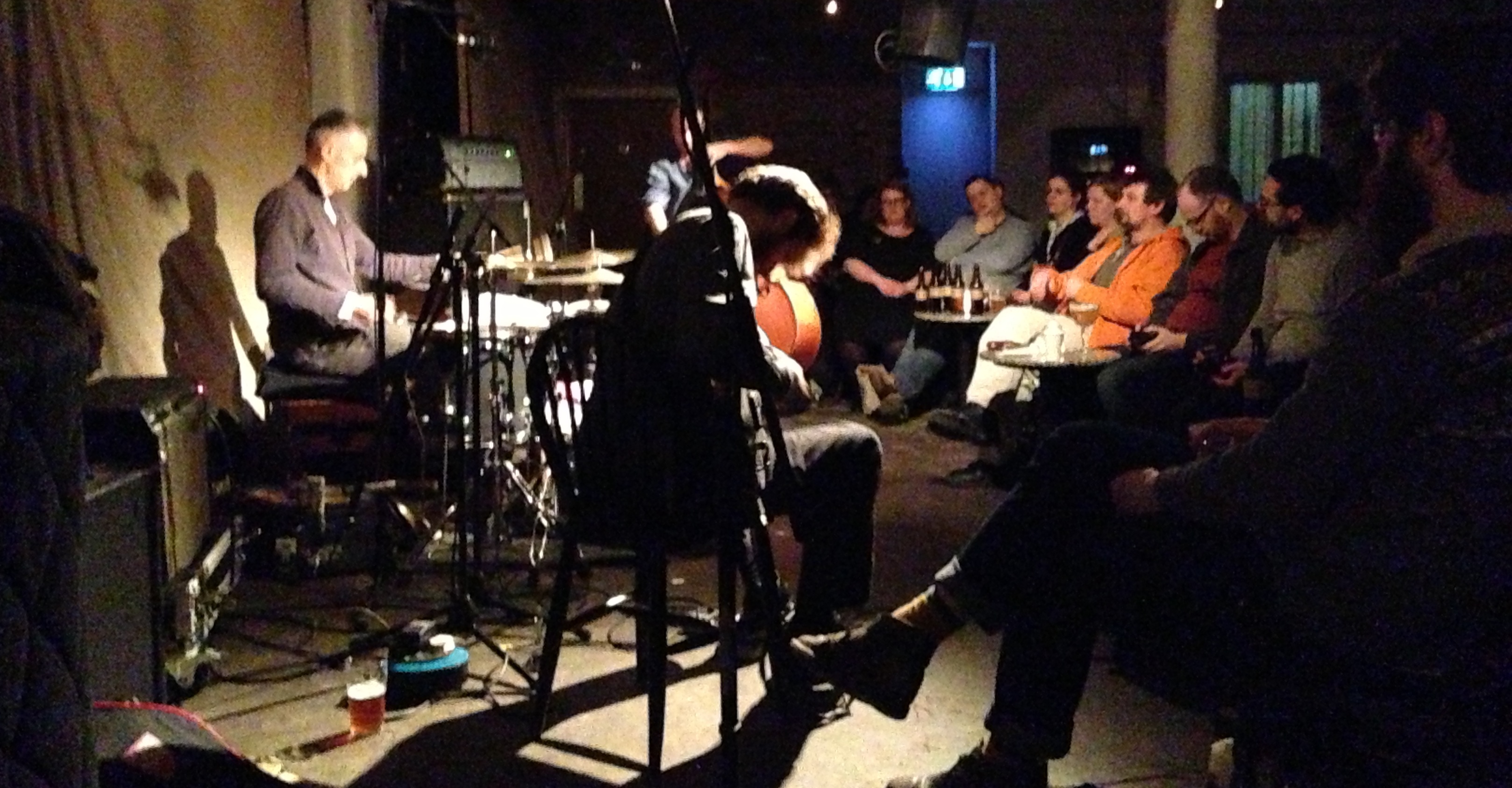
N.E.W. liveI could only stay for a single set of the trio called N.E.W. — Steve Noble (drums), John Edwards (double bass) and Alex Ward (guitar) — at Cafe Oto tonight, but it was enough to get excited about. This is an improvising group of ferocious intensity: for my taste, maybe the most effective high-volume band I’ve heard since Tony Williams’s Lifetime set the standard for such adventures more than 40 years ago.

The first piece lasted half an hour, in which everybody played without a break. They work with patterns rather than tempos, usually set by Noble’s relentlessly attacking sticks, mallets or brushes (he also has a way with cymbals that makes me think he’s the post-industrial Billy Higgins). Edwards, surely the most remarkable bassist ever produced by Britain, works off and around the drums, tugging and hammering the strings to produce huge surges of sound and in one passage bowing them above his left hand on the fingerboard while the drummer momentarily toyed  with a light Latin vamp. As for Ward, he is a constant astonishment: Bo Diddley’s “Road Runner”, Jimi Hendrix’s “Star-Spangled Banner”, Sonny Sharrock’s work with Herbie Mann and Last Exit, Robert Fripp’s solo on King Crimson’s “A Sailor’s Tale” and Derek Bailey’s amplified solo pieces — he doesn’t sound like any of them, but they might be some of the sources of inspiration behind the barrage of howling, squealing, chattering and whining but always coherent and compelling noise that he sets up.

They’ve been playing together in this configuration for half a dozen years, and the degree of empathy is phenomenal. You can hear it on their new album, Motion, a vinyl-only release on the Dancing Wayang label, limited to 300 copies (www.dancingwayang.com). The product of a studio session, it can’t possibly convey the impact of hearing them playing to an audience in a small room, but it has other, equally worthwhile qualities.

Try to imagine how a combination of Hendrix, Charles Mingus and Keith Moon might sound, stripped of ego, transported to Dalston in 2014, with modern amplification turned all the way up. If that might be your idea of a good time, don’t miss ’em.

Down from the Canyon

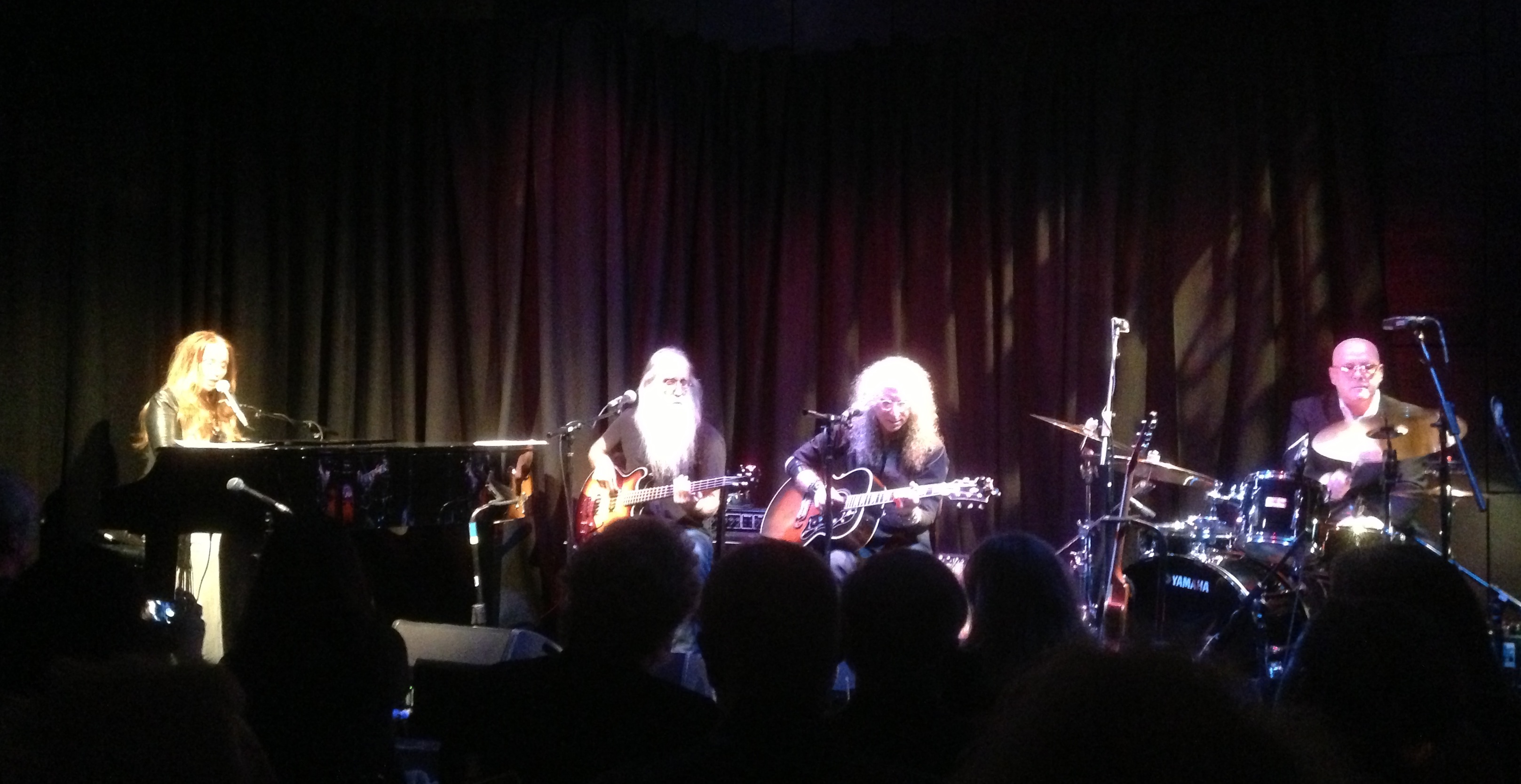
Judith OwenThere was a lot of history ranged alongside Judith Owen on the small stage in the basement room of the St James Theatre in London last night. The collective recording credits of the bass guitarist Leland Sklar, the guitarist Waddy Wachtel and the drummer Russ Kunkel include Tapestry, Sweet Baby James, Blue and Ladies of the Canyon, For Everyman and The PretenderHeart Like a Wheel and Hasten Down the Wind and other cornerstone works of the 1970s Laurel Canyon singer-songwriter movement. Not the kind of rhythm section you might expect to find on an average March night a stone’s throw from Buckingham Palace.

The gig was a showcase for Owen’s new album, Ebb & Flow. Her eighth, it is released next month and was recorded with these same musicians in Hollywood last year: a bit of a dream come true for the Welsh singer-songwriter, who will be known to some as a participating singer in some of Richard Thompson’s projects, including the 1,000 Years of Popular Music show. She’s a gifted writer, an extremely fine singer and an excellent pianist, her playing meshing perfectly with the de luxe work of her accompanists: Sklar’s purring bass lines, Wachtel’s deft melodic fills and turnarounds, Kunkel’s majestic underplaying and sense of texture. Visually, too, they were a treat: Sklar with an elegant white beard almost long enough to get tangled in his strings, Wachtel with mad grey curls and granny glasses, and Kunkel, shaven-headed and neatly suited and wearing shades, looking rather alarmingly as though he had just finished a stint guarding the door of an Essex nightclub.

Some of her new songs, such as “Train Out of Hollywood” and “Some Arrows Go in Deep”, are good enough to keep company with the work of her 1970s inspirations: Joni, the young Elton John and so on. I was sorry she didn’t do “About Love”, a featherweight jazz waltz darkened by the undertow of an irresistible descending chord sequence. When she announced that she was going to do James Taylor’s “Hey Mister, That’s Me Up on the Jukebox” with the bass player and the drummer from the original record, Sklar cracked: “We finally get to do it right.”

Owen is married to Harry Shearer, the American actor and comedian who played Derek Smalls in This Spinal Tap and is the voice of Mr Burns (and many other characters) in The Simpsons. She is the daughter of an opera singer and has an ageless and unusually flexible sort of voice — listening to her blind, it’s impossible to guess her age, which is, shall we say, somewhere between Laura Marling and Carole King — and she’s not short of a sense of humour herself. Her “subversive” covers included a sultry, slowed-down version of Mungo Jerry’s laddishly lecherous “In  the Summertime” (reminding me that I was in Pye’s old Marble Arch studios — now demolished — when Ray Dorset and his colleagues were putting the finishing touches to that song in the spring of 1970). Approaching it, she said, she thought to herself: “What would Joni do? She’d do it about an older woman checking out the boys of summer.” So she did.

You could see why a singer of Owen’s type might love sharing a stage with these musicians, whose principal devotion is to the song they happen to be playing at the time. Musically, their discretion is absolute: when she gave them each an eight-bar solo on the final number, none of them did much more than they’d been doing in accompaniment, and it was perfect. To see them play live was to get an idea of how, like all the finest session musicians, they can create arrangements as they go along, out of experience and imagination. It was lovely to watch. And if you’re the kind of person who’s worn out numerous copies of Tapestry and Sweet Baby James, Ebb & Flow is a grown-up record that won’t disappoint.

Songs of the South

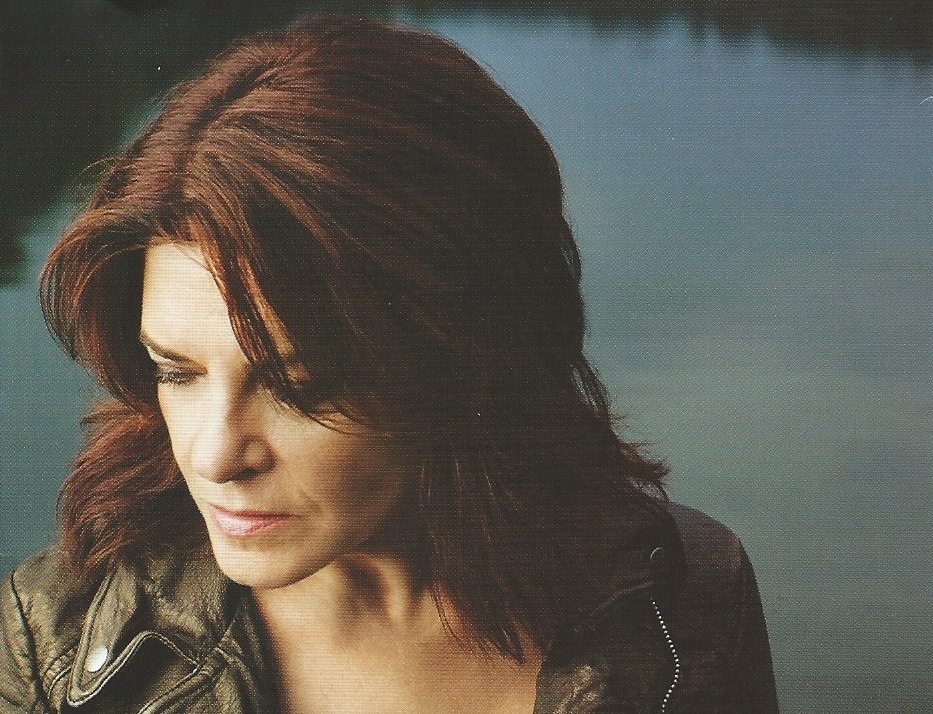
Rosanne CashYou have to wait until the 11th and final track of Rosanne Cash’s new album, The River and the Thread, for the latest evidence in  support of my theory that there has never been a bad record featuring the electric sitar, that curious hybrid invented in the late ’60s by the Danelectro company of New Jersey.

Among my own favourite examples would be not just obvious things like the Box Tops’ “Cry Like a Baby” (1968), Joe South’s “Games People Play” (1969), the Stylistics’ “You Are Everything” (1971), and Steely Dan’s “Do It Again” (1972), but the Hollies’ “The Baby” (also made in 1972, after Mikael Rickfors had replaced Allan Clarke, and the group’s greatest single, in my view), Paul Young’s stormingly soulful and brilliantly arranged “Tomb of Memories” (1983), and Pat Metheny’s piercingly beautiful “Last Train Home”, a track from the 1987 album Still Life (Talking) and a treat even for those who might not otherwise have much interest in Metheny’s work.

Anyway, back to Rosanne Cash. I bought The River and the Thread — released on the Blue Note label, an example of the broadminded approach of the company’s current president, Don Was — after reading an eloquent 10/10 review by Luke Torn in the January issue of Uncut. I don’t often find reviews to be very reliable guides these days, but this one was pretty close to the money. In more senses than one, actually, since I’m now going to have to embark on an expensive trawl back through the Rosanne Cash albums I’ve missed in recent years.

I found it to be an album that creeps up on you. The first time I played it, I got through half a dozen tracks thinking, “Well, this is pretty nice, but I don’t know about 10/10…” Then the songs started to grip, and by the last couple I was thinking it was excellent. The electric sitar topped it off, like a seal of approval. So I went straight back to the top, listened through again, and it turned out to be that good from start to finish.

Yes, it’s Americana, a somewhat over-familiar genre (particularly if you think that a genre that doesn’t include, say, bebop, doo-wop or hip-hop has no right to that name). But in Cash’s hands, and in those of her producer, guitarist and husband (and electric sitarist) John Leventhal, this voyage into the South — a set of songs, her first new material in seven years, inspired by Memphis, her birthplace, and Arkansas, where she grew up, and recent trips to the Delta, where she visited Dockery’s plantation, Faulkner’s house and Tallahatchie Bridge — largely sidesteps the cliched responses.

Lazy shuffles, slinky swamp-rock boogies, a great Derek Trucks slide guitar solo on “World of Strange Design” and a couple of lovely Leventhal arrangements — strings on “Night School”, trombones on “When the Master Calls the Roll” — typify the immaculate musicianship on show. The lyric make extensive use of geographical and cultural references — “combining the personal with the mythic,” as she puts it — with a constant presence of rivers. “A feather’s not a bird / The rain is not the sea / A stone is not a mountain / But a river runs through me” is how it starts, and “I was dreaming about the deepest blue / But what you seek is seeking you / You can cross the bridge and carve your name / But the river stays the same” is how it finishes.

Here’s the official eight-minute trailer for the album. It’s airbrushed, as these things usually are, but not indecently so. If The River and the Thread isn’t 10/10 for me, it’s certainly a solid eight, maybe eight and a half. I’m looking forward to seeing her London concert on April 30, at the Barbican. And if you happen to know of any bad records featuring an electric sitar, I’d be glad if you kept the information to yourself. This isn’t one of them.

* The photograph of Rosanne Cash is from the cover of The River and the Thread and was taken by Clay Patrick McBride.

A night of two halves

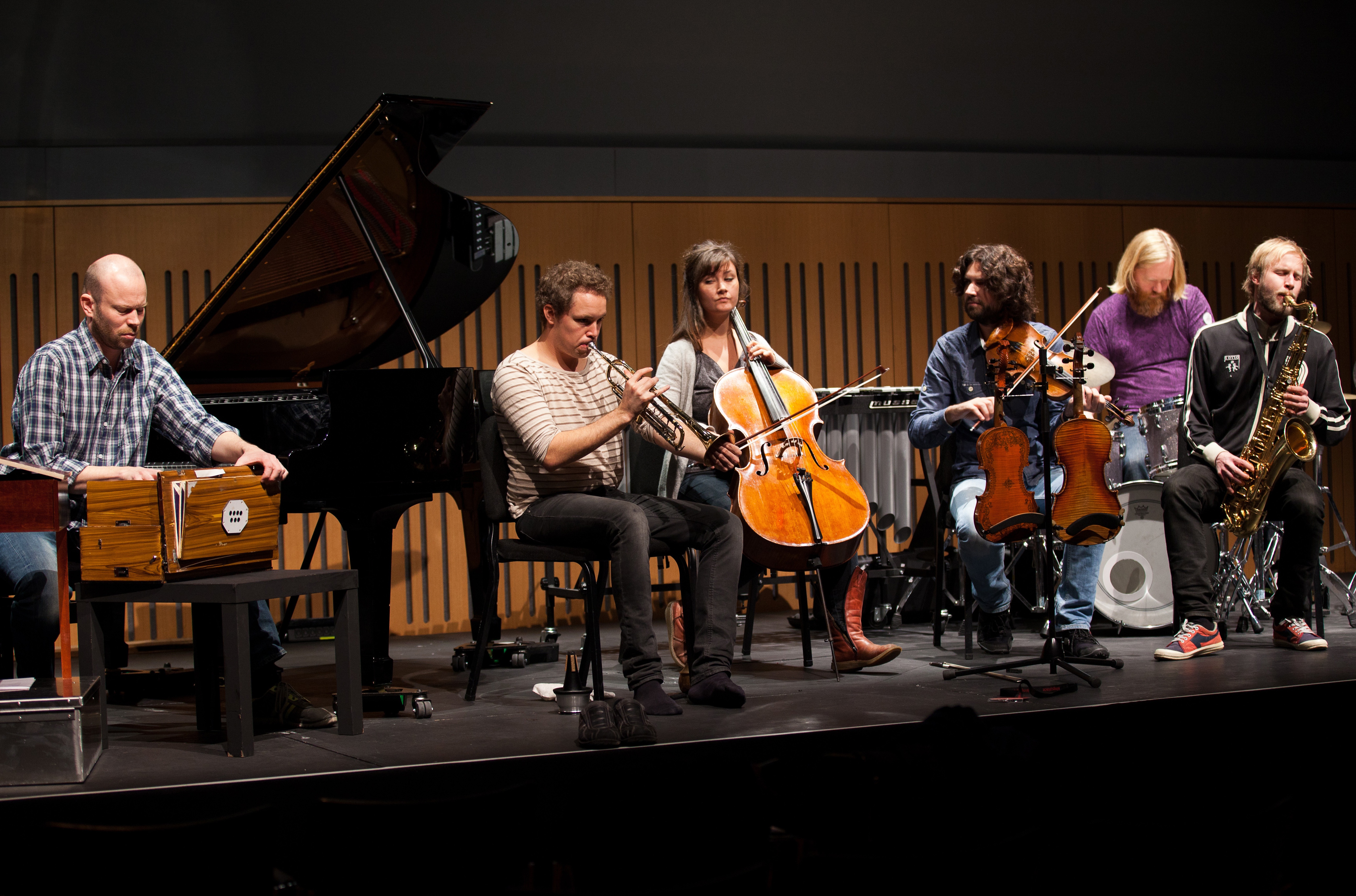
Christian Wallumrod 2Two great pianist-composers were at work within 400 yards of each other in Dalston last night. It was a tough call, so I compromised. The first half of the evening was spent at the Vortex in the company of the Christian Wallumrod Ensemble. The rest was devoted to a set by the Keith Tippett Octet at the Cafe Oto. Wallumrod was playing compositions from Outstairs, his latest ECM album, while Tippett was performing a recently commissioned suite, The Nine Dances of Patrick O’Gonogon. I was worried that by trying to catch both, I’d miss the best of either. But these were two such exalted experiences that by the end of the night I could only think what a extraordinary feeling it must be to create such music in your head and on paper and then have it brought to life by gifted and dedicated musicians.

Wallumrod’s six-piece band — with Eivind Lonning on trumpet, Espen Reinertsen on tenor, Gjermund Larsen on violin, viola and Hardanger fiddle, Tove Torngren on cello and Per Oddvar Johansen on drums — made a much greater impression on me in person than on record. Or perhaps it would be more sensible to say that they sent me back to Outstairs with a better understanding of what it is they’re doing. But I do think that in this case the live performance provides a vital extra dimension.

This is understated, reflective music, making great use of its Norwegian heritage (many of the themes sound as though they are inspired by folk songs), but the quiet power of the music’s physicality came as a surprise: when you actually witness Wallumrod gently pumping his portable harmonium, or Larsen playing soft-grained double-stops on the Hardanger fiddle, or Reinertsen discreetly using a  slap-tongue technique to turn his saxophone into an extra percussion instrument, or Lonning brushing the mouthpiece across his lips as he exhales to produce shushing sounds and bringing out a four-rotary-valve piccolo trumpet to add a new texture, it helps to bring it to life. A long track from the album, called “Bunadsbangla”, featured Johansen using his hands and a slack-tuned bass drum to produce a kind of Scandinavian Bo Diddley rhythm behind a beautifully structured and voiced horns-and-strings line; I think I speak for everyone in the room when I say that we’d have been happy for that one to have gone on all night.

A quick dash down from Gillett Square to Ashwin Street meant that I missed only the first couple of minutes of Tippett’s octet set; the band was already in full roiling Mingusian mode. This was the third performance of the work, written for Keith’s terrific new London-based band, mostly consisting of recent graduates: trombonists Kieran McLeod and Rob Harvey, saxophonists Sam Mayne and James Gardiner-Bateman, bassist Tom McCredie and the veteran drummer Peter Fairclough, with Ruben Fowler depping for Fulvio Sigurta on trumpet and flugelhorn. For me, the format of an octet often seems to locate the perfect middle ground between the flexibility of a smaller horns-and-rhythm combo and the mass and strength of a conventional big band. Tippett, who is writing and playing with a greater range and eloquence than at any time in his 45-year career, knows how best to exploit its potential to the full.

The nine movements were full of contrast, varying in mood from raucous shout-ups to a tiny, exquisite piano coda, enfolding a hymn-like horn chorale framing short unaccompanied piano improvisations, a kind of jig, and something that roared along at 80 bars per minute (that’s 320 of your “beats”, children), a tempo at which it is hard enough to think, never mind improvise coherently. I particularly loved Sam Mayne’s show-stopping alto, a flugel solo on which Fowler reminded me of the late, great Shake Keane, McLeod’s agile, thoughtful trombone, and the impressive maturity of McCredie, who coped nimbly with the demanding score but was always playing with his heart open. A sense of passion characterised the whole band as they negotiated a composition in which Tippett’s defining streak of lyricism never flagged, even when the music’s operating temperature was at its height.

They’ll be back in Dalston to play the piece again on April 11, this time at the Vortex. Keith is still waiting to hear whether the producers of the BBC’s Jazz on 3 are interested in broadcasting the piece. When he asked them, the response was that they wanted him to send a tape. After four decades in which his consistently distinguished work has brought him acclaim around the world, from Italy and France to Russia and India and South Africa, the gatekeepers of Britain’s jazz principal broadcasting outlet seem to be expecting him to audition. If he felt insulted by such a response, it would be hardly surprising or unjustified.

Last night, anyway, Wallumrod and Tippett — who share a gift for bringing the lessons learnt from jazz to bear on their respective native cultures — received the sort of response they deserve: sustained ovations from attentive listeners who know great music when they hear it, and are properly grateful for the experience.

* The photograph of the Christian Wallumrod Ensemble was taken by Christopher Tribble at Kings Place on their visit to London last year.


Give the session drummer some

If they still awarded grants for projects of genuine cultural significance, I’d want one for research into the great American session drummers of the 1960s. Which Motown records featured the playing of Benny Benjamin, Richard “Pistol” Allen or Uriel Jones? Exactly when did Al Duncan gave way to Maurice White on all those great Chicago sessions (Impressions, Major Lance, etc)? Precisely how did Earl Palmer and Hal Blaine divide the work-load in the Hollywood studios? I’d uncover the answers, and the world would be a better place.

Those questions came to mind when I found myself listening to Chuck Jackson’s “I Need You” a few nights ago. It’s a Goffin/King song (in fact you can find it on Honey & Wine, the second volume of Ace Records’ series of CDs devoted to their compositions), and it’s a beauty. Cover versions would come from the Walker Brothers and the young Wailers, but  none could match the performance of Jackson, one of the greatest of a generation of uptown soul singers that included Lou Johnson, Jimmy Radcliffe and Jerry Butler. Recorded for the Wand label in 1965, it was arranged by Ed Martin and produced by Stan Green and Steve Tyrell. In the hit parade, it made No 75 on the US Hot 100 and No 22 on the R&B chart, which was a disappointment for the singer after the success of “I Don’t Want to Cry”, “I Wake Up Crying” and “Any Day Now”.

What stuck out as I listened to this stately deep-soul ballad, however, was not the wonderful lead vocal. It was the arrangement, featuring strings, acoustic guitar and female vocals — and particularly the drumming, which makes use of the sort of emphatic tom-tom fills that Blaine brought to Phil Spector’s records, and Duncan (or possibly White) to those of the Impressions. And something about their architectural precision made me think of one name: Gary Chester.

Chester was the first-call session drummer in New York during those years. He’s the guy you can hear on the Drifters’ “Save the Last Dance for Me” and “On Broadway”, the Shirelles’ “Will You Love Me Tomorrow”, Gene Pitney’s “Every Breath I Take”, the Angels’ “My Boyfriend’s Back”, Dionne Warwick’s “Anyone Who Had a Heart” and “Walk On By”, Lesley Gore’s “It’s My Party”, the Shangri-Las’ “Remember (Walking in the Sand)”, the Lovin’ Spoonful’s “Summer in the City”, Van Morrison’s “Brown-Eyed Girl” and many, many others. He was born in Sicily in 1924 (as Cesario Gurciollo) and died in New York 62 years later, having played, by his own account, on some 15,000 sessions.

He wasn’t the only session drummer in New York  in 1960s, of course, but something about the playing on “I Need You” sounded familiar. So I dug around on the internet, and found an email address for one of the producers. I sent a message to his assistant. Sorry to bother you with such a bizarre request after almost 50 years, I said, but could you ask Steve Tyrell if it was indeed Gary Chester on that record — and by the way, were the backing singers Cissy Houston and her nieces, Dionne and Dee Dee Warwick, which was how it sounded to me?

Forty eight hours later, quite miraculously, the reply arrived, short but very sweet: “Showed this to Steve and he said: Dee Dee and Cissy. Probably on the same session as ‘Since I Don’t Have You’. And it was definitely Gary Chester playing drums. Could have been Dionne as well but he doesn’t remember that.”

I don’t know why it gives me such satisfaction to pass that information out into the world, but it does.

For more great New York session drumming from the mid-’60s, listen to the Four Seasons’ “Dawn”. I used to think that was Gary Chester, too, but it isn’t. It’s Buddy Saltzmann, who also played on Little Eva’s “The Locomotion”, Lou Christie’s “Lightnin’ Strikes”, the Monkees’ “I’m a Believer” and Laura Nyro’s Eli and the Thirteenth Confession. And, of course, countless others. In the drum booths of the New York studios, he, Chester and Panama Francis were the men.

Now, about that grant…

The precious legacy of Booker Little

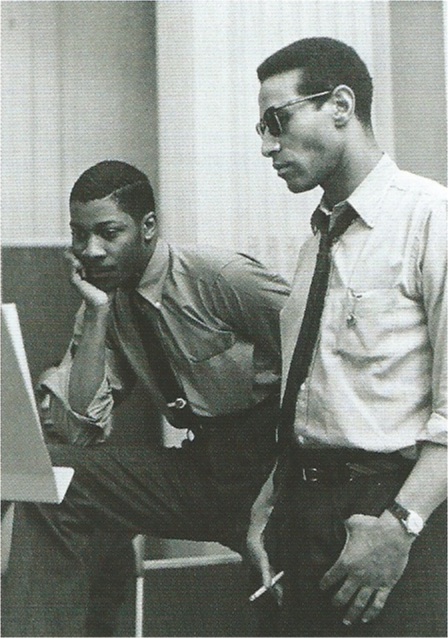
Booker Little:Max Roach

The four studio albums recorded under the Memphis-born trumpeter Booker Little’s name between 1958 and 1961 were issued by four different labels. It’s always been my feeling that if he had signed a contract with Blue Note Records early in his career, his reputation today would more than match that of Lee Morgan, Freddie Hubbard or Donald Byrd. But they did and he didn’t, and after his untimely death from uraemia, a kidney disease, at the age of 23, the piecemeal nature of his recorded output somehow prevented him from acquiring the stature he deserved.

For many years those four albums were hard to find and expensive to acquire. You might have gone without a few meals to buy one. Now, thanks to European copyright laws, all four are available in a single 2CD package for which I paid £12 the other day. Those copyright laws are problematic in some respects, but when they make it possible for independent companies to reissue music like this, in which the corporate successors to the original labels have seldom shown any constructive interest, it’s very hard to argue against them, so I won’t. The original albums in question were called Booker Little 4 & Max Roach (United Artists, recorded 1958), Booker Little (Time, 1960), Out Front (Candid, 1961), and Booker Little and Friend (Bethlehem, 1961). The package in which they are assembled, titled Complete Recordings: Master Takes and issued on the American Jazz Classics label, has been put together with evident care, reproducing the original sleeves and notes, with full recording details and extra pictures.

The first of them reminds us that Little came to prominence as a member of the Max Roach Quintet, whom he joined just after his 20th birthday, following studies at the Chicago Conservatory. He made several albums with that band, and his qualities as a soloist were obvious from the start: his clean articulation, bright, burnished tone, rhythmic agility and harmonic acuity made him the obvious successor to Clifford Brown. And at a time when skilled hard-bop trumpeters were not exactly thin on the ground, his playing was immediately identifiable.

The Time album is by a quartet, with Wynton Kelly or Tommy Flanagan on piano, Scott LaFaro on bass and Roy Haynes on drums, and it still sounds pristine. But the remaining albums are the real jewels, since they place his improvisations in the context of a developing compositional gift. They feature sextets, both including the trombonist Julian Priester and the pianist Don Friedman, with Out Front also including Eric Dolphy and Max Roach while Booker Little and Friend (a coy reference to his trumpet) features George Coleman and another great drummer, Pete LaRoca. Little’s 14 tunes on these albums are distinguished by a gift for lyricism that was not always to be found in the composers of the post-bop era; perhaps the nearest equivalent would be the great Benny Golson, who also achieved a song-like quality in his themes for hard-driving horns-and-rhythm combos. Little, though, was a more sophisticated thinker than Golson. In pieces as breathtakingly gorgeous and structurally fascinating as “Forward Flight”, “Strength and Sanity” and “Moods in Free Time”, written in his very early twenties, there are unmissable signs of boundless potential.

His partnership with Dolphy would no doubt have borne further fruit. They were ideal partners, utterly dissimilar in instrumental style but clearly on the same musical and intellectual wavelength, as can be heard on Dolphy’s Far Cry, recorded for Prestige in December 1960, and in the three volumes of live recordings by their quintet, taped in July 1961, just three months before his death, and released as Eric Dolphy at the Five Spot (now also available in a complete edition, from Essential Jazz Classics). Among the last things he played on, as a sideman, were John Coltrane’s Africa/Brass and Max Roach’s Percussion: Bitter Sweet. Wherever jazz was heading in that turbulent and exhilarating era, he was going to be part of it.

We’ll never know what he might have achieved in the years that a fatal illness denied him, but the four albums under his own name — brimming with the amazing clarity of his playing and a talent for exploiting the resources of a small group — are evidence of a remarkable artist at work. It’s a legacy that all jazz fans should know about.

* The uncredited photograph of Booker Little (left) and Max Roach is taken from the booklet accompanying the American Jazz Classics package. 

Charlie’s angels

Haden Triplets 2Richard Thompson once told me his theory, rooted in an early devotion to the Everly Brothers, that there is nothing quite like the sound of blood relatives singing together. Tanya, Rachel and Petra Haden might be a case in point.

They were born in New York on October 11, 1971 to Ellen Haden and her husband Charlie, who had come to prominence as the double bassist with Ornette Coleman’s great quartet of 1959-61 and later as the leader of his own Liberation Music Orchestra. I’ll never forget the first time I heard Haden’s classic solo on Ornette’s “Ramblin'”, from Change of the Century, and over the last 40-odd years the Liberation Music Orchestra has been one of the great positive forces in the music.

Charlie was born in Iowa; at the age of two he started singing with his family’s band, who performed country songs on radio and at country fairs. When polio ruined his voice at 15, he switched to the double bass and developed an interest in jazz. Later he moved to Los Angeles, and the rest is part of jazz history. A few years ago he explored his roots in a fine album called Rambling Boy.

His triplet daughters, born (like his son Josh, who leads the band Spain) to his first wife, grew up surrounded by music. On visits to their father’s parents in Missouri, they learnt the country songs of his childhood. At home there was usually something good playing — “whether it be our mom playing Billie Holiday and Nina Simone records, or our dad playing Keith Jarrett and Ornette Coleman in the living room,” as they write in the notes to their first album together, The Haden Triplets. They’ve all worked in music for many years, with credits including the Foo Fighters, the Queens of the Stone Age, Beck, Green Day and Todd Rundgren. Almost 10 years ago Petra recorded a acappella album called Petra Haden Sings The Who Sell Out, which was exactly what it said and earned Pete Townshend’s admiration.

Here’s a short promo film for the sisters’ album, which is released on Third Man Records, Jack White’s label. Perhaps a little confusingly, Tanya Haden’s husband is the actor Jack Black, and the album was recorded — at the insistence of Ry Cooder, who produced it — in their house, with one microphone for the singers and their accompanists: Cooder on guitar and mandolin, his son Joachim on drums and Rene Camacho on bass, with occasional touches of fiddle from Petra and cello from Tanya.

The bulk of the repertoire is drawn from hallowed country and bluegrass sources: the Louvin Brothers (“Tiny Broken Heart”, “My Baby’s Gone” and “When I Stop Dreaming”), Bill Monroe (“Voice from on High” and “Memories of Mother and Dad”), the Carter Family (“Will You Miss Me When I’m Gone?”, “Single Girl, Married Girl” and “Oh Take Me Back”), the Stanley Brothers (“Lonesome Night”) and Kitty Wells (“Making Believe”). It suits their voices very nicely: while none of the three seems to be a particularly distinctive singer, together they make close harmonies that are appropriately plaintive. When they step outside the idiom, with the poppier “Slowly” or Nick Lowe’s “Raining Raining”, the results aren’t quite as convincing, although never less that pleasant.

On the best songs the sense of intimacy is very appealing. The Haden Triplets has the atmosphere of music made in the family parlour, for their own enjoyment and for that of their circle of friends, of whom we are made to feel a part. And sometimes, as with the glorious “Voice from on High”,  you just want to lift your own voice and join in.

* The photograph of Rachel, Petra and Tanya Haden is from the inside cover of The Haden Triplets and was taken by Jo McCaughey.

Westbrook’s Blake

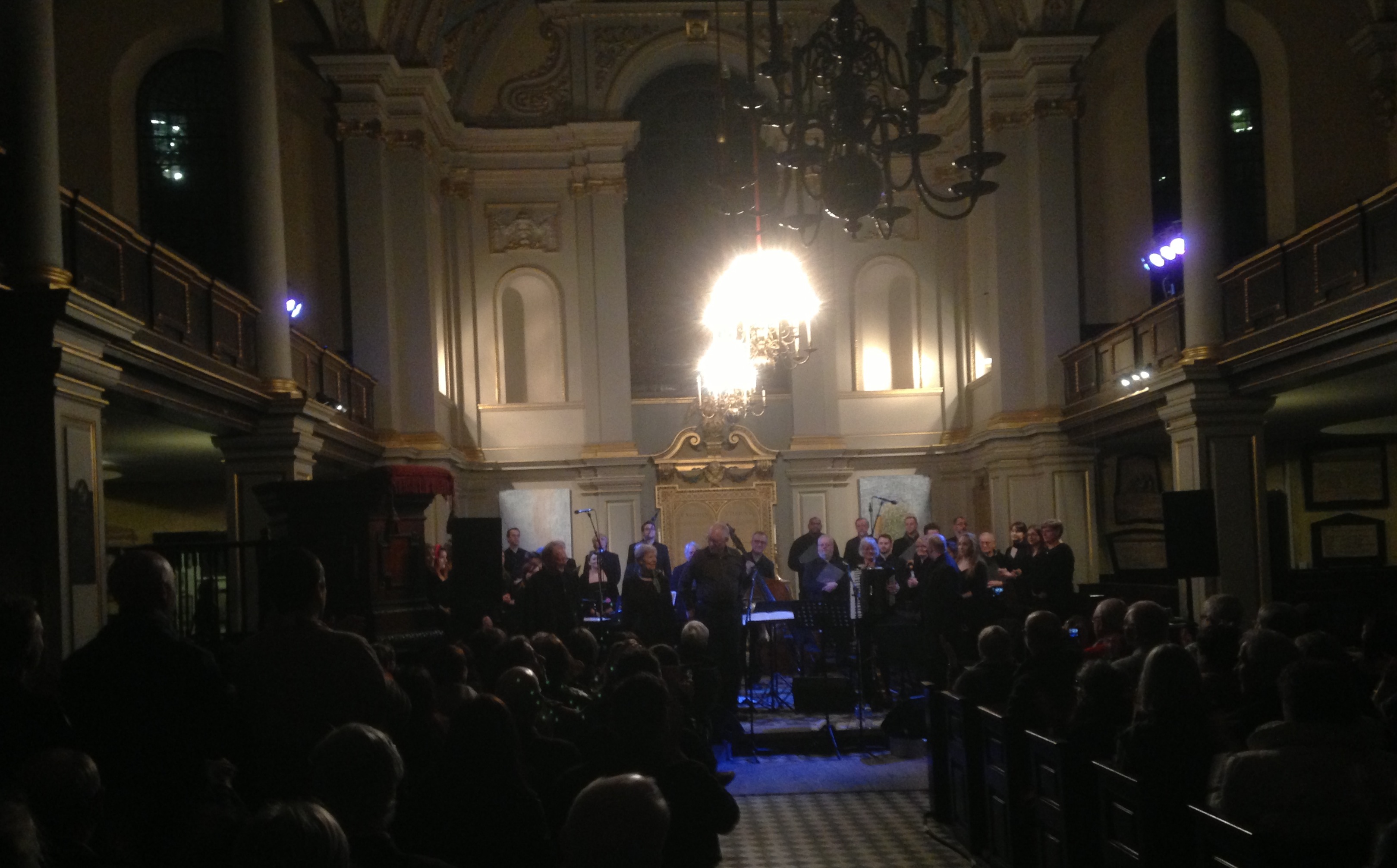
Mike Westbrook 3The parish church of St Giles-in-the-Fields turned out to be the perfect place for last night’s performance of Glad Day, Mike Westbrook’s settings of William Blake’s poetry. Situated close to the modern junction of Charing Cross Road, Oxford Street, Tottenham Court Road and New Oxford Street, and known as the Poets’ Church, the present building was completed in 1733 on the site where first a monastery and chapel and then earlier churches had ministered to lepers (St Giles is their patron saint) since the 12th century. The first victims of the Great Plague of 1665 were buried in its garden.

Blake was born in nearby Soho and in his time the church stood next to the warren of dwellings known as the Rookery, London’s most notorious haunt of thieves and prostitutes, immortalised in Hogarth’s Gin Lane drawings and Dickens’s Sketches by Boz. It’s a gentler place now, although had Blake, Hogarth and Dickens been living today they might have been interested to leave the church, turn left down Denmark Street, cross Charing Cross Road and witness the sights of 21st century Soho on a Saturday night.

The concert was in aid of the Simon Community, which recently celebrated the 50th anniversary of its work with London’s homeless population. In the church’s soft yellow light Westbrook was joined by two solo singers — his wife, Kate, and Phil Minton — and the 30-voice Queldryk Choral Ensemble, conducted by Paul Ayres, plus the violinist Billy Thompson, the accordionist Karen Street and the double bassist Steve Berry.

They began, appropriately enough, with the searing images of “London”, sung by Kate, before Minton delivered “Let the Slave” and Mike Westbrook himself recited “The Price of Experience” above a lulling choral vamp: “It is an easy thing to triumph in the summer’s sun / And in the vintage and to sing on the wagon loaded with corn. / It is an easy thing to talk of patience to the afflicted, / To speak of the laws of prudence to the houseless wanderer…”

“Holy Thursday”, “The Tyger and the Lamb” and “Long John Brown and Little Mary Bell” were among the texts, most of them arranged by the late Adrian Mitchell and the others by Kate Westbrook. The audience remained silent between the individual pieces, reluctant to disturb the mood, but the dramatic conclusion of “The Poison Tree”, on which tango rhythms propelled Kate’s bitter vocal and Thompson’s dazzling fiddle solo, provoked spontaneous cheering.

The musicians were given plenty of space for unaccompanied solos, each one relevant to Westbrook’s overall structure while ensuring a constant variety of texture. They all shone, with Berry’s dark-toned bass outstanding throughout, and particularly when he launched “The Human Abstract” with an improvisation located somewhere between Charles Mingus and Charlie Haden, which is not a bad place to be. But nothing was more quietly electrifying than the transition from Minton’s open-hearted vocal to Thompson’s spirit-possessed violin which led from “The Fields” to the concluding “I See Thy Form”.

Westbrook has been working on this material for many years, and it is among his several masterpieces. Like his fellow pianist/composer Keith Tippett and his old associate John Surman, he came out of the jazz ferment of the 1960s and found his way to a music in which he can employ everything he has learnt while making profound use of his indigenous heritage. For his admirers who couldn’t make it to last night’s concert, there’s a new DVD and CD, called Glad Day Live, of a performance by the same singers and musicians, filmed at Toynbee Hall in Whitechapel five years ago. Highly recommended, of course.

That old suburban voodoo

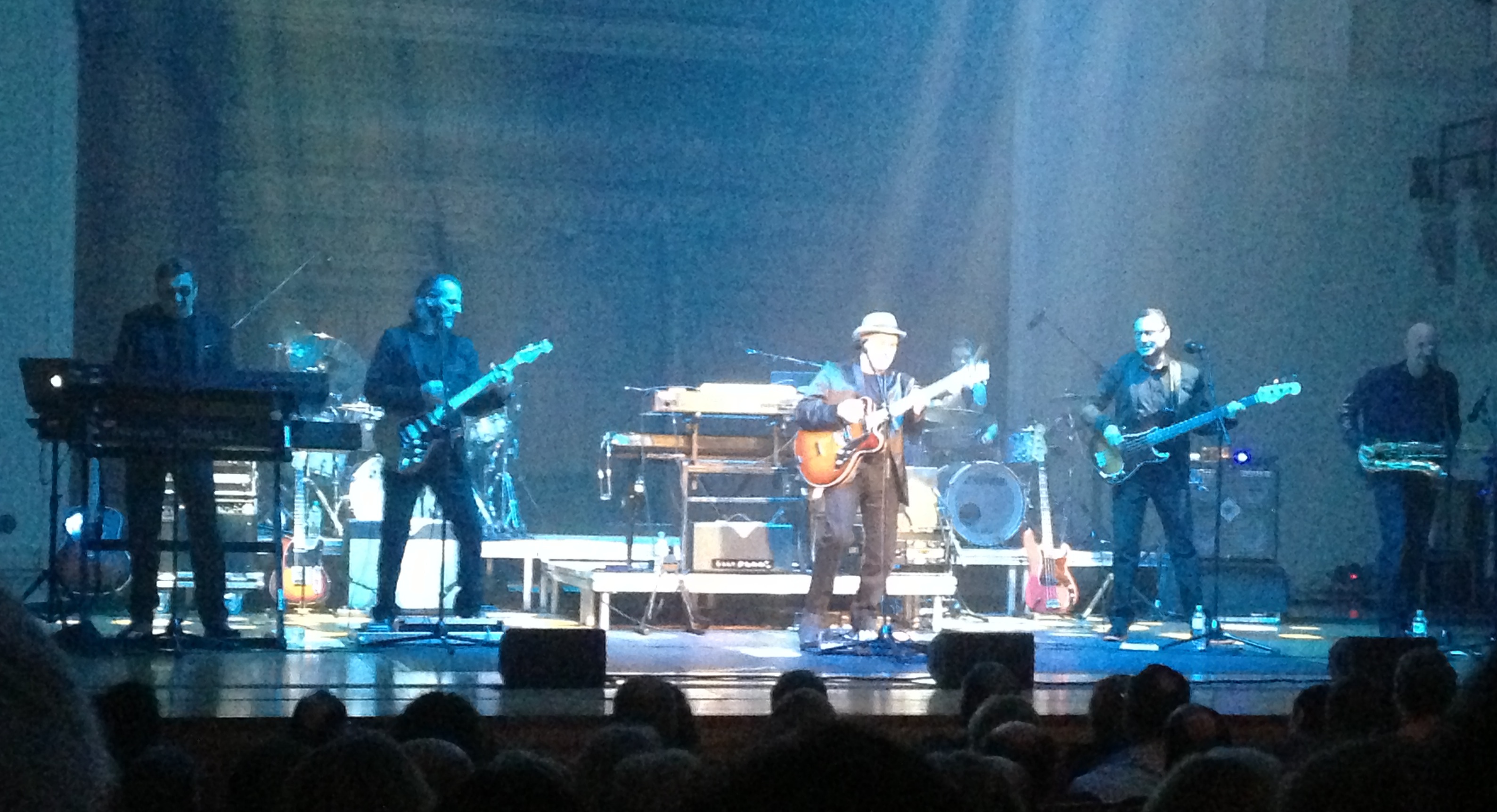
Paul CarrackWhen I saw Paul Carrack at Ronnie Scott’s just over three years ago, he did a shrewd thing by beginning his set with “How Long”, the hit that brought his voice to public attention back in 1974. It’s a song everybody loves, he still does it brilliantly, and it put everybody in a good mood. The whole club seemed to relax and open up to him.

Last night at the Cadogan Hall off Sloane Square, closing his UK tour, he went to the opposite extreme and performed it as the final number before the encores. This didn’t work as well. By starting the set with less familiar material, he had to work harder to build a rapport — particularly since the hall, although a beautiful and comfortable concert space with excellent acoustics and sight-lines, is a rather formal setting for what is, in essence, music best suited to a club environment.

It didn’t really matter because it’s always a pleasure to hear his great voice and listen to his excellent six-piece band as they run through 40 years’ worth of fine songs. “Tempted” and “Another Cup of Coffee”, from his days with Squeeze and Mike and the Mechanics respectively, are modern classics; the latter band’s “Over My Shoulder”, which he wrote with Mike Rutherford, is eternally irresistible. I’m only sorry that he doesn’t find room in the set from a song or two from his second solo album, 1982’s Nick Lowe-produced Suburban Voodoo, such as “A Little Unkind” or the sublime “Always Better With You”.

There were also several songs from his new album, Rain or Shine. One or two of the originals, like “Life’s Too Short” and “Time Waits For No Man”, are a little on the lacklustre side, but the deeply soulful “Stepping Stone” is a beauty that should find a permanent place in his repertoire. The album also features several covers, including lovely versions of “(If Loving You Is Wrong) I Don’t Want to Be Right”, written by Homer Banks, Carl Hampton and Raymond Jackson for Luther Ingram in 1972, and Harold Arlen and Johnny Mercer’s “Come Rain or Come Shine”, in an arrangement inspired by Ray Charles. An unexpected highlight came in a heartfelt and properly respectful treatment of Springsteen’s “If I Should Fall Behind”, which he recorded on his 2012 album, Good Feeling.

I suppose what I respond to in Paul Carrack, apart from his vocal and instrumental talent, is his unpretentiousness and his deep affinity for the music he loves (demonstrated in the choice of music played over the PA before the start of the gig, including Doris Troy’s “What’cha Gonna Do About It” and Irma Thomas’s “Time Is On My Side”). In between songs last night he told a story of getting a call from his daughter during that afternoon’s sound check. “She’s in New Zealand,” he said, going on to explain that when she told him she was planning a trip through Thailand, Cambodia, Laos, and other exotic places, he’d expressed anxiety. “Dad,” she responded, “when you were 17, you were getting in a van and setting off for Germany, to play in Hamburg…” That was 45 years ago. You’d have to say he’s used the time rather well.