Miles at the Plugged Nickel
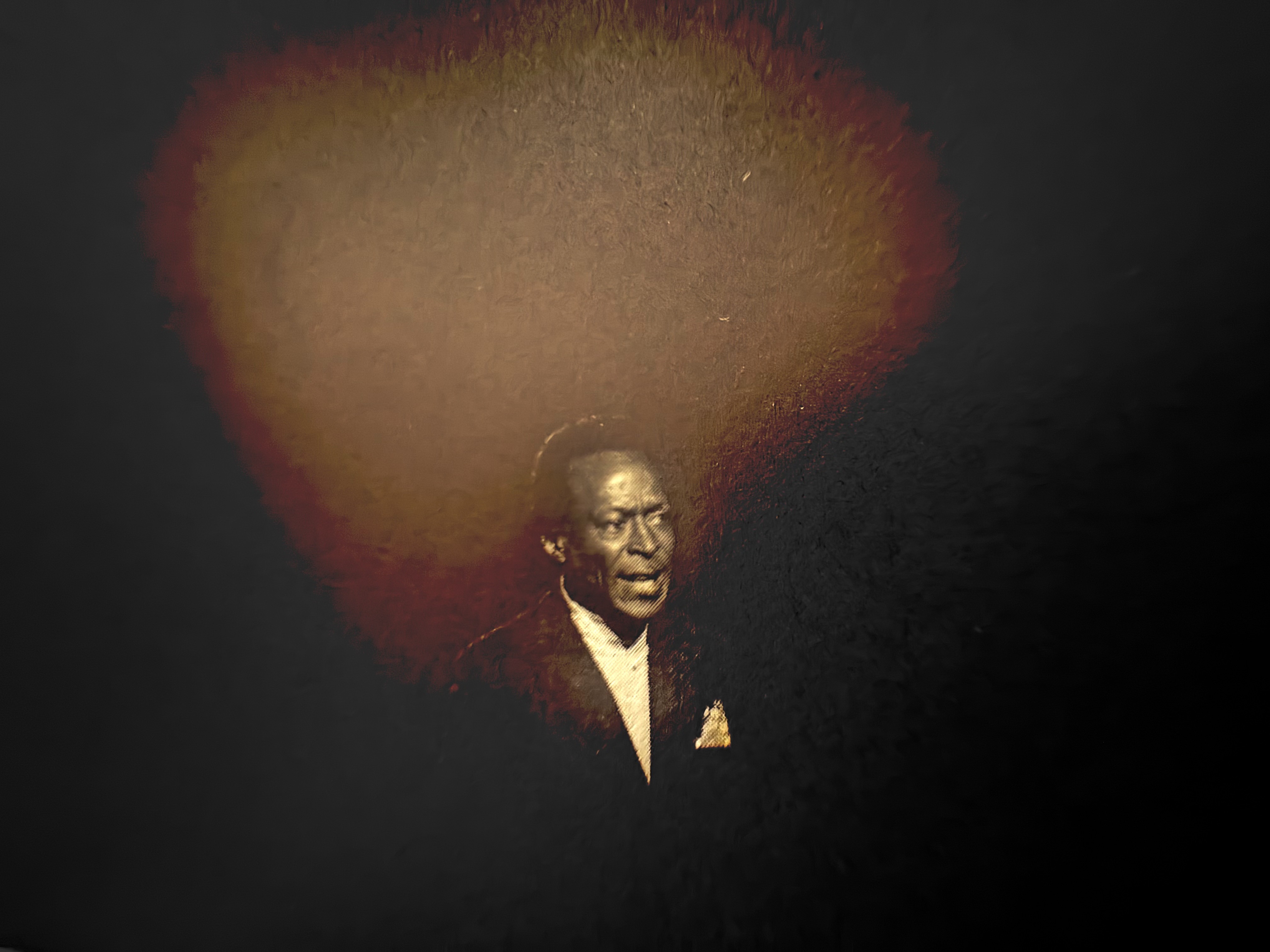
Sixty years ago, in the week before Christmas 1965, Teo Macero recorded the Miles Davis Quintet over two nights at a club called the Plugged Nickel on North Wells Street in Chicago’s Old Town district, nowadays known as the Near North Side. That December it was 15 months since Wayne Shorter had become the group’s tenor saxophonist, joining the pianist Herbie Hancock, the bassist Ron Carter and the drummer Tony Williams to complete what would be known as Davis’s Second Great Quintet.
Extracts from those evenings were released on a couple of LPs in Japan in 1976, and then worldwide in 1982, but it wasn’t until the 30th anniversary, in 1995, that everything from the two nights — three sets from the first night, four from the second, seven and a half hours of music in all — was packaged into a slipcased seven-CD box. Which was when it became clear how important a place it occupied not just in Davis’s discography but in the history of jazz. Now, after many years in which used copies of the set fetched extraordinary prices, it has been restored to general availability.
No jazz group has ever taken the use of pre-existing formats (head arrangements, soloist and rhythm) and materials (composed melodies, chord or modes, rhythms) to such heights of sophistication and simultaneous invention. Ambition was one factor. Davis wanted, as usual, to stay ahead of the competition, and these four young musicians (Williams had left his teens only 10 days earlier) provided not just the fuel but the fire. In return, he set them free. They could go anywhere they wanted. What mattered was that everything they played was the result of listening and responding, not just of moving with the currents but setting up crosscurrents and rip tides and making radical choices between them.
It worked because they were all virtuosi, all innovators, all repositories of the jazz history of their instruments but intent on taking the next step. Where that step took them was to the ultimate iteration of the evolution of small-combo jazz as it had been known for half a century. In their four years together, they achieved something that, in its field, would never be bettered.
Which is not to say, of course, that jazz finished when their work was done. It took on new forms and new challenges, and it remains a living and vital force, existing in dimensions undreamt of 50 years ago. But on these discs you hear the ideal of five musicians moving independently and yet as one, colliding and diverging, slowing down or speeding up, switching the mood in an instant, from the playful to the bone-deep serious, conveying such a remarkable sense of space even when they seem to be jostling and provoking. There is no coasting here: every note counts, wherever it sits in the plan.
The tunes are familiar: “If I Were a Bell”, “Stella by Starlight”, “Walkin'”, “I Fall in Love Too Easily”, “My Funny Valentine”, “Four”, “When I Fall in Love”, “Agitation”, “Round Midnight”, “Milestones”, “The Theme”, “On Green Dolphin Street”, “So What”, “Autumn Leaves”, “All Blues”, “Yesterdays”. For fans of pre-electric Miles, that would surely be pretty close to a perfect programme. You hardly notice the breaks between the tunes: it’s like one unbroken journey.
This is a club date, so you get little snatches of incidental conversation and the occasional bit of vocal encouragement. There actually seems to be an argument going on, perhaps at the bar, during the first night’s beautifully pensive version of “When I Fall in Love”; a burst of random applause during the piano solo may be signalling the departure of one of the disputants. That’s OK by me. It’s a reminder that this isn’t a studio session in which the musicians knew they were laying down something destined to become an artefact. Or a formal concert, with a audience seated in rows and a measure of self-consciouness on either side of the footlights.
They were, in the very best sense, making it up as they went along: creating music on the fly, discovering themselves, testing the limits, exploring the music’s inherent elasticity, living on the leading edge, leaning way over it with no safety net, and exhibiting the ultimate in the improviser’s ideal of relaxed concentration. Pure exhilaration, then and now, from start to finish, and utterly essential.
* The Complete Miles Davis Live at the Plugged Nickel is reissued by Columbia Records, the same music now reformatted on eight CDs, with new packaging — individual cardboard sleeves rather than jewel cases — at around £69. The uncredited photo is from the original brochure.

 thebluemoment.com
Is there material on the new 8 CD set that is not on the original 7 set?
No, there isn’t.
Thanks Richard. The question came from me but was anonymised by the wordpress system.
I just watched Miranda’s most recent cut of her Graham Simpson film. I don’t know whether it has ever come up in conversation between us but Graham and I were friends from the last year of primary school onwards. I was amazed when he, in his ravaged state, recited a long list of his favourite jazz musicians.
Evan
In “Conversations on the Improviser’s Art” by Lee Konitz the great saxophonist speaks approvingly of the Plugged Nickel sessions.
He’s particularly impressed with Shorter’s work and the rhythm section but opines that Miles was not in good form on those nights
I couldn’t agree more Richard. I have recently had access to my stored records and cds after two years in storage, and the Complete Miles at the Plugged Nickel was, coincidentally, one of the first out of the boxes. I played them one after the other over a few days. I did note that I was playing them at exactly the same time of year that they were recorded; a few days before Christmas. The music still leaves a febrile energy in the room it’s being played. Even 50 years later.
isn’t it the second great quintet, rather than quartet?
Indeed so. Thank you. Now corrected.
Thank you Richard for the usual attention to details and reference to previous editions, but reading through one got the idea that the way they played those night was a decision of Miles “He wanted to stay ahead of the competition” and “in return he set them free”. But in actual fact he didn’t know. It was an idea of Tony Williams, during a flyght to Chicago to propose the other member of the group to play ‘anti-music’. Anthing the public would expect was not to be played. This decision was not shared with the leader, although he immediately undertood that something was happening. He didn’t say a word and he complyed with their style. Tunes like “My funny valentine” was taken almost to the unrecognisable. But it wasn’t “free-jazz” as such because after all the swing was still present despite the deconstruction. What I’m saying was declared by both Hancock and Shorter in different occasions. I’m sure you knew and didn’t say.
Roberto
A jazz musician of my acquaintance once allowed to me that Miles may have been the weak link in the group. Heretical to say, but possibly true.
Forgive me for saying how ridiculous that suggestion is. The other four were younger and more “advanced”, yes. But the music could not have happened without Miles’ vision. Individual merit is hardly a consideration.
As the observation was offered some time ago I can’t faithfully reconstruct its context, but I think my friend was not gainsaying Miles’ organizational vision – after all, it was he who selected his storied sidemen – but was rather saying something about the quality of his playing. That is an arguable point, of course, but I would suggest that an aural scan of the many group tracks scattered across You Tube would yield more we’ve-heard-that-before moments from Miles than from his colleagues, particularly on tunes such as So What and All Blues.