Skip to content

Archive for

RIP Margaret Ross

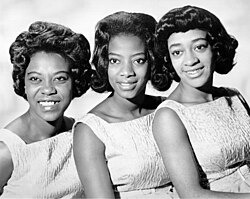
The Cookies: Earl-Jean McRea, Dorothy Jones and Margaret Ross

Margaret Ross was still in high school when she joined her cousin Dorothy Jones and their friend Earl-Jean McRea in the Cookies, a vocal group from Coney Island who became the favourites of the hit-making songwriters in Aldon Music’s Brill Building offices in the early ’60s. They sang on countless demos and provided backup on many hits by other artists.

On their own records, such as “Chains”, “Don’t Say Nothing Bad About My Baby” and “Girls Grow Up (Faster Than Boys)”, they shared the lead vocals between them. But in 1964 it was Margaret who sang lead on the sublime “I Never Dreamed”, a song written by Gerry Goffin and Russ Titelman, one of my three all-time favourite records in the beloved girl-group genre. Arranged by Carole King, it was produced by Goffin, King’s then-husband, and Titelman.

I saw the news of her death at the age of 83 today on Titelman’s Facebook page, which shows how long some old loyalties last. In the same year as “I Never Dreamed”, Margaret also sang lead on two almost equally fine records released under the fictitious name of the Cinderellas: “Baby Baby (I Still Love You)” and “Please Don’t Wake Me”, both written by Titelman with Cynthia Weil, and produced by Titelman with Barry Mann, Weil’s husband and usual writing partner.

Who were the greatest of all the girl-group lead singers? For me it’s Shirley Owens of the Shirelles and Judy Craig of the Chiffons. But Margaret Ross had something special: she could capture the innocence that people like Goffin, Weil and Ellie Greenwich wrote into their stories of young love. She, above all, sounds like a teenager singing on behalf of other teenagers — but with a fine vocal technique that, when matched with the other members of the group, explained their popularity with the writers. “Their ears were so good,” said Neil Sedaka, for whom they sang the background to “Breaking Up Is Hard to Do”.

That day Sedaka took them from Coney Island to the session at RCA studios on East 24th Street in a taxicab. As Ross told Laura Flam and Emily Sieu Liebowitz, the authors of But Will You Love Me Tomorrow?, an oral history of the girl groups: “We learned the song in the taxi. Only took a few minutes to put it together, and once we got in the studio, naturally that’s how it came out.”

It was the Beatles who called time on the girl-group era — ironically, because Lennon and McCartney had been inspired and influenced by those very records, and they covered “Chains”, along with the Shirelles’ “Baby It’s You”, on their first album. Ross was not pleased. “We were furious. Oh, we were mad. I mean, they came over here and they just took over and they pushed us out. And that’s when everything slowed down. They just knocked all of us out.”

She left the music business, got married, had two children, and went to work for the New York City Health Department until her retirement in 1998. In her later years she performed sometimes with a new group of Cookies and sometimes with Louise Murray of the Jaynetts, Lillian Walker-Moss from the Exciters, Beverly Warren from the Raindrops and Nanette Licari from Reparata and the Delrons.

“I love to sing,” Margaret told Flam and Liebowitz. But the schoolgirl could not have imagined, as “I Never Dreamed” went on to the tape in 1964, that she was singing her way into a kind of immortality.

* But Will You Love Me Tomorrow? was published in 2023 by Hachette Books. The Cookies: Chains / The Dimension Links 1962-64 was issued in 2009 on RPM Records and contains their important recordings, under the group name and those of the Cinderellas, Earl-Jean, the Palisades, Darlene McRea and the Honey Bees.
Crushed velvet

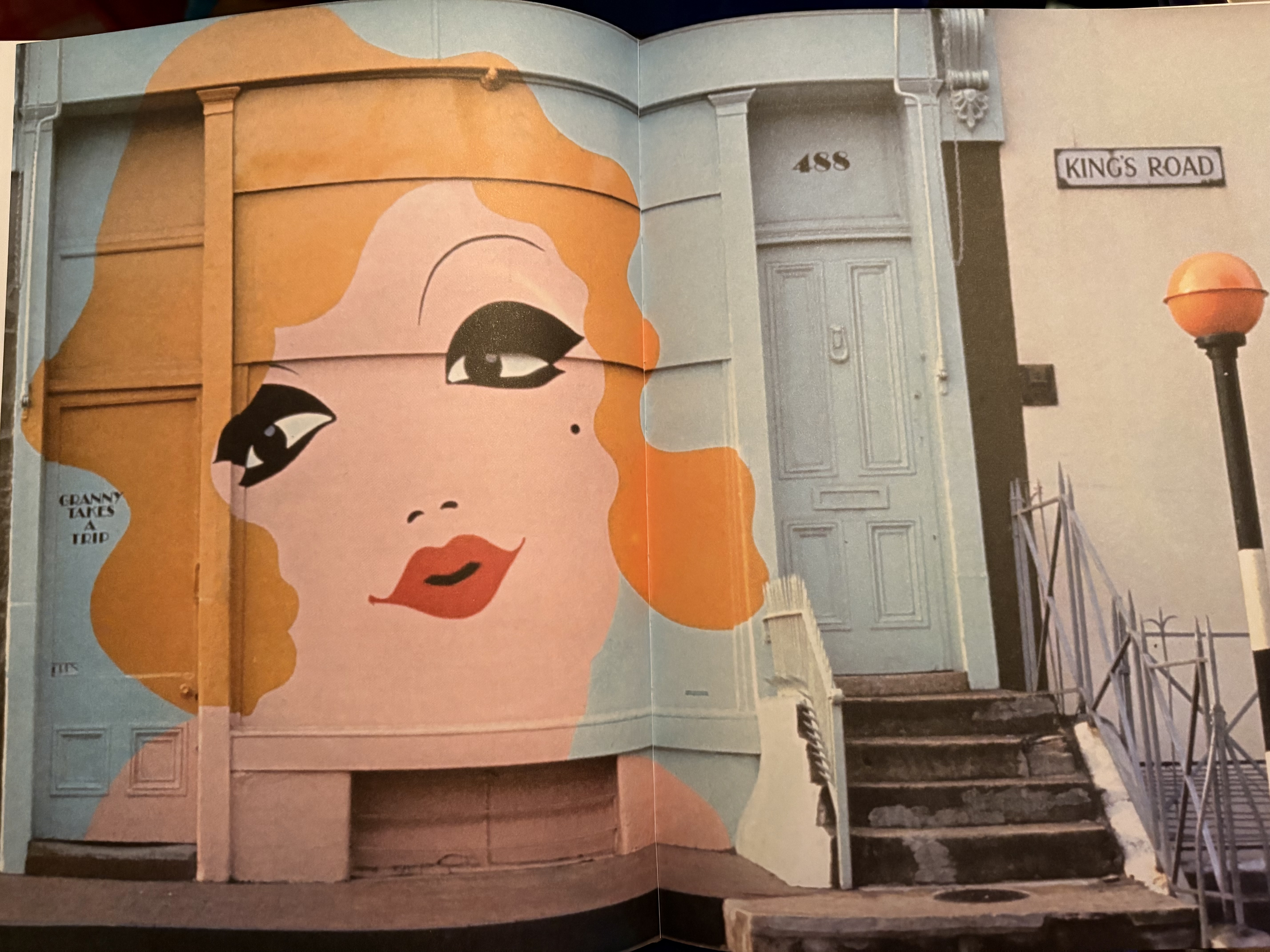
Hung on You opened at 22 Cale Street, north of the King’s Road in Chelsea Green, in 1965, followed a few months later by the arrival of Granny Takes a Trip, located 15 minutes’ walk away (or rather less by Mini-Moke) at 488 King’s Road, in the then-unfavoured bit known as World’s End. Between them, at a time of rapid change and amid a prevailing mood of exhilaration, they redefined the way fashionable young men dressed.

It wasn’t always for the better. Cast an eye over Gered Mankowitz’s photographs of the Rolling Stones from 1964/65 and you’ll find a look — reefer jackets, tab-collar shirts, maybe a leather waistcoat, straight elephant-cord trousers, Cuban-heeled boots — that seems immaculate today. Examine the same band a year or two later, and the Afghan coats, velvet flares, silk scarves and floral or satin shirts with long collars and puffed sleeves look amusing but hopelessly dated. What had happened was that they’d discovered Granny’s and Hung on You. So had the Beatles.

Dozens more rock stars flocked in their wake. Two days before he died, in September 1970, Jimi Hendrix visited Granny’s to place an order for suits, shirts, trousers and boots. By then, alas, the bloom had gone off what had once seemed so original.

Those two shops — and a handful of others, like Alkasura and Dandie Fashions, also on the King’s Road — had caught a pivotal moment in the metamorphosis from mod to hippie, from restraint to excess. Trends are often at their most interesting when they’re in transition, when (as Gramsci put it) the old is dying and the new is struggling to be born. As with everything, success attracts exploitation. And then it goes too far.

How it started, and how it ended, is chronicled with great thoroughness in Paul Gorman’s Granny Takes a Trip, subtitled “High Fashion and High Times at the Wildest Rock ‘n’ Roll Boutique”. Gorman tells the story well, with plenty of first-hand testimony from the survivors and a lot of illustrations — clothes, shopfronts, magazine and newspaper cuttings — but by the time I’d finished it, I felt it was one of the saddest books I’ve ever read.

Sixty years ago I lusted after some of the earliest clothes produced by Nigel Waymouth, Sheila Cohen and John Pearse at Granny’s and particularly by Michael Rainey and Jane Ormsby-Gore at Hung on You, often modelled in Men in Vogue or Town magazine by young exquisites such as the antiques dealer Christopher Gibbs and the interior designer David Mlinaric. Sadly, 100-odd miles and a suitable income away from the King’s Road, that lust was destined to remain unrequited.

While Hung on You faded out at the end of the ’60s, Granny’s — where the front end of Pearse’s 1948 Buick pick-up had been sawn off and painted yellow to form a late version of the ever-changing shopfront — was taken over by a man named Freddie Hornick, whose big plans eventually included branches in New York and Los Angeles. Rock stars continued to shop there, but Rod Stewart in a leopard-print suit, Elton John in zebra stripes and Todd Rundgren in a suit embroidered with harebells were no longer even cool, never mind at fashion’s leading edge.

For too many of the participants, the bright beginnings were eaten away by drugs. The body-count in the second half of Gorman’s narrative is horrendous, making it hard to recreate the sense of euphoria and optimism once generated by the sight of a perfect double-breasted velvet jacket like the one from Hung on You worn by George Harrison on the back cover of Revolver in 1966.

Among the survivors is John Pearse, still making beautiful clothes at his premises on Meard Street in Soho. About 10 years ago I gathered together all my pocket money and bought a plain dark blue double breasted jacket from him. It seemed like a homage, however belated, to a year or two when the air seemed filled with the intoxicating scent of something new and good.

* Paul Gorman’s Granny Takes a Trip is published by White Rabbit (£40). The photograph of the façade of Granny’s in 1967 is from the book and was taken by David Graves.

‘Sue me if I play it wrong…’**

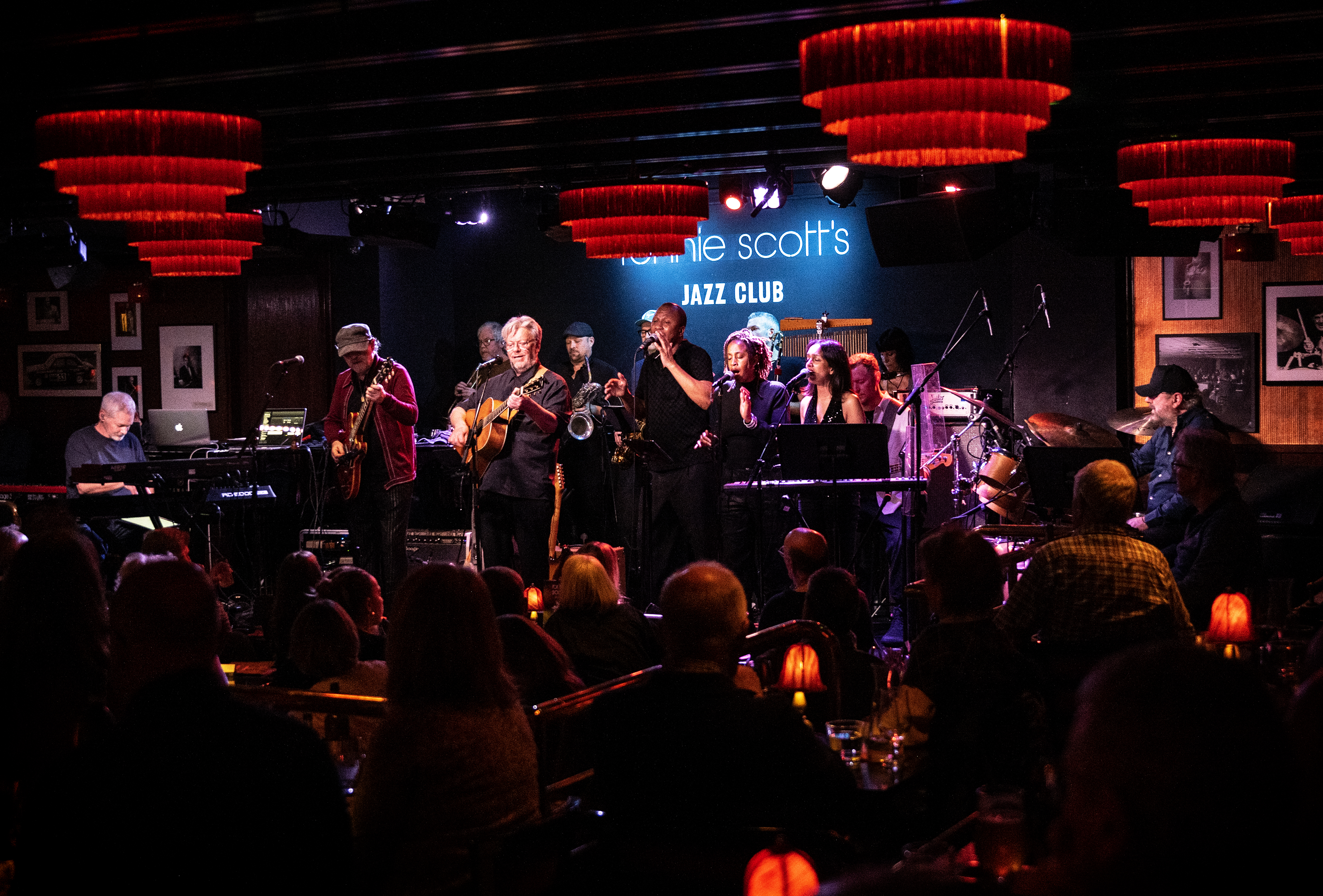
Within a very short time last night, it was apparent that my pal Martin Colyer and I were probably the only people in a packed Ronnie Scott’s who were seeing the night’s featured attraction for the first time. The enthusiasm aroused by the Royal Scammers’ versions of the Steely Dan repertoire, from the opening “Night by Night” to the closing “Aja”, was so warm and immediate that it could only have come from committed fans.

Fans of the compositions of Donald Fagen and Walter Becker, of course, but also of the 14-piece band formed by the twin Stacey brothers, Paul on lead guitar and Jeremy on drums, with two clear intentions: to pay homage to the source and to have a lot of fun in the process. It was the way every member of the band seemed to buy into those ideas that made the whole thing fly, for the musicians and the audience alike.

Let’s name them all now, these people charged with summoning the spirits not only of Fagen and Becker but of their cadre of great session musicians: Andy Caine (vocals, rhythm guitar), Sumudu Jayatilaka (backing vocals, keyboard, tambourine), Louise Marshall, Bryan Chambers (backing vocals), Dominic Glover (trumpet), Trevor Mires (trombone), Andy Ross (tenor saxophone), Jim Hunt (tenor and baritone saxophones), Dave Arch, Gary Sanctuary (keyboards), Robin Mullarkey (bass guitar) and Pete Eckford (percussion). I was amused to see that they lined up across the stage at Ronnie’s in exactly the way the actual Steely Dan did/do, as seen on the cover of Northeast Corridor, their 2021 live album.

I’ve mentioned before that I’m allergic to tributes and recreations, but there are exceptions. And sometimes a literal recreation is the only way to go. I mean, are you going to come up with anything better than Wayne Shorter’s astonishing tenor improvisation on “Aja”? Jim Hunt played it note for note, and it was beautiful. Ditto Pete Christlieb’s tenor solo on “Deacon Blues”, replicated by Andy Ross. As much as the precision, it depends on the intention and the emotion with which it’s done.

Interestingly, when the “real” Steely Dan play “Aja” now, Walt Weiskopf, their excellent tenorist, is allowed free rein to make up his own solo in the space once occupied by Shorter. But I don’t think that’s what required from the Royal Scammers. The first improvised solo I ever learnt off by heart was by the cornetist Bobby Hackett on Glenn Miller’s 1941 Bluebird recording of “String of Pearls”; if I went to see a modern Miller tribute band today and the cornetist didn’t reproduce Hackett’s improvisation note for note, I’d feel cheated. On the other hand, when the American band known as Mostly Other People Do the Killing saw fit to record an exact replica of Kind of Blue a few years ago, as a post-modern gesture, it felt like an insult — to the original and its creators, to the listener, and to the spirit of the music itself.

The spirit of Steely Dan was certainly alive and flourishing at Ronnie Scott’s last night, in a setting of wonderful musicianship. Andy Caine, facing the challenge of assuming Fagen’s voice, took two or three songs to warm up but then sang brilliantly, giving full value to two of my favourite couplets: “I cried when I wrote this song / Sue me if I play it wrong”** (“Deacon Blues”) and “Chinese music always sets me free / Angular banjos sound good to me” (“Aja”).

There spirited renderings of early songs like “Reelin’ in the Years” and “Rikki Don’t Lose that Number”, less obvious ones like “Night by Night” and “Pretzel Logic”, and ones with sudden fiendish modulations like “Green Earrings”. Wherever the original ended in a studio fadeout, the Staceys devised an interesting and wholly fitting coda.

There were also four great songs from Gaucho: “Babylon Sisters”, the always strangely spinetingling “Hey Nineteen”, “Time Out of Mind” and the title track, which actually improved on the original by subtly dialling up the mariachi inflection in the horns. The three backing singers delivered the chorus bit of “Gaucho” with such thrilling intensity that I noticed Martin spontaneously applauding not just on the first iteration but the reprise: “Who is the gaucho, amigo? / Why is he standing in your spangled leather poncho / And your elevator shoes? / Bodacious cowboys such as your friend will never be welcome here / High in the Custerdome.”

It occurred to me that tributes and recreations work where the original template is mostly established, i.e. composed. Ellington’s music can continue to be performed successfully because, although he wrote for his soloists, the settings were fixed. It’s the same with Fagen and Becker. You can play around quite happily with their wonderfully inventive, literate, cryptic and infernally catchy songs (as Chris Ingham does with his quintet) but you can also decide that playing them as written is the best homage. Which is what the Royal Scammers do, quite brilliantly.

* The Royal Scammers play two shows tonight and tomorrow and one on Sunday at Ronnie Scott’s. All are sold out. The photograph was taken last night by Tatiana Gorilovsky.

** This is not the correct lyric (see Comments). But it’s how I heard it 48 years ago and it’s how I hear it still. Yes, I’m wrong, but — sorry, Walt & Don — I prefer my version.

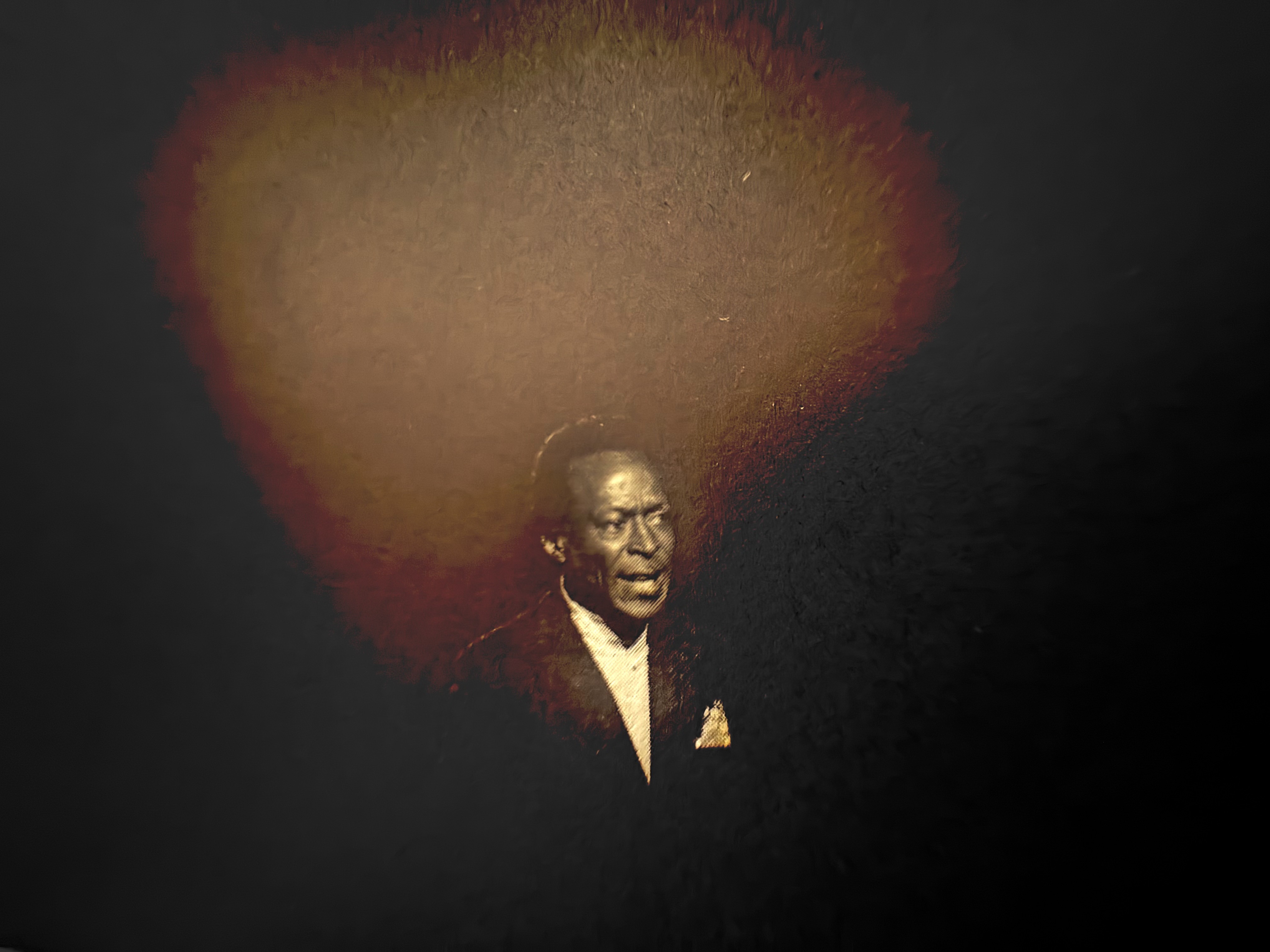
Miles at the Plugged Nickel

Sixty years ago, in the week before Christmas 1965, Teo Macero recorded the Miles Davis Quintet over two nights at a club called the Plugged Nickel on North Wells Street in Chicago’s Old Town district, nowadays known as the Near North Side. That December it was 15 months since Wayne Shorter had become the group’s tenor saxophonist, joining the pianist Herbie Hancock, the bassist Ron Carter and the drummer Tony Williams to complete what would be known as Davis’s Second Great Quintet.

Extracts from those evenings were released on a couple of LPs in Japan in 1976, and then worldwide in 1982, but it wasn’t until the 30th anniversary, in 1995, that everything from the two nights — three sets from the first night, four from the second, seven and a half hours of music in all — was packaged into a slipcased seven-CD box. Which was when it became clear how important a place it occupied not just in Davis’s discography but in the history of jazz. Now, after many years in which used copies of the set fetched extraordinary prices, it has been restored to general availability.

No jazz group has ever taken the use of pre-existing formats (head arrangements, soloist and rhythm) and materials (composed melodies, chord or modes, rhythms) to such heights of sophistication and simultaneous invention. Ambition was one factor. Davis wanted, as usual, to stay ahead of the competition, and these four young musicians (Williams had left his teens only 10 days earlier) provided not just the fuel but the fire. In return, he set them free. They could go anywhere they wanted. What mattered was that everything they played was the result of listening and responding, not just of moving with the currents but setting up crosscurrents and rip tides and making radical choices between them.

It worked because they were all virtuosi, all innovators, all repositories of the jazz history of their instruments but intent on taking the next step. Where that step took them was to the ultimate iteration of the evolution of small-combo jazz as it had been known for half a century. In their four years together, they achieved something that, in its field, would never be bettered.

Which is not to say, of course, that jazz finished when their work was done. It took on new forms and new challenges, and it remains a living and vital force, existing in dimensions undreamt of 50 years ago. But on these discs you hear the ideal of five musicians moving independently and yet as one, colliding and diverging, slowing down or speeding up, switching the mood in an instant, from the playful to the bone-deep serious, conveying such a remarkable sense of space even when they seem to be jostling and provoking. There is no coasting here: every note counts, wherever it sits in the plan.

The tunes are familiar: “If I Were a Bell”, “Stella by Starlight”, “Walkin'”, “I Fall in Love Too Easily”, “My Funny Valentine”, “Four”, “When I Fall in Love”, “Agitation”, “Round Midnight”, “Milestones”, “The Theme”, “On Green Dolphin Street”, “So What”, “Autumn Leaves”, “All Blues”, “Yesterdays”. For fans of pre-electric Miles, that would surely be pretty close to a perfect programme. You hardly notice the breaks between the tunes: it’s like one unbroken journey.

This is a club date, so you get little snatches of incidental conversation and the occasional bit of vocal encouragement. There actually seems to be an argument going on, perhaps at the bar, during the first night’s beautifully pensive version of “When I Fall in Love”; a burst of random applause during the piano solo may be signalling the departure of one of the disputants. That’s OK by me. It’s a reminder that this isn’t a studio session in which the musicians knew they were laying down something destined to become an artefact. Or a formal concert, with a audience seated in rows and a measure of self-consciouness on either side of the footlights.

They were, in the very best sense, making it up as they went along: creating music on the fly, discovering themselves, testing the limits, exploring the music’s inherent elasticity, living on the leading edge, leaning way over it with no safety net, and exhibiting the ultimate in the improviser’s ideal of relaxed concentration. Pure exhilaration, then and now, from start to finish, and utterly essential.

* The Complete Miles Davis Live at the Plugged Nickel is reissued by Columbia Records, the same music now reformatted on eight CDs, with new packaging — individual cardboard sleeves rather than jewel cases — at around £69. The uncredited photo is from the original brochure.