Skip to content

Archive for

Voces humanae

Amazing, isn’t it, that even in this Tower of Babel an individual human voice can be unmistakeable. Mavis Staples sounds like Mavis Staples. Boz Scaggs sounds like Boz Scaggs. No one else. And over the decades those voices become trusted friends. Each of them has a new album out that suggests, as they head towards the inevitable end of long careers (Mavis is 86, Boz is 81), that they could never outstay their welcome.

After albums with Ry Cooder, Jeff Tweedy and Ben Harper in the producer’s chair, it’s the turn of Brad Cook, whose credits include Bon Iver and Nathaniel Rateliff and the Night Sweats, to supervise Mavis’s new album. He doesn’t let her down.

The song selection on Sad and Beautiful World is thoughtful and empathetic, starting with the conscious boogie-shuffle of Tom Waits and Kathleen Brennan’s “Chicago” and proceeding through Gillian Welch and David Rawlings’ “Hard Times”, Curtis Mayfield’s “We Got to Have Peace” and Leonard Cohen’s “Anthem” to Eddie Hinton’s “Everybody Needs Love” via material less familiar to me. The most striking of those is Frank Ocean and James Ho’s “Godspeed”, set in a dense instrumental weave that summons all the best elements of Americana into one perfect arrangement.

There’s no showing off by the many fine players involved on the 10 tracks, but I love Derek Trucks’ beautiful slide guitar decorating “Hard Times” and the glinting pedal steel of Colin Croom on “A Satisfied Mind”, the gorgeous country song by Red Hayes and Jack Rhodes, whose many cover versions go back to 1954 and Mahalia Jackson — perhaps the exemplar Mavis had in mind. And to take us out, there’s a backing choir on “Everybody Needs Love” consisting of Bonnie Raitt, Patterson Hood, Kate Crutchfield and Nathaniel Rateliff. Everybody loves Mavis, don’t they?

For Detour, Boz Scaggs returns to the sort of American standards he investigated on But Beautiful in 2003 and Speak Low in 2008, although it sells a dummy straight away by opening with a night-club version of Allen Toussaint’s “It”s Raining” before settling into the likes of “Angel Eyes”, “The Very Thought of You” and “We’ll Be Together Again”. After the very fine arrangements by Gil Goldstein that helped make Speak Low such a success, here Scaggs favours the more stripped-back setting of a piano trio with the lightest touches of string arrangements here and there.

OK, you could say that his “Angel Eyes” and “Once I Loved” don’t match those of, say, Sinatra and Shirley Horn respectively, but if you like Scaggs’ voice as much as I do, you won’t be worried by that — and you’ll be delighted to hear him excavate “I’ll Be Long Gone”, a waltz-time song from his very first solo album back in 1969, refurbishing it with a deeper, richer, more controlled approach.

Sometimes these American Songbook projects work (Bob Dylan) and sometimes they don’t (Rod Stewart), their success largely dependent on what their significance is to the singers and how much real appreciation they have of the art of the men wrote the melodies and lyrics. I don’t think there’s much doubt on which side of the divide Boz Scaggs falls.

Twang. Thump. Crash. More twang.

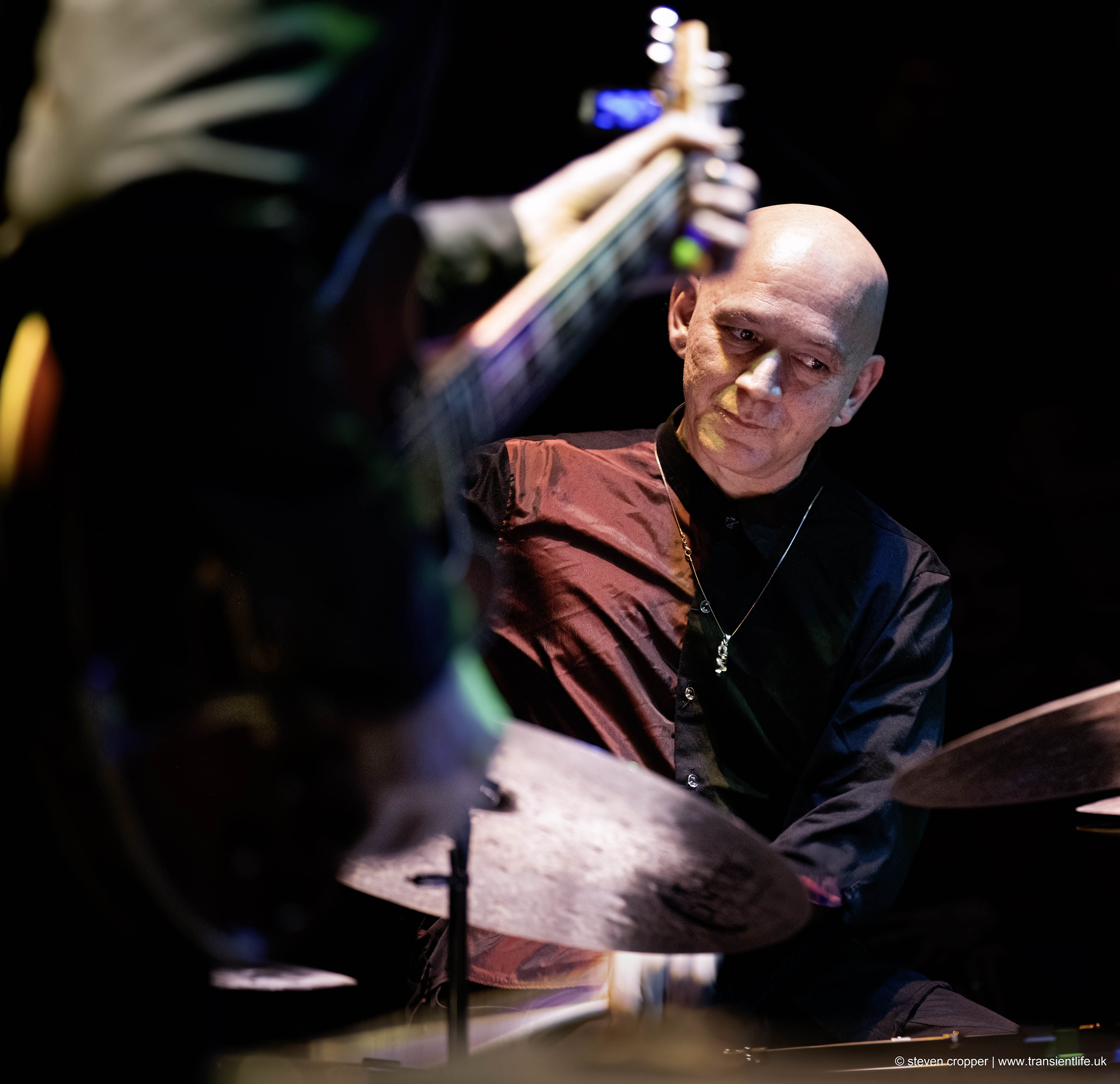
Finding Ways is the name of the drummer/composer Seb Rochford’s new band. It’s also the title of their debut album, which they played at the Cockpit Theatre in north-west London last night, as part of the Jazz in the Round series. It was one of the events featured on the closing night of the 2025 EFG London Jazz Festival, and I couldn’t imagine a happier way of ending the 10-day programme.

Rochford has made some intriguing choices in his career, but probably none more surprising than this. Finding Ways is a guitar-instrumental band: three guitarists, to be precise, plus bass guitar and drums. I don’t think I’ve seen such a line-up live since an early incarnation of Fleetwood Mac with Peter Green, Danny Kirwan and Jeremy Spencer back In 1968. Or at least not one so memorable.

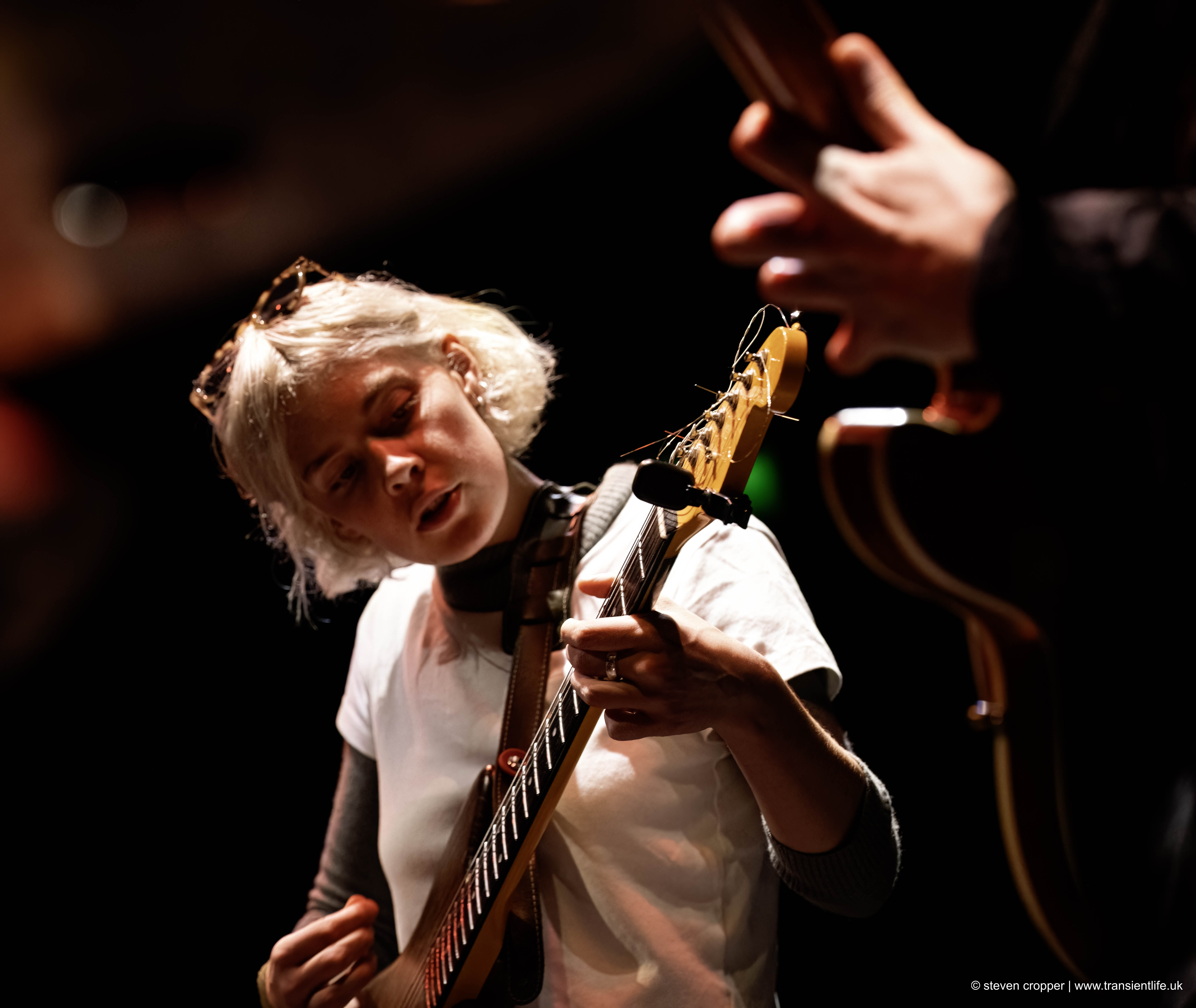
Last night’s guitarists were David Preston, Tara Cunningham and Matt Hurley, joined by Anders Christensen on bass guitar. One thing that stuck out straight away was the absence of pedal boards or other effects. No wah-wahs, no phasing, no tremolo arms. This, apparently, was at Rochford’s insistence. So what we heard was three versions of the sort of sound you made when you got your first electric guitar, hit an E major chord and then looked for a way to make the strings twang. A sound with innocence intact. And an interesting approach to apply to three very sophisticated players.

So what was the result? Surf music in space, maybe. The Ventures or Dick Dale and the Del-Tones with Derek Bailey or Sonny Sharrock sitting in. Rochford’s tunes for this line-up are sometimes based on simple two-bar chord modules reminiscent of the twangtastic “Walk, Don’t Run” or “Misirlou” (and occasionally finding beguiling elaborations of the format, as on the soaring “People Say Stuff, Don’t Be Disheartened”). Also springing to mind: the free-form guitar conversations of Jerry Garcia and Bob Weir in the Grateful Dead and of Tom Verlaine and Richard Lloyd in Television: “Dark Star” or “Marquee Moon” but with different perspectives.

It was great to see the band in this environment, arranged in a circle, the musicians locked into each other, watching for cues, tidying up small errors but letting rough edges show as they exploited the spaces left for spontaneity within the structures. Furiously loud in some places (driven by Rochford’s brutal energy), it was surprisingly lyrical in others; I don’t think I’ve ever heard three electric guitars played as softly as in the filigreed three-way conversation between Cunningham, Hurley and Preston that formed the delightfully unexpected coda to “Community”, which had started out as a reggae piece.

In this intimate setting, the musicians’ very visible sharing of their pleasure extended to the audience and was washed back in return. They were having fun, and so were we.

* Finding Ways is out now on Edition Records. The photos of Sebastian Rochford and Tara Cunningham at the Cockpit were taken by Steven Cropper and are used by kind permission.

Tom Skinner at the QEH

The trouble with the EFG London Jazz Festival is that it’s all too much. Given 300 gigs in 10 days, there’s always going to be something you regret missing. Last night I badly wanted to hear the Weather Station — the marvellous Canadian singer-songwriter Tamara Lindeman — with a string quartet at EartH in Dalston. But I also wanted to hear the drummer-composer Tom Skinner and his band perform their new album, Kaleidoscopic Visions, at the Queen Elizabeth Hall. I’d seen the Weather Station in Islington at the start of this year. I hadn’t seen Skinner since 2022. So that’s how my decision was made.

In the end, any regrets were overwhelmed by events. Skinner and his six colleagues — Chelsea Carmichael (flute and tenor saxophone), Robert Stillman (soprano and tenor saxophones), Yaffra (keyboards, voice and percussion), Adrian Utley (guitar), Kareem Dayes (cello) and Caius Williams (bass) — started the concert with watchful discretion. But over the course of 90 minutes they built the music until it had become a living, pulsing thing, full of narratives, individual and collective.

Skinner writes deceptively simple, sometimes folk-like melodies that exist in essential dialogue with the riffs and other figures devised to help form a unified matrix. The textures are airy, with room for light and shade. (That’s a reflection of his superbly flexible drumming, in which power is used with restraint.) There are solos on top of prepared accompaniment — those from Utley and Carmichael, cutting loose on tenor, were quite remarkable — but often the improvising is done in small groupings.

A string trio of Williams’s bowed bass, Dayes’ pizzicato cello and the guitar of Utley, making use of sustain and the volume pedal to eliminate attack, was beautifully realised, as was an unaccompanied tenor saxophone duet by Stillman and Carmichael. I’d been listening to their spontaneous interlocking pointilliste figures for a couple of minutes before I realised that the dialogue sounded like a solo tenor improvisation by Evan Parker, its components broken down and distributed between the two players to create an actual version of the conversation that Parker’s playing often resembles. And there was also a real conversation between Skinner and Yaffra, who moved from his keyboards to play a pair of tom-toms with tympani beaters, the two of them sending a gentle thunder rolling around the hall.

I wrote with some enthusiasm about the album a few weeks ago, but the concert did what concerts should do: it warmed the blood in the music’s veins, allowing it to grow. I’d have been very sad to miss it. Now I hope Skinner follows the practice he established with his earlier project, Voices of Bishara, and releases the live version of Kaleidoscopic Visions. Last night’s, if possible.

In the Unreal City

Snow fell in London yesterday morning. It seemed the right sort of day for a performance of T. S. Eliot’s The Waste Land at the Queen Elizabeth Hall. Although the poem contains all kinds of weather in all kinds of places, from the cracked earth of endless plains to thunder in the mountains and a summer shower on a Bavarian lake, taking the short walk from Waterloo station in a cold and dark London (the poet’s “Unreal City”) was like strolling straight into its heart.

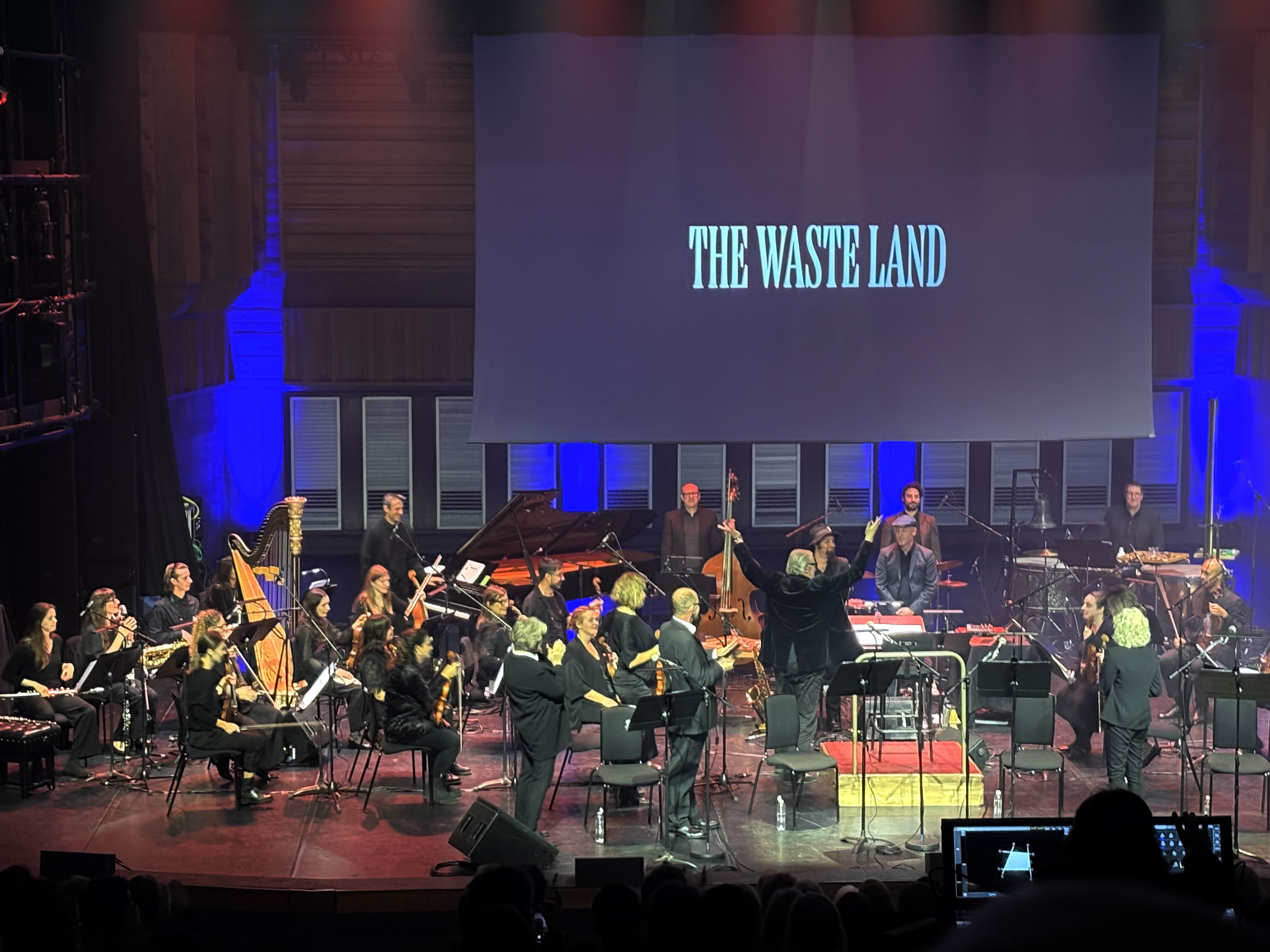
Mounted as part of the EFG London Jazz Festival, the performance offered an expanded version of the treatment commissioned 10 years ago by the Beckett festival in Enniskillen from the Irish actor Adrian Dunbar. With the permission of the famously strict Eliot estate, Dunbar was able to devise an arrangement of the poem for four actors (two women and two men) plus a jazz quintet playing music by the saxophonist and composer Nick Roth.

I was 15 when an English teacher named Keith Yorke took us through The Waste Land, decoding its mysteries. I could never thank him enough. Dunbar, introducing last night’s performance, in which the quintet was augmented by a 25-piece orchestra, said he had encountered it while studying at the Guildhall School of Music and Drama 40 years ago; clearly, its impact on him was similarly profound. My previous experience of a live performance of the poem was the actress Fiona Shaw reciting it from memory beneath a single bare lightbulb on stage at the historic Wilton’s Music Hall in the East End on New Year’s Eve, 1998. In my eyes, that gave Dunbar and his crew a lot to live up to.

The readers were Anna Nygh, Orla Charlton, Frank McCusker and Stanley Townsend. Dunbar divided the lines between them, as appropriate to Eliot’s shifting cast of characters. Passages were rendered with German, Irish, American and Cockney accents. I was worried to begin that it might all seem a bit contrived, a bit stagey. That unease evaporated within a few minutes. The polyphony of the reading brought a different kind of life to an already highly polyphonic poem.

Ross’s music was used as an overture and as interludes between the five episodes. The overture, scored for the Guildhall Sessions Orchestra, evoked the European modernist classical music of the inter-war years: bold gestures, hints of dissonance. The first interlude had a ragtime flavour (“that Shakespeherian Rag… so elegant… so intelligent”). For the second, the quintet — Alex Bonney (trumpet), Roth (saxophones), Alex Hawkins (piano), Oli Hayhurst (bass) and Simon Roth (drums) — brilliantly created something that sounded like one of Charles Mingus’s bands paying homage to the pre-war Ellington small groups, or possibly vice versa. The third found the group moving towards free jazz, with Hawkins flailing the keyboard à la Cecil Taylor. The fourth exploited Bonney’s expert manipulation of electronic sound. Did that chronological progression echo something buried within the text? If certainly added a new perspective and a contemporaneity.

Nothing will ever dim the memory of Shaw’s spellbindingly majestic recitation, but Dunbar’s gamble paid off. The drama intensified until, by the time the closing lines of the fifth and final section were reached — “These fragments have I shored against my ruins / Why then Ile fit you / Hieronymo’s mad againe / Datta. Dayadhvam. Damyata. / Shantih shantih shantih” — the words and sounds had transformed the climate of a well-warmed hall and I felt a shiver run through me.

Mulatu Astatke says goodbye

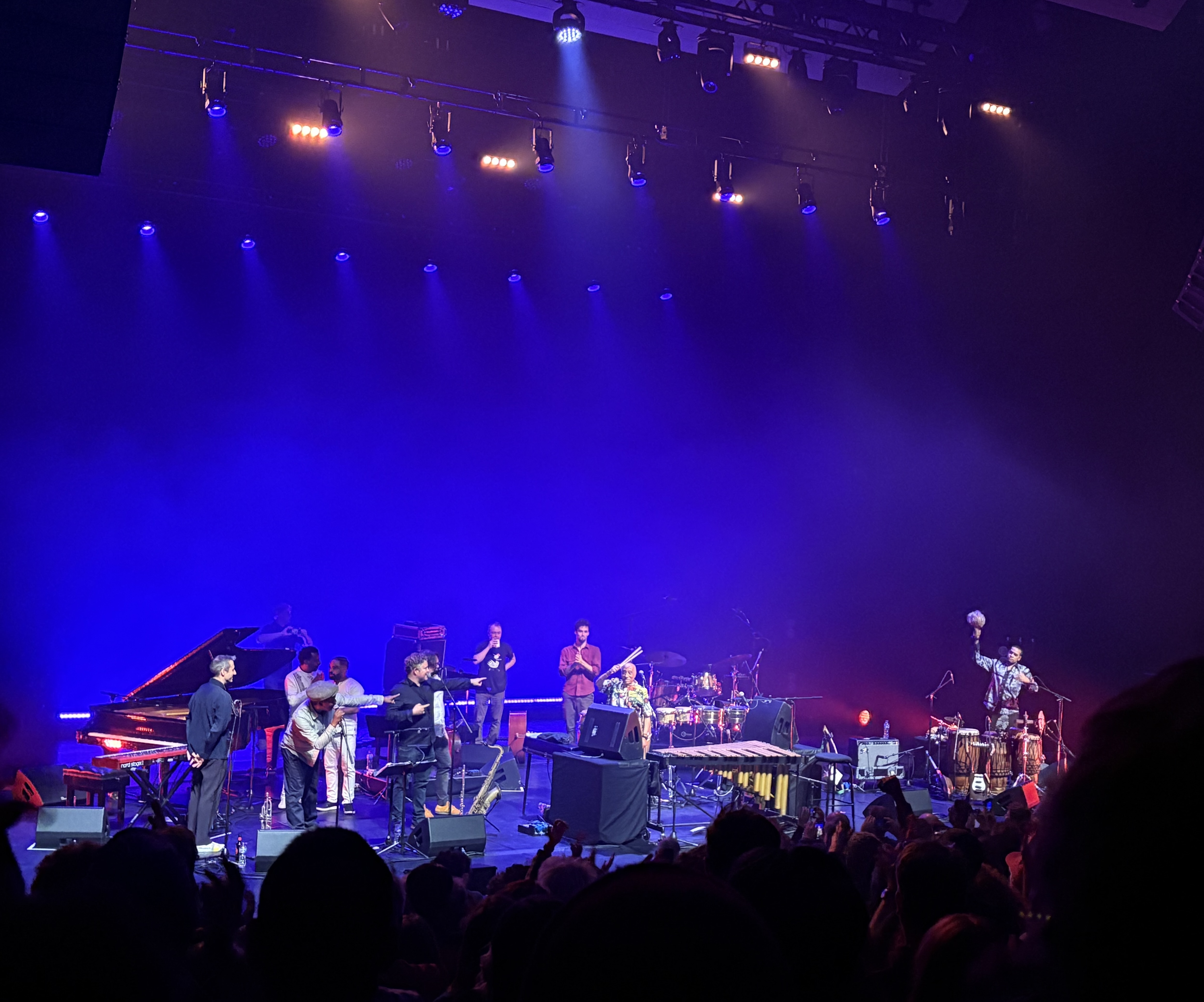
A month shy of his 82nd birthday, Mulatu Astatke brought his farewell tour to a close with two sold-out dates at the start of the EFG London Jazz Festival this week. I went to the first of them, at the Royal Festival Hall, to celebrate the work of the man generally credited with the creation of “Ethio-jazz”.

It takes more than one person to create a genre, but Astatke, who left Ethiopia as a teenager in the late 1950s to study vibraphone, his main instrument, and composition at Trinity College in London and Berklee College in Boston, was certainly a catalyst. He began making records in the US in the 1960s before returning to Ethiopia, where conditions changed after the takeover by a military junta in 1975, restricted Addis Ababa’s lively creative scene. He already had a large hipster following when the use of his music in Jim Jarmusch’s Broken Flowers in 2005 expanded his audience considerably.

On Sunday night he began the concert with Steps Ahead, his seven-piece European band, including such familiar figures as the trumpeter Byron Wallen, the pianist Alexander Hawkins and the double bassist John Edwards. The first half of the 90-minute set featured some of the compositions revived for a recently released album, Mulatu Plays Mulatu, including “Yekermo Sew”, with strong echoes of Horace Silver, and “The Way to Nice”, which plays a game with the James Bond riff. This music sounds like early-’60s hard bop filtered through Ethiopian modes and intonation, infusing it with as distinctive a flavour as the Skatellites and the Blue Notes imparted to similar material in Jamaica and South Africa respectively.

I was struck by the use of Danny Keane’s cello, sometimes strummed like a rhythm instrument, at other times interjecting short percussive phrases with a dry tone, and often combining to powerful effect with Edwards’ bass. It was intriguing to hear Edwards, Hawkins and the saxophonist James Arben delivering solos using the language of free jazz in the context of this mostly riff-based music, and receiving ovations for their efforts. While Astatke was spinning out his mellifluous extended vibes solos over the deep groove provided by the kit drummer, Jon Scott, and the percussionist, Richard Olatunde Baker, on something like “Netsanet”, I felt perfectly contented.

For the second half of the set, the band was joined by two dancers, a man and a woman, and two more musicians, playing the masengo, a single-stringed bowed lute, and the krar, a six-stringed lute. This was more of a folkloric experience, inviting the sort of mass participation that can seem awkward in a modern western concert hall. But it would be wrong to suggest that it was not greatly enjoyed, or that Astatke was not given the warmest and most rousing of valedictory salutes.

* Mulatu Plays Mulatu is out now on the Strut label.

Young but daily growing

It was difficult to tell what song he wrote and what song he didn’t write, because sometimes I noticed that he said he wrote a song and he didn’t, and other times I thought he didn’t write a song and he did.

Those words have been in my head while listening to the eight CDs and 139 tracks of Through the Open Window, the 18th volume of Bob Dylan’s Bootleg Series, which arrived a couple of weeks ago. A quote from his boyhood friend John Bucklen, it’s a perceptive early observation about Dylan’s approach to making music: a process of listening, absorbing, blending, modifying and recombining in which borrowed and created materials become one and become new. For him, that’s been a permanent process since he first tuned in to the radio and heard Little Richard.

This new set covers his early years. It begins in 1956 with a 15-year-old schoolboy in Minnesota, taping songs with his pals, and ends in 1963, when he’s standing on the stage at Carnegie Hall, in front of a full house, a 22-year-old at the apogee of his first incarnation, feeling the warm glow of real fame.

I don’t know whether or not it’s the “best” volume of the series to date, but it certainly fills me with a powerful set of emotions. While listening to it, I sent an old friend a message saying that it made me realise how lucky I’d been to live my life alongside his. I’m six years younger than Dylan, so I was 16 when I first heard Freewheelin’ in 1963; for members of my generation who discovered him early, he’s been a unique kind of companion, and still is. Through the Open Window does a good job of showing how that came about.

Over about eight hours, we see continuous progression, evolution, growth. We hear Dylan honing his art as an interpreter of the hellhound-haunted blues (a clenched “Baby Please Don’t Go”, “Fixin’ to Die”, “See That My Grave Is Kept Clean”), hooking his young boho audiences with protest ballads based on specific stories (the incendiary “Emmett Till”, the rousing “Davey Moore”, the plodding “Donald White”), playing harmonica with blues elders Victoria Spivey and Big Joe Williams on Spivey’s album Three Kings and a Queen, practising singing in an older person’s voice and inhabiting traditional material with an astonishing level of empathy (“Young But Daily Growing”, “House Carpenter”, “Moonshiner”, the transcendent 1962 Gaslight version of “Barbara Allen”), and carefully building his own legend (“Bob Dylan’s Blues”, “Bob Dylan’s Dream”, “Bob Dylan’s New York Rag”).

You hear how the droning blues jams — and perhaps the influence of John Lee Hooker, with whom he shared the bill at his first significant New York booking, at Gerdes Folk City in April 1961 — inform a certain strand of songs he soon began to write: “The Ballad of Hollis Brown”, “North Country Blues”, “Masters of War”. Songs about bleak, blasted landscapes, both external and internal. When I listened to those songs in 1963-64, I’m sure that somewhere in my mind I was making a connection with what John Coltrane was doing at the same time. Not a literal connection; something beyond that, to do with stretching structures to fit the times we were living in. A year later, and just beyond the time-frame of this set, that strand of songwriting would lead Dylan to the unsurpassable achievement of “It’s Alright, Ma (I’m Only Bleeding)”.

All this comes through loud and clear on a set thoughtfully assembled by the writer Sean Wilentz (who contributes an impeccable essay to the accompanying hardback book) and the veteran producer Steve Berkowitz, particularly in the performances recorded in friends’ homes and small clubs. We hear Dylan trying things out: using humour to beguile his listeners, sometimes telling tall stories to embellish his myth but also unafraid to acknowledge his sources. Introducing “Tomorrow Is a Long Time” — still a work in progress — into a tape recorder at the home of his friend Dave Whitaker in Minneapolis in August 1962, he seems to drop his guard: “My girlfriend, she’s in Europe right now, she’s sailed on a boat over there and she’ll be back September 1st, but till she’s back I never go home and it gets kind of bad sometimes. Sometimes ir gets bad, most times it’s doesn’t. But I wrote this specially thinking about that.”

Suze Rotolo, the “girlfriend” in question, is a presence in many of these songs. She was also an unheard presence in the tender version of “Handsome Molly” recorded at Riverside Church on the Saturday afternoon in July 1961, which is when they first met (“He comes from Gallup, New Mexico,” the MC tell us). The accompanying book contains some lovely outtakes from Don Hunstein’s Freewheelin’ cover shoot in the snow on Jones Street to go with the outtakes from the recording sessions; an astounding “Ramblin’ Gamblin’ Willie” seems to be setting him off on the path that led a dozen years later to “Lily, Rosemary and the Jack of Hearts”.

A few of the selections are notable more for their historical interest than their musical value, which is fine. They’d include the very first track, a snatch of Shirley and Lee’s “Let the Good Times Roll” recorded with Bob on piano and his friends Larry Keegan and Howard Rutman joining him on vocals in a St Paul music shop in 1956; the surviving fragment of “The Ballad of the Gliding Swan” from his first visit to London in early 1963, engaged to appear in the TV play Madhouse on Castle Street for the BBC; and the versions of “Only a Pawn in Their Game” and “Blowin’ in the Wind” performed at the SNCC voter registration rally in Greenwood, Mississippi in the summer of 1963.

The live recordings include extended extracts from his most significant early New York concerts, including the poorly attended Carnegie Chapter Hall on November 4, 1961 and the sold-out Town Hall show on April 12, 1963. It all leads — and I firmly recommend listening to the set in sequence — to two CDs devoted to the complete Carnegie Hall concert of October 26, 1963, in which the dimensions of his talent are fully revealed.

He comes to the concert while putting the finishing touches to his third album, The Times They Are A-Changin’, which won’t be released for another three months. So the audience is unfamiliar with some of these songs. He hits them straight off with the title song, then “Hollis Brown”, “Boots of Spanish Leather”, “North Country Blues”. There are great new songs that won’t be officially released: “Lay Down Your Weary Tune”, “Seven Curses”, “Percy’s Song”, “Walls of Red Wing”. When he talks, he’s charming and confident and tells some funny stories and in this formal setting he achieves the kind of audience rapport he’d worked hard to establish at the Gaslight or Gerdes, drawing sympathetic laughter when he has trouble with his microphone and mid-song applause when, in “Davey Moore”, he sings about boxing being banned by the new Cuban government (temporarily, as it turned out).

And he finishes with this sequence: “With God on Our Side”, “Only a Pawn in Their Game”, “Masters of War” (that one being from Freewheelin’, of course), “The Lonesome Death of Hattie Carroll” and “When the Ship Comes In”. Just imagine hearing four of those songs for the first time in that climactic five-song fusillade of rage and revelation. The controlled intensity of his delivery comes through as powerfully as it must have done that night. It’s electrifying, even at more than 60 years’ distance.

Here are some lines he wrote as part of a long poem for the sleeve of Peter, Paul and Mary’s album In the Wind, the one that included “Don’t Think Twice, It’s Alright”, “Quit Your Lowdown Ways” and “Blowin’ in the Wind”, released in 1963:

Snow was piled up the stairs an onto the street that first winter when I laid around New York City / It was a different street then — / It was a different village — / Nobody had nothin / There was nothin t get / Instead a being drawn for money you were drawn / for other people —

It is ‘f these times I think about now — / I think back t one a them nites when the doors was locked / an maybe thirty or forty people sat as close t the stage as they could / It was another nite past one o clock an that meant that the tourists on the street couldn’t get in — / At these hours there was no tellin what was bound t happen — / Never never could the greatest prophesizor guess it — / There was not such a thing as an audience — / There was not such a thing as performers — / Everybody did somethin / An had somethin to say about somethin —

Most of all him. And it’s all here.

In memoriam

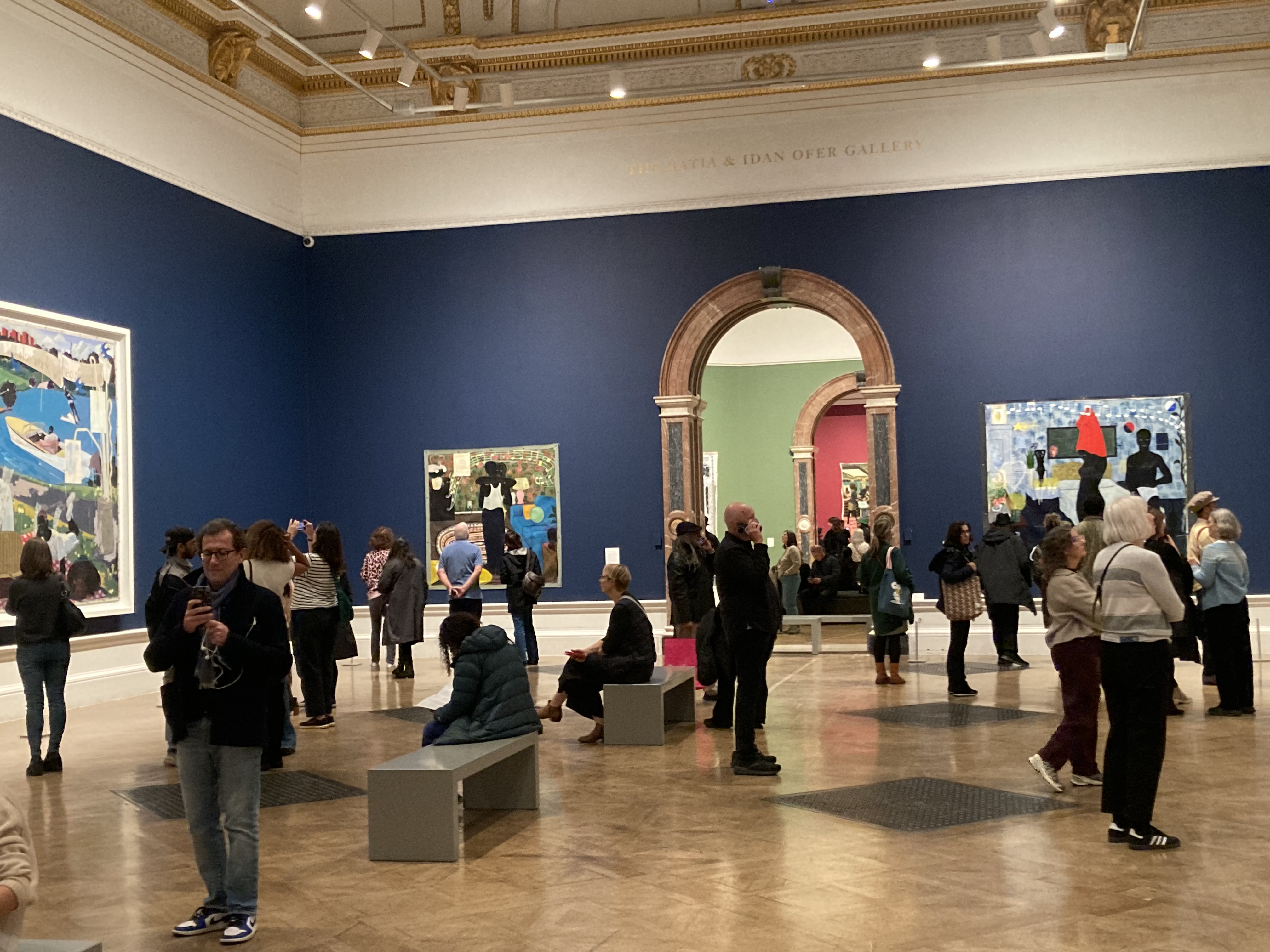
The Royal Academy’s current show of paintings by Kerry James Marshall, born in Birmingham, Alabama in 1955, is so full of colour and decoration (hard reds, electric blues, sizzling pinks, gold and silver braid), all contrasting with the fathomless black of his skin tones, that it might seem perverse to choose the most subdued piece on view. But when you examine “Souvenirs IV”, it’s not not surprising that it should have made an impact on me.

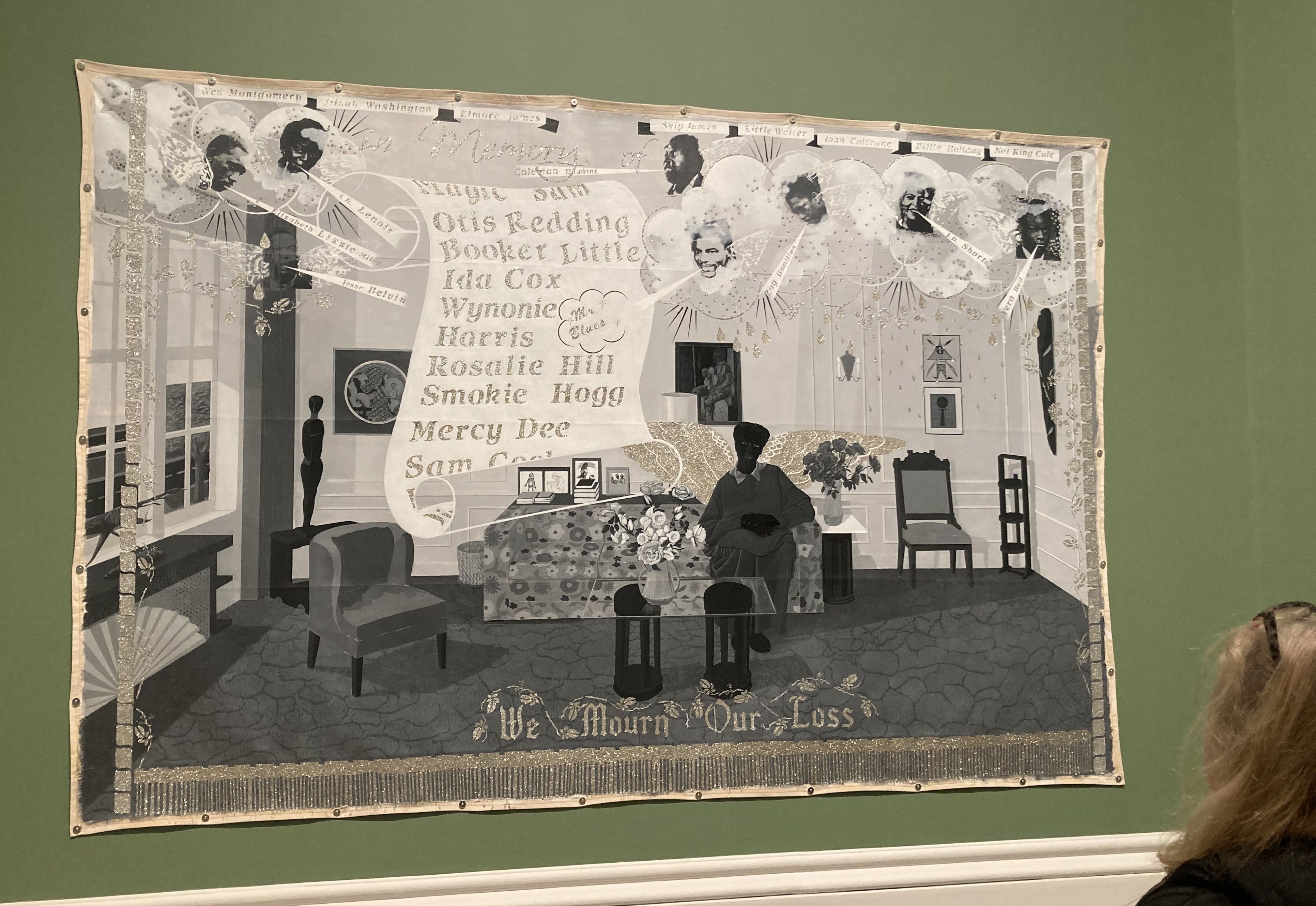
Each of the four large (13ft wide by 10ft high) works in this 1998 series occupies a wall of the octagonal room at the centre of the gallery. Executed in acrylic, glitter and screenprint on paper on tarpaulin, attached to the walls by visible grommets, they are memorials to dead heroes, their domestic settings subtly adorned with African symbols. Three of them feature Martin Luther King, Jack and Bobby Kennedy, and a variety of political and literary figures from black history. But “Souvenirs IV”, painted in grisaille, is dedicated to music, and includes some interesting figures.

Across the top we see the names of Wes Montgomery, Dinah Washington, Elmore James, Skip James, Little Walter, John Coltrane, Billie Holiday and Nat King Cole. Beneath the frieze of those names are their pictures, each with a kind of speech trumpet giving the name of another musician: Jesse Belvin, Lizzie Miles, J. B. Lenoir, Coleman Hawkins, Roy Hamilton, J. D. Short, Vera Hall. And streaming down the centre of the painting is a banner containing more names: Magic Sam, Otis Redding, Booker Little, Ida Cox, Wynonie Harris, Rosalie Hill, Smokie (sic) Hogg, Mercy Dee (Walton), Sam Cooke.

What a very intriguing selection, running from country blues and Chicago blues through gospel, R&B and soul to jazz from New Orleans to the avant-garde. As well as the obvious greats, some of my long-time lesser-known favourites are there: Lenoir, Belvin, Little. There are others I’ll have to look into. One is Lizzie Miles (1895-1963), born Elizabeth Landreaux in New Orleans, who sang with Freddie Keppard and visited Europe in the 1920s, performed throughout the US with Paul Barbarin, Fats Waller and George Lewis, and retired from secular music in 1959 to live among an order of black nuns in her home city. Another is Rosalie (Rosa Lee) Harris (1910-68), a Mississippi hill country blues singer and guitarist recorded by Alan Lomax in 1959. A third is J. D. Short (1902-62), a cousin of his fellow Mississippi blues singer-guitarists Big Joe Williams and Honeyboy Edwards.

There are other fine things in the exhibition, which is titled The Histories. I spent quite a lot of time looking at a spectacular painting called “Untitled (Club Scene)” and at the enigmatic “Black Painting”, which reveals its story only when the eyes have become accustomed to its tonal grading. But “Souvenir IV” is the one that spoke to the importance of black culture in my own life, and the great debt thus incurred.

* Kerry James Marshall’s The Histories is at the Royal Academy, London W1, until January 18, 2026.