Not just another chanteuse
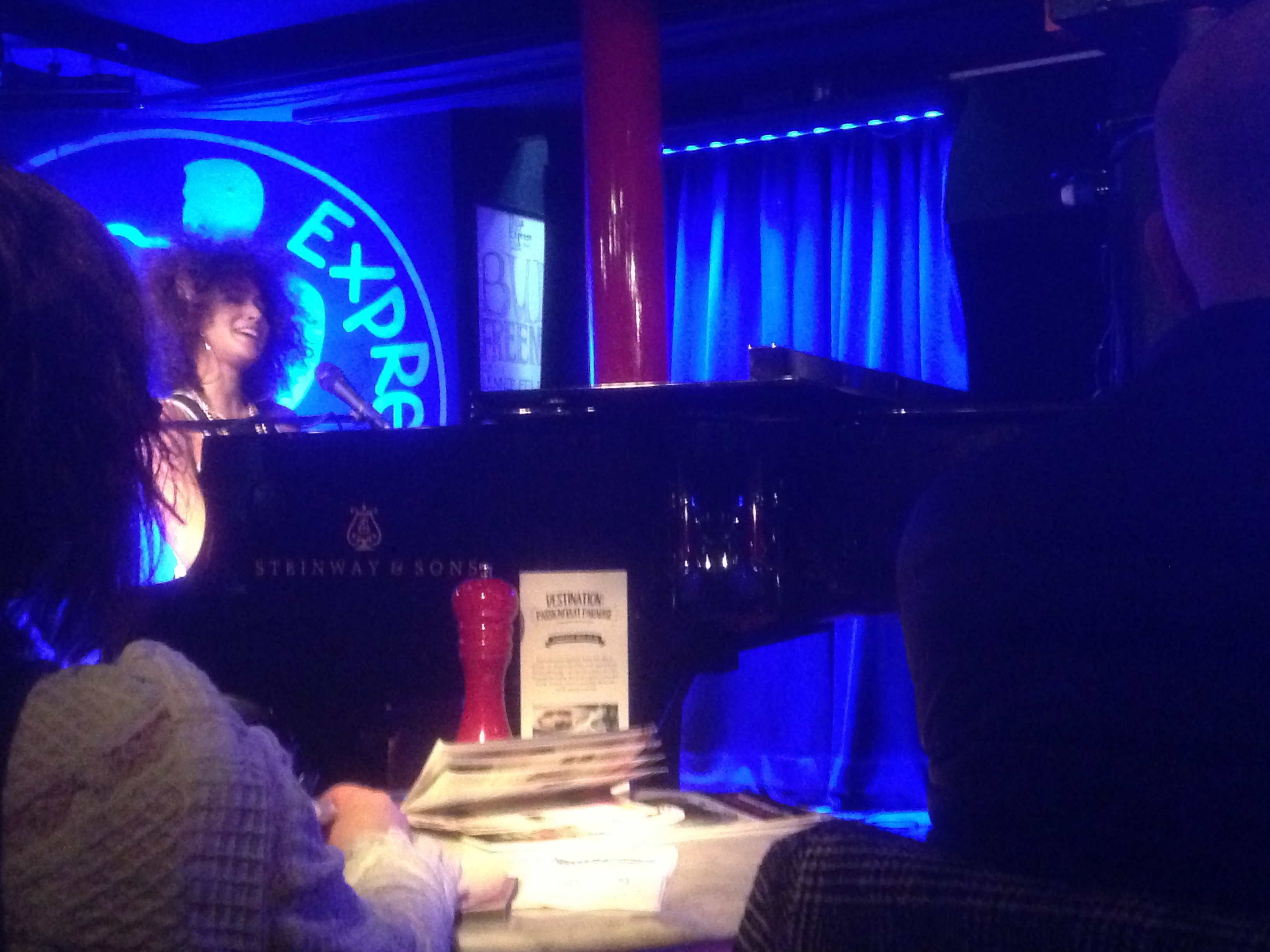
You wouldn’t ask your worst enemy to perform at an awards ceremony, particularly a standing-only affair where the audience is milling around, enjoying free champagne and noisy gossip. So it took some guts for the American singer Kandace Springs to perform Mal Waldron’s ballad “Soul Eyes” when she was given a slot at just such a function this week.
As she began by testing out the rather indifferent piano with a few bluesily decorated arpeggios, a friend and I looked at each other with raised eyebrows. It’s like the first sentence of a novel: sometimes you just know that this is going to be all right. And despite a hubbub that barely diminished in volume, Kandace Springs was able to use her allotted handful of minutes to demonstrate a talent that demanded further attention.
A couple of days later she was at the Pizza Express on Dean Street for a lunchtime showcase gig in front of a more attentive invited audience of industry and media types. One of the half-dozen songs she performed was “The Nearness of You”, written in 1937 by Hoagy Carmichael and Ned Washington. It was Norah Jones’s version of the song, she told us, that had inspired her to embark on a career in music. Tackling the song alone, with only her piano in support, she succeeded in making it her own property, without recourse to distortion or exaggeration, thus deepening the favourable impression.
Ms Springs’s coolness factor is high. Prince called her up after hearing her cover of Sam Smith’s “Stay With Me”. She has an album out on Blue Note in July. She has been opening for Gregory Porter on his European dates, and she is at the Cheltenham Jazz Festival this coming Monday. The world is awash with female “jazz singers” who try to combine the American Songbook repertoire with contemporary sounds, some in the hope of ending up on X Factor. It’s a genre for which I have a pretty limited tolerance. But she seems to have something different and more substantial.
She is 27 years old, she comes from Nashville, and she has a likeable self-possession that gets the audience on her side. Musicians, too. On her British dates she has been expertly and discreetly accompanied by the double bass of Sam Vicary and the drums of Luke Flowers, both from the Cinematic Orchestra, and at the Pizza Express they seemed to be enjoying themselves.
“The Nearness of You” isn’t on the album, which is titled Soul Eyes and was produced — rather conservatively for my taste, but never mind — by Larry Klein. I like the way she feels confident enough to do something other than plug the album to death, and she finished off at the Pizza Express with something else that isn’t on it: a beautifully poised and understated version of Ewan McColl’s “First Time Ever I Saw Your Face” which reminded that if you live long enough, everything comes around again.
Back in 1972 I went to another showcase, at Ronnie Scott’s, to see Roberta Flack, whose fame was secured when Clint Eastwood used her version of the McColl song on the soundtrack to Play Misty For Me. Flack brought an ace band with her, including Richard Tee on keyboards and Chuck Rainey on bass, and she was quietly sensational. And I have to say that the woman who performed 100 yards away this week was every bit as good. As long as she wards off the dreaded melisma virus and keeps her sights high when selecting her repertoire, she’ll be an adornment to the scene.
Anyway, whenever I try to type the name Kandace Springs, the spellcheck device insists on changing it to “Candace”. I suspect it won’t be long before that particular algorithm wises up.
 Somewhere in West London, there is said to be a dealer in second-hand hi-fi equipment whose face lights up every time Brian Eno walks in. Eno’s interest in speakers of all types and sizes was on show this morning in his Notting Hill studio, where a small audience gathered to listen to a 15-channel 3D mix of his new album, The Ship. After the playback, I took the photograph above in order to give a partial sense of the configuration.
 They were only invited at the last minute after their compatriot Mette Henriette had been forced to withdraw from the Jazzahead! festival in Bremen, but the women of Trondheim Voices provided me with what is likely to be the most lasting musical memory from this year’s event. Based in a city famous for the open-minded young musicians produced by the jazz courses taught at its adventurous and well resourced music conservatory, they have been going, with various changes in size and personnel, since 2001. Over the past year they’ve begun to explore the possibilities of individual sound-tailoring devices created by the mixing engineer and sound designer Asle Karstad: the singers wear discreet wireless boxes on their belts, with controls enabling them to modify their own output in real time.
 The pianist Masabumi Kikuchi died last year at the age of 75, mourned by those whose love of jazz is based, at least in part, on the way it offers a home to wandering spirits. It’s clear from the testimony of those who worked with Kikuchi that he wasn’t an easy person, either on himself or on others; his music was the product of an endless pilgrimage towards some sort of essence, some sort of truth, that could not be found in pretty surfaces or routine politeness.
 The beautiful Union Chapel in Islington proved to be the perfect final stop for the Necks’ short UK round of pipe organ concerts last night. They were sharing the series, titled The Secret Life of Organs, with James McVinnie, who opened the evening with two pieces by Philip Glass and two short suites by Tom Jenkinson (better known to electronica fans as Squarepusher).
 Until its re-release this week, I hadn’t seen
 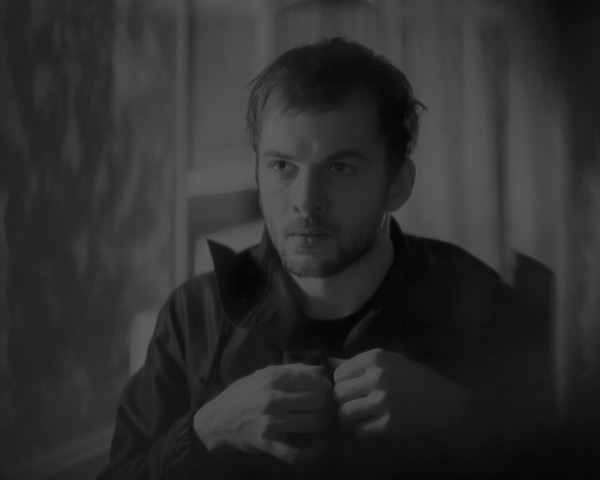 Sebastian Schipper’s Victoria opened in London a couple of weeks ago, a year after it won an award at the Berlin International Film Festival. It’s famous for having been shot in a single 138-minute take. I came away impressed by everything it has to offer, from the direction and the acting by all the young principals to the agile cinematography of Sturla Brandth Grøvlen and, by no means least, the contribution made by Nils Frahm’s soundtrack.
 At some point in his career, Leandro “Gato” Barbieri became a sound. A great sound, for sure, its hoarse urgency bursting with Latin passion, but he learnt that he needed to do little more than apply it to the theme he wrote in 1972 for Bernardo Bertolucci’s

 thebluemoment.com