James Jamerson at 80
 Had he lived, the most influential of all bass guitarists would have been 80 years old this week: on January 29, to be precise. Many of us will never stop marvelling at the creativity shown by the one and only James Jamerson during an era when session musicians who played his instrument were expected to do little more than mark the song’s chord changes and keep in step with the drummer.
Luckily, Jamerson (who died in 1983) played on so many records during his time as the No 1 bass player in Motown’s Detroit studio — roughly from 1960 to 1972 — that fans like me can spend a lifetime discovering half-buried examples of his artistry. A couple of years ago I wrote here about his contribution to Martha and the Vandellas’ “No More Tear Stained Make Up”. The latest one I can’t stop playing is a Mary Wells obscurity called “I’ve Got a Story”, recorded in 1962 and released a couple of years ago on a Hip-O Select from-the-vaults compilation called Something New: Original Recordings 1961-64.
An irresistibly catchy song by Marvin Gaye and two of Motown’s top backroom boys in the early years, Mickey Stevenson and Hank Cosby, its lyric has Mary telling us about a friend who’s made a disastrous decision to turn love aside before admitting that the fool is, in fact, her (“Now it was me… it was me who lost a real true lover”). It gets a fine Stevenson production featuring a chorus of grainy horns and an ace performance by the Funk Brothers, with a starring role for the bass.
A rattle of the snare and toms from Benny Benjamin’s mix ‘n’ match studio kit introduces a strutting medium-tempo rhythm entirely driven by Jamerson. He makes his Fender Precision sound almost as fruity as a tuba in a New Orleans marching band as he sits on top of the 4/4, adding his own distinctive hook to the track by inserting little descending 16th-note runs on the fourth beat of each bar, occasionally adding variation by switching the run to the second beat, and in the bridge — as the drummer adds a subtle Latin accent — sometimes extending the motif into a run across both the third and fourth beats.
The choice of notes in these beautifully articulated 16th-note flurries could only have come from someone with a jazz background, someone used to searching the chords for the most interesting variations. That’s what Jamerson had, and this is an example of how it could put it to creative use in the service of a pretty little pop song, probably something he’d already forgotten by the time he got into his car that evening and headed away from 2648 West Grand Blvd.
I’ve also been listening to his playing on the Four Tops’ hits, specifically “Bernadette”, on which he spins an amazing variety of figures around Richard “Pistol” Allen’s imperturbable four-to-the-bar snare drum beat with astonishing flexibility and imagination, and “Ask the Lonely”, where he does the opposite: by dropping anchor on the tonic while the chords shift, avoiding any hint of decoration, he underscores the song’s piercing melancholy.
But back to “I’ve Got a Story”. Recorded on June 28, 1962, it remained unheard for more than 30 years. Obviously it didn’t get past Berry Gordy Jr’s celebrated quality control committee. Could that be because, at 1:40 and 1:47, in the course of this virtuoso display, Jamerson hits two of the very few unconvincing notes of his career? Unlikely. They’re not wrong. They’re just not the perfect choices by a man to whom, in the dozen years that counted. perfection was an everyday matter of fact.
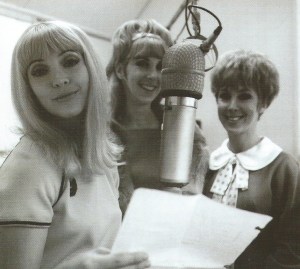 So now we know that Veronica Bennett was not the first lead singer of a female vocal trio to whom Phil Spector proposed marriage. That would be Priscilla Paris, according to the testimony of her sister Sherrell in the sleeve notes to Always Heavenly, the first proper retrospective of the Paris Sisters’ intriguing career, put together by the Ace label from the group’s recordings for several labels between 1961 and 1968.
 Matana Roberts was reminiscing about the first time she played with the great bassist Henry Grimes. It was during the New York blackout of 2004, when she was scheduled to appear at the Jazz Gallery with a group including Grimes and the pianist Vijay Iyer. She had been travelling on the L train from her home in Queens, and it had just emerged from the tunnel under the East River when all power vanished across the length and breadth of the city.
 For many years I dismissed David Bowie as a shallow opportunist. What was he doing that Andy Warhol and Lou Reed, conceptually and musically, hadn’t done with more wit and originality? I saw him at the Greyhound in Croydon in the summer of 1972, supported by Roxy Music in a pub room that can’t have held more than 200 people. He did the Ziggy Stardust thing, he and the band in full costume, and I didn’t care for it much.
 thebluemoment.com