Skip to content

Archive for

The parable of the credits

It would be an understatement to say that I didn’t get on well with Paul Thomas Anderson’s Inherent Vice. But I did stay until the end of the film, all the way to the credits, at which point I was unexpectedly rewarded by the sound of a record that I sometimes think would be the one I’d save from a burning house: Chuck Jackson’s “Any Day Now (My Wild Beautiful Bird)”.

For me this record, a US Top 40 hit in the summer of 1962, is Burt Bacharach’s finest hour as a writer of melodies and arrangements. His creation finds its perfect match in Bob Hilliard’s poetic words, with their gloriously gloomy prediction that “those blue shadows will fall over town” when the singer’s lover leaves, as he is convinced she will. Jackson, one of the best singers of his type and era, does the song full justice: of all the many artists who later covered it, none ever improved on this original version. In the lovely clip above, Bacharach mimes the distinctive organ intro; it was actually played in the studio by the great Paul Griffin.

Hearing it at the very end of a film I disliked was a reminder of sitting through Wim Wenders’s three-hour 1991 film Until the End of the World, until the moment when, after what felt like several weeks, the credits rolled and a half-familiar voice croaked: “I tried to reach you… on Valentine’s Day…”. Thus I was introduced to Robbie Robertson’s “Breakin’ the Rules”, a track from the 1991 album Storyville which — thanks not least to the understated nobility of its horn arrangement by the late Wardell Quezergue, as well as the achingly soulful vocals shared by Robertson with the Blue Nile’s Paul Buchanan — has existed for me ever since on a plane only half a notch below “Any Day Now”, which is to say within touching distance of heaven.

So the moral must be: whatever your opinion of the film, don’t leave your seat until you’ve see the line about no animals being harmed and the lights have come up.

Taking the long view

Coin Con Chapter ThreeMatana Roberts thinks big, encouraging us to do the same. After emerging a few years ago as an uncommonly talented young alto saxophonist, composer and bandleader, at a time when she was a member of Chicago’s Association for the Advancement of Creative Musicians, she is now a quarter of the way through a sequence of 12 albums under the series title Coin Coin (the nickname of Marie Thérèse Metoyer, a freed slave who founded a colony in 18th century Louisiana).

The first volume, Chapter One: Gens de Couleur Libres, appeared in 2011; the second, Chapter Two: Mississippi Moonchile, in 2013; the third, Chapter Three: River Run Thee, is just out. At her present rate of production, if my arithmetic is correct, she will complete the cycle in 2033, at which point those who are still around will be able to enjoy a vast, impressionistic and many-dimensioned view of the history of African Americans, seen through one artist’s eyes.

Roberts calls what she does “panoramic soundquilting”: a particularly appropriate description given the development of quilt-making into an American folk art, beginning with the earliest settlers. What her use of the term conveys is a willingness to use techniques of collage and superimposition to create layers of texture and meaning.

Although Roberts is now based in New York, all three albums were recorded at the Hotel2Tango studio in Montreal. Each takes a quite distinct approach. Gens de Couleurs Libre juxtaposed her arrangements for a 16-piece ensemble with songs and readings from diverse sources, with an extended and disturbingly nonchalant depiction of a slave auction as its centrepiece. Mississippi Moonchile found the instrumental resources pared down to a conventional post-Coleman quintet, featuring Roberts’ alto and the trumpet of the excellent Jason Palmer — with the occasional intrusion of Jeremiah Abiah’s operatic tenor providing a provocative contrast.

River Run Thee continues the process of reduction, and is a more demanding experience. Unlike its predecessors, it cannot be listened to as an album of relatively straightforward contemporary jazz, with horns and rhythm sections and riffs and improvisations based on the thematic material. Essentially a solo album featuring Roberts’s voice, alto, synthesiser and piano, it resembles not so much a quilt as one of Gerhard Richter’s abstract works, in which the painter partially scrapes through his own layers of paint to reveal disarticulated fragments of colour and pattern. The 12 movements of this chapter of Roberts’s giant work are indistinctly defined: whooshes and surges of electronic noise part to expose found sounds and voices recorded during a recent trip to the South, shards of free-floating saxophone improvisation and fragments of “The Star Spangled Banner”, “Lift Ev’ry Voice and Sing”, “All the Pretty Horses” and other pieces from America’s collective memory.

As a child, Roberts’s imagination was fired when her grandfather, a Louisiana man, told her about Marie Thérèse Metoyer; now the South, and particularly the experience of slavery, forms the primed canvas for the whole work to date. Literal meaning, however, is not on offer. She seems to be excavating America’s memory in search of the elements, some of them far distant in time, that shaped her own life, using notes and words but intending to convey something beyond them, something they cannot express. The richness of her gathered material is what makes Coin Coin such a fascinating project, one whose future chapters and ultimate resolution are likely to be awaited with great anticipation for many years to come.

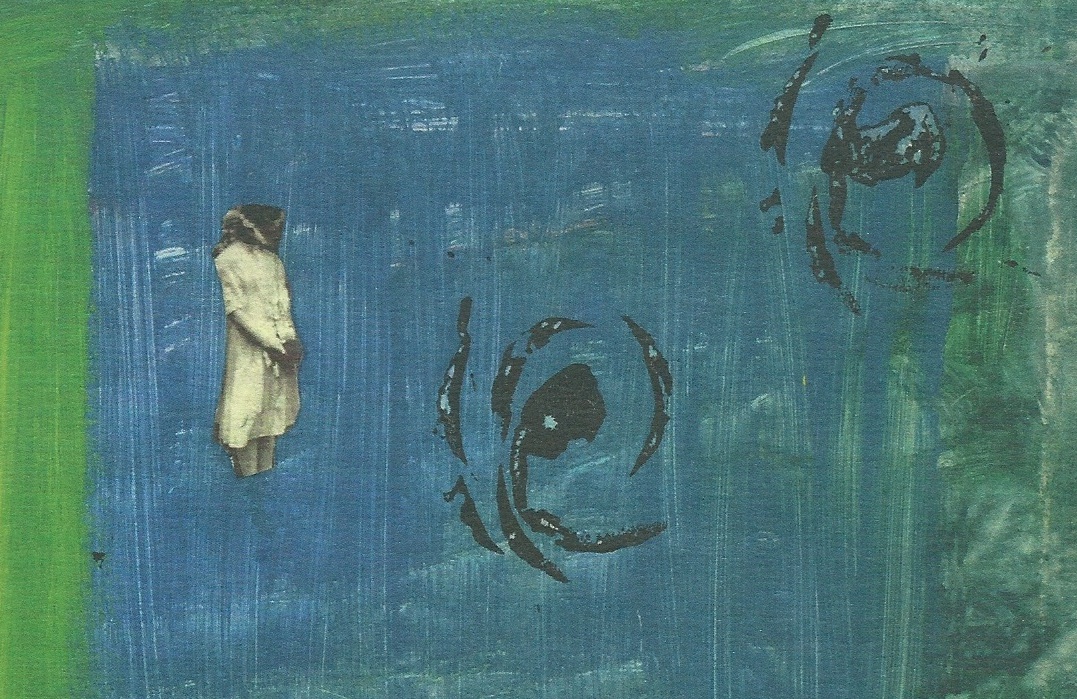
* The painting/collage is by Matana Roberts and forms a part of the cover of Coin Coin Chapter Three: River Run Thee, released by the Constellation label.

Lesley Gore 1946-2015

Lesley Gore was preparing for her studies in English and American literature at New York’s Sarah Lawrence College — whose alumni include Yoko Ono, Sigourney Weaver, Alice Walker, Carly Simon and Meredith Monk — while making some of the best records of the girl-group era between 1963 and 1965. Her voice had a sensible, wholesome quality that may have lacked the poignancy of the Shirelles’ Shirley Owens or the sexiness of the Ronettes’ Veronica Bennett but was perfectly suited to the songs that became her hits.

If “It’s My Party” was the best known of them, and “You Don’t Own Me” achieved a different dimension of success after being claimed as a feminist anthem, it’s also worth remembering beauties like “Maybe I Know” (above), its wonderful groove created by Claus Ogerman’s arrangement, Quincy Jones’s production, and a bunch of great New York session men who’d probably forgotten everything about it by the time they sat down to dinner that night. “The Look of Love” is from the same template and just as fine:  a world of danceable teenage anguish compressed into two minutes and three seconds. Both of them came from the pens of Jeff Barry and Ellie Greenwich. Her version of the classic “What Am I Gonna Do With You (Hey Baby)”, written by Gerry Goffin and Russ Titelman, is also extremely beautiful.

She died yesterday, aged 68. Here’s Dave Laing’s Guardian obituary. She had quite a story.

Something trivial (or perhaps not)

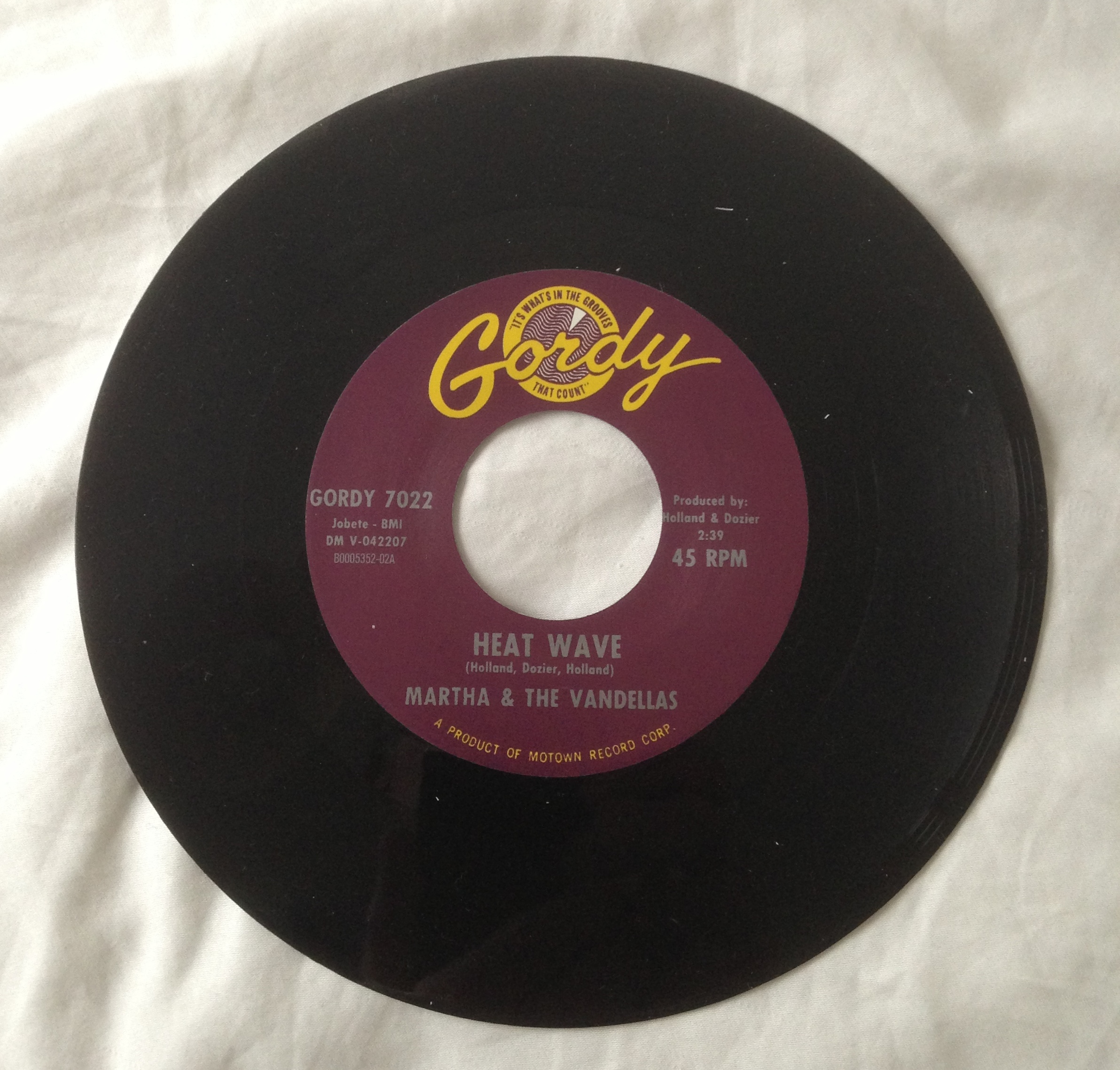
Heat WaveThe first scene of The Theory of Everything is set in an undergraduates’ drinks party. It’s captioned “Cambridge, England, 1963”. In her book Travelling to Infinity, on which the film is based, Jane Hawking tells us that the date of the party at which she first encountered her future husband, the cosmologist Stephen Hawking, was January 1 of that year.

The music being played for these middle-class university students in their sports jackets and cocktail dresses is “Heat Wave”, by Martha and the Vandellas. Which, as it happens, was not even recorded until June 1963. It was released in the US on July 10, and in the UK a couple of months later.

Does it matter that the opening scene of a film supposedly based on a true story contains a resounding distortion? A more subjective opinion on the credibility of the scene’s soundtrack, but one likely to be shared by any British fan of black American music who was around at the time, is that in any case a record like “Heat Wave”, even had it been available, would not have been heard at an undergraduates’ cocktail party. Motown music, a year ahead of its UK breakthrough with the Supremes’ “Where Did Our Love Go”, was still an underground taste in Britain. Someone might have had a copy of “Love Me Do” to put on the Dansette, but “Telstar” or “Bachelor Boy” would have been more likely.

As we know, however, the makers of films based on historical events like to go for “emotional truth” rather than the literal version. They must have persuaded themselves that “Heat Wave” — which does, of course, sound fabulous coming through cinema speakers — would set up the right kind of resonance in the minds of members of the audience who had no first-hand memory of the era. And that, to them, is what counts.

The same thinking was in evidence last week in the final instalment of Bright Lights, Brilliant Minds, a three-part BBC4 series presented by the art historian Dr James Fox on pivotal times in the cultural lives of three major cities: Vienna in 1908, Paris in 1928 and New York in 1951. In the New York episode, Fox had lots of good stuff to examine: abstract expressionism, method acting, bebop, beat literature, the birth of the modern advertising industry. Quite legitimately, the programme chose to focus on five emblematic figures: Jackson Pollock, Marlon Brando, Thelonious Monk, Jack Kerouac and David Ogilvy.

I could just about swallow the modern convention of putting the presenter front and centre, making him a bigger personality than anyone whose art the programme was actually examining. So, for example, we saw Fox evoking Kerouac’s world and work by driving an American car down an endless highway and feeding a big roll of paper into a typewriter. Puerile stuff — but that’s how these things have to be done, or so it seems, in order to get past the commissioning editors.

The warning lights had started flashing, however, as soon as the first piece of music was heard under the opening titles: Charles Mingus’s “Better Git It in Your Soul”. A great piece, of course, and certainly evoking the energy of New York, the city in which it was recorded. “I think it all got started in one remarkable year — 1951,” Fox told us. “This was the year in which the city’s irrepressible creative spirit exploded into life.” Except that “Better Git It in Your Soul” was recorded, as part of the sessions that produced the classic album Ah Um, in May 1959.

There was more great background music to come, all of it used to underscore the events and the atmosphere of 1951. Art Blakey and the Jazz Messengers playing Bobby Timmons’s “Moanin'” — recorded in 1958. Link Wray’s “Rumble” — also from 1958 (and recorded in Washington DC). Percy Faith’s “Theme from A Summer Place” — written for a 1959 film. Gil Evans’s “Where Flamingos Fly” — recorded in 1960. Dave Brubeck’s “Unsquare Dance” — recorded in 1961.

So why, one had to ask, did the programme’s makers shun the music of 1951, about which the presenter waxed so lyrical? Presumably they’d given it a degree of thought, and concluded that the sounds of Charlie Parker’s “My Little Suede Shoes”, Bud Powell’s “Parisian Thoroughfare”, Joe Turner’s “Chains of Love”, or Dizzy Gillespie’s “Tin Tin Deo” — all recorded in 1951 — did not fit their conception of what today’s audience would think of as evoking the cultural phenomenon they were attempting to describe.

I’m not sure that any of this really matters except to those, like me, who fear that once everyone with a first-hand memory of everything that was important to us has gone, a kind of chaos will ensue. But that is, I suppose, how all history eventually comes to be written.


Blue shadows

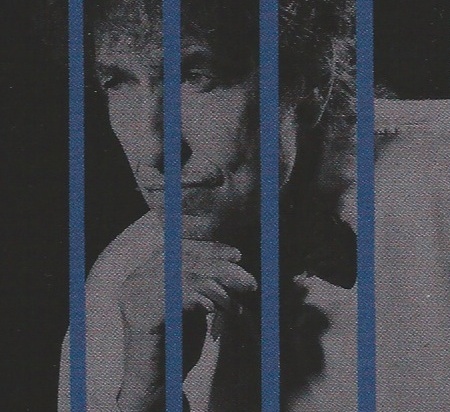
Bob Dylan ShadowsYou only need to pay close attention to the way Bob Dylan delivers the line about “the sunburned hands I used to hold” to understand the value of Shadows in the Night. For me, his version of “Autumn Leaves” is the album’s most fully realised song: against the subdued but glowing accompaniment of pedal steel, acoustic and electric guitars and bowed double bass, out of tempo for all but eight bars in the middle (which include the line quoted above), he immerses himself in Joseph Kosma’s gently falling tune and Johnny Mercer’s beautifully simple lyric and makes the combination, and the emotions they evoke, sound as real as anything he has ever sung.

That’s where he outflanks those who doubt the right of a man lacking in conventional vocal equipment to tackle these songs and to evoke so explicitly the memory of Frank Sinatra. They’re the ones who will point out that Sinatra listened to Jascha Heifetz and Tommy Dorsey and swam lengths underwater in order to develop his breath control, enabling him to deliver those long legato lines without a break. Lacking any of that technical equipment, Dylan brings it off. He makes me see those sunburned hands.

Once that’s accepted, the whole album starts to make sense. As outlined in this fascinating interview with the magazine of the American Association of Retired Persons, his basic decision was to reject the temptation to overdo the arrangements, even down to the omission of a piano, and to rely on the special approach developed by his excellent touring band over recent years. Thus he gives the album both an artistic focus and a freshness missing from most contemporary assaults on the Great American Songbook.

The thing of sliding gently in and out of tempo is a feature of the album. Although never played for drama (you might not even notice it happening), the device is used to stir the songs’ emotions. The approach requires, and gets, the highest degree of sensitivity from his musicians. On three tracks the simple arrangements for a brass trio (trumpet, trombone and French horn) add another unexpected shade to the palette of muted but glowing colours, reminding me of the effect of the horn chart Booker T. Jones created for the playout of “Georgia on My Mind” on Willie Nelson’s classic Stardust.

Dylan seldom shirks a challenge, and the biggest one here is the re-interpretation of “I’m a Fool to Want You”, a song inextricably linked to the doomed affair between Sinatra and Ava Gardner. It’s Sinatra’s confession of emotional helplessness, and probably no one else should attempt it. But Billie Holiday did, unforgettably, on Lady in Satin, and that’s another obstacle Dylan has to surmount. He chooses to open his album with it, too, as Holiday did hers, thus inviting an even more direct comparison. It doesn’t matter.

For me, the whole thing works — even the choice of “Some Enchanted Evening”, the most obvious example of the kind of sentimental romantic Rodgers-and-Hammerstein ballad the young Dylan was supposedly invented to banish for ever. But these observations on love are never obsolete. And in the end, after the shock of hearing Dylan tackle these chromatic melodies and moon-and-june rhymes, it’s impossible not to be moved as this 73-year-old man persuades us that, like Sinatra and Holiday, he knows all about the sweetness and the pain of which he sings. The sunburned hands. That’s what matters.

Olie Brice at the Vortex

Olie Brice QuintetLast year I enjoyed the playing of the double bassist Olie Brice in several contexts, notably the excellent quartet of the trumpeter Nick Malcolm. Now Brice has an intriguing band of his own, and they launched their new album with a gig at the Vortex on Tuesday night.

On the CD, called Immune to Clockwork, Brice’s quintet is completed by Alex Bonney on trumpet and cornet, Waclaw Zimpel on alto clarinet, Mark Hanslip on tenor saxophone and Jeff Williams on drums. The instrumentation, and the strong commitment to collective interplay, remind me at times of the occasions on which Ornette Coleman led a band with both Don Cherry and Dewey Redman in it (e.g. the Crisis album), of the New York Contemporary 5 (with Cherry, John Tchicai and Archie Shepp), and occasionally of Albert Ayler’s Bells/Spirits Rejoice quintet. But that doesn’t mean they sound like those bands. This isn’t a ’60s thing in any sense. Brice’s thoughtful compositions and the high-grade improvising of all the individuals see to that.

The leader and his musicians certainly make use of the freedoms that were fought for in the ’60s. But they don’t share the social environment and conditions in which Ayler, Shepp and the rest worked, and they don’t try to counterfeit its effects. Their music works so well because it has a very different flavour: the textures are gentler, the attack less aggressive and more measured. The compositions, employing a welcome variety of techniques (including a Mingus-like fondness for loosely plaited horn lines) within a clearly defined emotional range, are more reflective in tone but encourage the individuals to listen and react to each other with just as much intensity. The result is music than cannot be defined by era, its own or any other.

At the Vortex, Zimpel and Hanslip were replaced by Mike Fletcher and George Crowley, with no loss of quality. Zimpel’s alto clarinet and Fletcher’s C melody saxophone give the ensemble a subtly unusual blend: the latter horn, fairly common in pre-war dance bands but now seldom seen, could be described as sounding like an alto after a quarter-bottle of brandy, its voice slightly deeper and hoarser, although still lighter than a tenor.

I could only stay for Tuesday’s first set, but that was more than enough to confirm the strongly favourable impression made by Immune to Clockwork (which is released on the Multikulti Project label). A playful version of “If You Were the Only Girl in the World” — a First World War song which the young Brice heard his grandmother sing, later discovering to his delight that Sonny Rollins had recorded in 1958 (in a trio version with Henry Grimes and Specs Wright) — lightened the mood set by something like the skittering Ornetteish lines of “Crumbling Shyly”.

The leader introduced a slow piece called “What Might Have Been” with a well constructed and emotionally compelling solo that showed how artfully he has reconciled the salient characteristics of Mingus and Charlie Haden in order to emerge with his own voice. Joined by the discreet but inspiring brush-work of the impeccable Williams, he was able to provide a sensitive framework within which Crowley and Fletcher could display their imagination and character.

There a track from the album, called “The Hands”, currently on Soundcloud (you’ll have to scroll down a bit). It’ll give you an idea of why this quintet, which stays resolutely clear of empty displays of spectacular technique, has become one of the most interesting and satisfying bands on the current UK scene.


Raising an Eyebrow

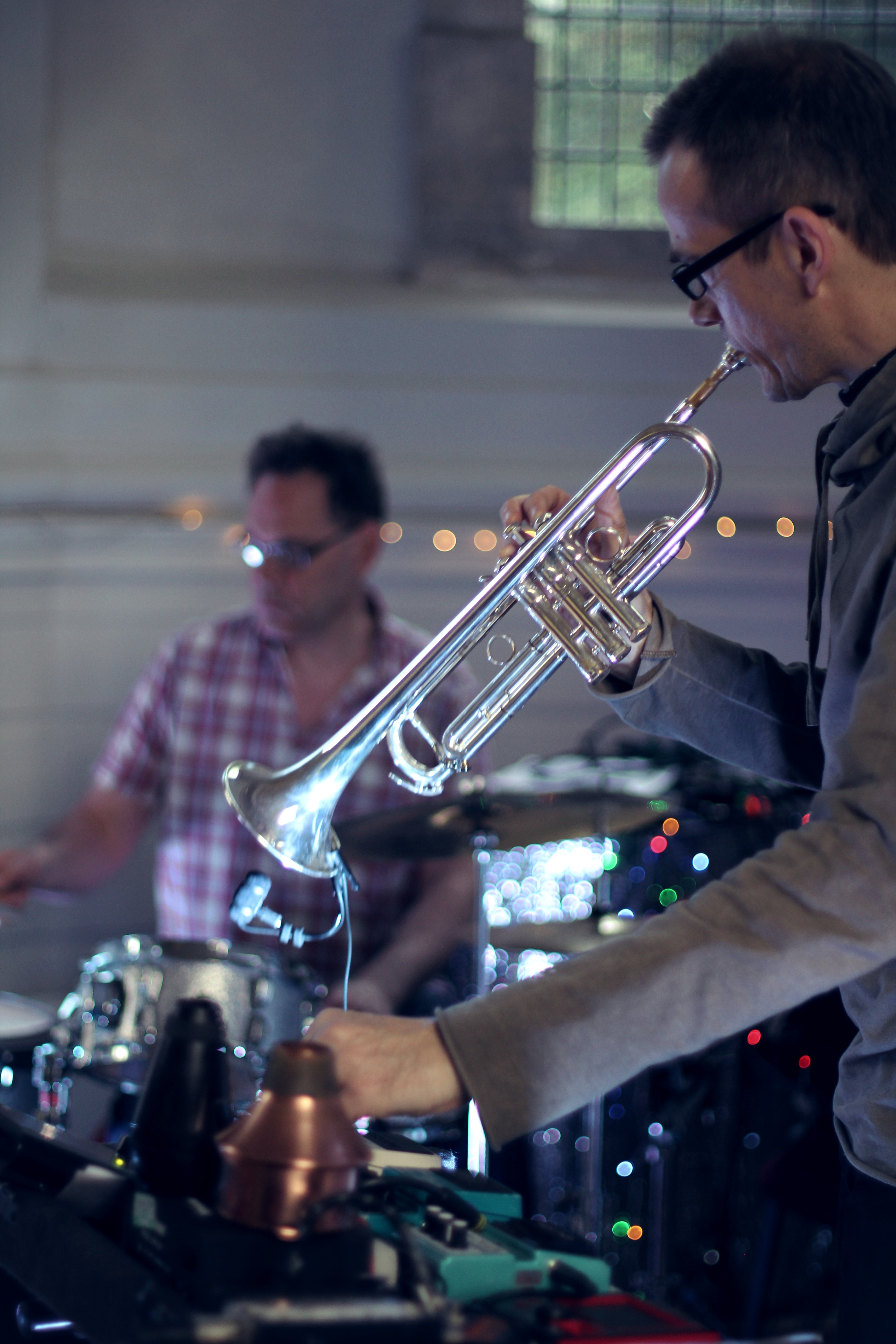
EyebrowMostly just trumpet and drums, with the occasional wash of electronics, Eyebrow’s Garden City is one of the most beguiling records I’ve heard in ages. I should imagine that anyone who loves the work of Jon Hassell (particularly the classic Fourth World Vol 1: Possible Musics album with Brian Eno) or Arve Henriksen’s series of solo albums on the Rune Grammofon label will respond to what this Bristol-based duo are up to: a music of substance and elegance that slips easily between foreground and background, unassuming in its surfaces but best rewarding the closest attention.

They were formed in 2009, and this is their fourth album. Pete Judge, the trumpeter, also plays with the excellent quartet Get the Blessing, while Paul Wigens, the drummer, has a CV including spells with Blurt, Natacha Atlas, Viv Albertine, Damo Suzuki and Gary Lucas. On a couple of tracks they’re joined by the bassist/guitarist Jim Barr, another member of Get the Blessing (and of Portishead’s live band).

The format is simple: Wigens sets up an uncluttered, cleanly articulated and sometimes deceptively straightforward basic groove — using not much more than snare and bass drum and hi-hat, occasionally a tom-tom or two — over which Judge moves between written themes and the kind of improvisation that feels as though it grows directly out of the material, with subtle use of mutes and treatments. Barr makes it a three-way conversation with a lightly distorted baritone guitar on one track, “Blind Summit”, and adds a discreet baseline to another, “Scrim”.

On “Thaw”, for example, at 13 minutes the longest piece of the set, a soft electronically-generated background figure runs in and out of phase with Wigens’s slip-sliding pattern, while Judge plays long tones that are eventually expanded by echo or superimposition. Two-thirds of the way through there are a few moments of understated drama when the drummer drops out, allowing the trumpet to soar and resound as if under a cathedral dome.

This is music of quiet imagination and intimate beauty, spare and discreet without being forbiddingly austere, and recorded with fine clarity and presence. It’s on the ninety&nine label (www.ninetyandninerecords.com), and you’ll find a few samples of the music on the band’s own website here. I hope a lot of people get to enjoy it.

* The photograph of Paul Wigens and Pete Judge was taken by Mark Taylor in Arnos Vale Chapel, Bristol.

Valentinos’ day

Valentinos laterLike its founder, Sam Cooke’s SAR label was marinated in gospel music. Cooke himself had come to prominence as the charismatic young lead singer of the Soul Stirrers, taking over from the great R.H. Harris in 1951 and staying for six years until leaving to embark on a spectacular career on the R&B and pop charts.

Of his two partners in the SAR project, one was J.W. Alexander, a former member of the Pilgrim Travelers who had introduced the Soul Stirrers to Art Rupe of the Specialty label, for whom they made their finest records. The other, Roy Crain, had actually founded the Soul Stirrers, first in Trinity, Texas in 1926 and then, with a different group of singers, in Houston in 1933. That was the start of an institution that outlived all its most celebrated members — including Johnnie Taylor, who succeeded Cooke — and appears to be still active today.

SAR was founded in 1961, the initials signifying Sam, Alex and Roy, but lasted only until Cooke’s death 50 years ago last month. During that time its biggest hit, the Valentinos’ “It’s All Over Now”, came from a converted gospel group, and the signs of that heritage were very clear.

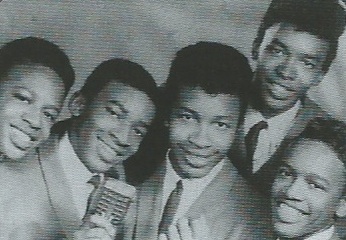
The Valentinos had formerly been the Womack Brothers: five young men who had inherited the name, and the sacred-music vocation, from a group including their father, Friendly Womack Sr. They started performing at a church in Cleveland, their home town, in 1951, and made their first recordings three years later. When Cooke heard them while on tour, he invited them to Los Angeles, where they made a pair of gospel singles.

The four sides of those singles top and tail a new collection of their recordings for SAR, compiled by the ABKCO company — founded by the music business lawyer Allen Klein, who also owns the Rolling Stones’ early material. Titled Lookin’ For a Love, after another of their finest songs, it is released in association with Ace Records of London, the world’s most diligent and meticulous reissuers of early rock ‘n’ roll, R&B and soul recordings.

What always struck me about the Valentinos was how, at a time when most soul hits — even the most gospel-flavoured, like Marvin Gaye’s “Can I Get a Witness” or Garnet Mimms’s “Cry Baby” — gave the impression of having been moulded in a studio, the Womack brothers sounded like a band playing together on stage in front of an audience. There was an R&B-style rawness and immediacy about their records, a sense of rough edges left unpolished. It was probably that quality to which the Rolling Stones were responding when they heard the group’s record of “It’s All Over Now”, written by Bobby and Shirley Womack, and swiftly covered it, making it their first UK No 1 in July 1964, only a few weeks after the release of the original version in the US.

With its 23 tracks, Lookin’ For a Love is said to contain everything the group recorded for SAR before the label folded. There’s a lovely Sam Cooke song called “Tired of Livin’ in the Country”, recorded at United Recording in Hollywood on March 24, 1964, at the same session as “It’s All Over Now”, with a pair of transplanted New Orleans greats, Harold Battiste and John Boudreaux, on piano and drums respectively, augmenting the guitars of Bobby and Cecil Womack and Harry Womack’s bass guitar.

That day’s work also threw up a track which has remained unreleased until now: a Bobby Womack ballad called “Don’t Go Away” which blends R&B and doo-wop in perfect proportions. Bobby wails his lead vocal — “The birds on high, the stars in the sky / Are the same as they were before / But the joy they bring don’t mean one little thing / Because they just don’t seem to reach me no more” — over a goofy bass voice, wah-ooh harmonies and a classic four-chord cycle straight off the street corner. It’s this track for which I’ll cherish a compilation that provides a fine reminder of a group whose significance far outweighed their moderate commercial success.

* The photograph of the Valentinos is from the sleeve of Lookin’ For a Love. Left to right: Cecil, Henry, Friendly Jr,Curtis and Bobby Womack.

The trouble with Whiplash

Whiplash-Poster

I have very mixed feelings, to say the least, about Whiplash. As a former drummer and a jazz fan, I’m delighted by the existence of a feature film about jazz drumming, particularly one that attracts Academy Award nominations. But I hated reading the newspaper and magazine features that rehearsed all the tired old jokes and generalisations about drummers before going on to describe the film. And there’s a much more profound and serious reservation.

Perhaps I can explain it by going back 40-odd years to the time when I and a colleague at the Melody Maker, both of us drummers, although in my case no longer active, maintained a state of polite hostility over — to put it crudely — his preference for Buddy Rich and Ginger Baker and mine for Elvin Jones and Tony Williams. I’d grown up believing that jazz was music originated by African Americans and that Baby Dodds was a better drummer, and more significant to the history of jazz, than Gene Krupa, although much less celebrated, just as Duke Ellington was more important than Stan Kenton and Dizzy Gillespie was more important than Harry James. Ditto Elvin Jones and Buddy Rich. Although my colleague certainly wasn’t a racist — anything but, in fact — we found ourselves on opposite sides of a divide.

I think it was after I’d interviewed Elvin Jones for the paper in 1971 that the great man — and his wife, Keiko — read a dismissive remark Ginger Baker had made about him and issued a challenge to an old-fashioned drum battle, via the front page of the MM. It took place at the Lyceum, as part of a gig featuring Baker’s Air Force, but I didn’t go. I could understand Elvin’s motive — quite properly, he felt he deserved to be at least as famous as Baker — but I thought it was somehow demeaning for the man who played on “Chasin’ the Trane” to invite public measurement against the author of “Toad”.

Anyway, Whiplash reminded me of this because it is about the education of a young jazz drummer. And my problem is that the student drummer in question — like his brutally demanding teacher, the part for which J.K. Simmons is up for a best-supporting Oscar — is white, and idolises Buddy Rich. He is also being taught to play a cold, unfeeling kind of music that has nothing to do with jazz as I understand it — and reminds me very much of the sort of stuff the members of Rich’s own big band were trained to play.

The college band in which the young drummer tries to establish himself contains plenty of black musicians — trumpeters, trombonists, saxophonists, a guitarist and a bassist. But it seems very strange to me that the four young men competing for the drum stool, the struggle around which the film revolves, are all white. (Just as strange is the fact that there are no women in the band — probably out of dramatic necessity, since otherwise the writer could not have given such foul-mouthed homophobic rantings to Simmons’s character.**)

Of course white drummers can play jazz with feeling and originality. I’ve always loved the work of Stan Levey, Shelly Manne, Phil Seamen, Paul Motian, Han Bennink and John Stevens, and that wholehearted admiration continues to be extended to the likes of Matt Wilson, Joey Baron, Steve Noble, Jeff Williams, Tom Skinner and others. They’re as far away from the template of Buddy Rich, a boorish show-off to whom technique was everything, as you could get.

It’s nice to think of today’s jazz world as being colour-blind. But I always felt that my inquiries had taught me where this music originated, and the answer was in the African diaspora, most particularly and obviously — although not at all exclusively — in the area of rhythm. So Elvin Jones and Tony Williams symbolised the kind of drumming I most admired, along with Kenny Clarke, Max Roach, Art Blakey, Roy Haynes, Frank Butler, Philly Joe Jones, Billy Higgins, Ed Blackwell, Pete La Roca and Sunny Murray. There was a principle involved, and an issue of authenticity.

We could argue about this, politely or rancorously, for a very long time. But to present jazz drumming to a cinema audience in the way Whiplash does seems to me implicitly regressive. It’s an affront to a continuing tradition embodied today by such brilliant African American players as Clarence Penn, Tyshawn Sorey, Marcus Gilmore, Brian Blade, Gerald Cleaver, Eric Harland and Jonathan Barber.

Damien Chazelle, the 29-year-old writer and director of Whiplash, studied drumming at a music college in an earlier phase of his life. Miles Teller, who plays the student, is a drummer. J.K. Simmons is also a musician, as we see in the film’s only musically satisfying sequence, when he plays piano with a rhythm section in a small club (making this viewer think: “Ah — some real jazz at last!”). So it gets most of the stuff right on a technical and atmospheric level. But Chazelle inserts so many absurd melodramatic twists into his plot — which, as others have said, closely resembles a jazz version of An Officer and a Gentleman and Rocky — that I couldn’t begin to take it seriously as a story. I could, however, take it seriously in the way it presents jazz to a general cinema audience.

Nowadays we look back at Hollywood’s earlier attempt to make a film about a jazz drummer, when Sal Mineo played the lead in The Gene Krupa Story in 1959, and think what crime it was that Max Roach and Art Blakey stood no chance of such recognition. It seems to me that with Whiplash, more than half a century later, we’re doing no better.

** Correction: Since I posted this blog, it’s been pointed out to me that a female musician does make a brief appearance in the college band.
Ronnie Milsap says goodbye

Ronnie MilsapIf you’re lucky enough to be in Nashville this Saturday night, go and see Ronnie Milsap at the Ryman Auditorium. He’s one of the great singers of the past half-century’s popular music, even though no one talks about him much any more. And, at the age of 71, he’s in the middle of what he’s decided will be his farewell tour.

Sadly, I’ll be 3,000 miles away. But I’m so glad I saw Milsap before his famous run of 40 No 1 country hits, which started in 1974. Nothing against his country records, of course. Some of them still sound great. But the night in 1971 when I saw him at TJ’s in Memphis, Tennessee, a musicians’ bar to which, at that time, you had to take your liquor in a brown bag, he was still in that state of grace to be found somewhere between country and southern R&B, with the balance tilted in favour of R&B.

It was a late night at the end of a long day, and I had a brown bag with me, so I don’t remember the details. But I do remember that he had a terrific little four-piece band — what else, in a musicians’ hangout in Memphis 40-odd years ago? — including himself on piano. He also had, when heard in person, one of the great white soul voices, in a line of devout Ray Charles worshippers including Charlie Rich, Dan Penn and Troy Seals. The only specific song that I remember from the set is the Temptations’ “Ball of Confusion”, which was on the charts at the time, because it seemed such an improbable choice but worked so brilliantly.

As far as I can tell, he made no records that sounded much like the set he played that night. In 1966 he’d cut  “Ain’t No Soul Left in These Old Shoes” with the producer Huey P. Meaux for the Scepter label; released on Pye in the UK, it became a Northern Soul favourite. From the same year there’s a very nice version of an early Ashford and Simpson song, “When It Comes to My Baby”, produced by Stan Green.

All that later success on the country charts seemed to take the R&B edge off his voice, but he could still sing beautifully. Here’s an example: his smooth version of “Any Day Now”, one of Burt Bacharach’s finest. My favourite of his later recordings is the Grammy-winning “Lost in the Fifties Tonight (In the Still of the Night)”, which I love no doubt partly because I was in the USA when it came out in the summer of 1985, cruising the Smoky Mountains and the Blue Ridge Parkway from Gatlinburg, Tennessee to Washington DC  in a rented Buick.

* The picture — uncredited — is taken from a very interesting 2009 interview with Ronnie Milsap by Ken Norton Jr on Engine 145, a roots music blog (www.engine145.com).