Skip to content

Archive for

The Henrys at 21

the_henrys_2015For some years now the Henrys have been one of my stock answers to the question, “What’s your favourite band?” Since they’re celebrating their 21st anniversary with this week’s release of their first album since 2009, it’s probably time I wrote something about them.

I say “them”, but the Henrys are really Don Rooke, a resourceful guitarist and songwriter, with a floating group of like-minded musicians gathered at his base in Toronto. Rooke will be known to some people for his contributions to the regrettably slender discography of the elusive singer-songwriter Mary Margaret O’Hara, an authentic genius whose sole full-length album, Miss America, and two London concerts around 25 years ago are still vivid in the memory.

MMO’H appears as a guest on earlier Henrys records — Puerto Angel (1994), Chasing Grace (1996), Desert Cure (1997), Joyous Porous (2002), and Is This Tomorrow (2009) — and if you click on http://www.thehenrys.ca/listen.html and scroll down down to “God Moves on the Water”, you’ll hear one of their finest moments together. But she’s not on the new one. The lead singing on Quiet Industry is done by Gregory Hoskins, with John Sheard on pump and electric organ, Hugh Marsh on violin, Jonathan Goldsmith on “muted piano”, Andrew Downing on bass, Davide DiRenzo on drums, and Tara Dunphy on backing vocals.

The music of the Henrys has what always seems to me to be a typically Canadian quality: like that of the Band and the Cowboy Junkies, or the musicians who used to travel with the McGarrigle sisters, it sounds as though it’s being played in your front room by musicians who wouldn’t be put out if you asked them to swap instruments. I don’t know a better way of describing the sense of ease that lubricates their creativity.

The tone may be set by the timbres of a slide guitar, a pump organ and drums that sound like they were made from a set of well-travelled cardboard suitcases from the 1930s, but the music isn’t revivalist or retrospective in any way. It’s devised and directed by a person who seems to have spent a lifetime cultivating good listening habits and distilling them into a personal vision of the way things might sound.

So while the noise the Henrys make is full of creaks and sighs, these are an indication of carefully chosen textures rather than of an attempt to counterfeit the patina of age. Rooke himself, an unassuming virtuoso on various kinds of guitars, including a Weissenborn koa-wood model, has a better command of acoustic sonorities than just about any guitarist I can think of, along with an absolute disinclination to show off. About a dozen years ago he made an album of instrumental pieces under his own name called Atlas Travel, also highly recommended.

Rooke has excellent taste in singers (Becca Stevens was also featured on Is This Tomorrow), and Hoskins, a veteran of the Canadian folk-rock scene, has a sidelong, semi-private delivery that suits the songs almost as well as O’Hara’s more gestural approach once did. And these are really beautiful songs. Once you get past the exquisitely detailed settings, like the dancing organ on “Was Is” and the shadowy doubled vocal on “Burn the Boat”, there are many things to admire in the finely turned melodies and the thoughtful lyrics, such as this payoff verse from “Dangers of Travel”, a great edge-of-breakup song: “The light is pretty now / But soon it will fade / So put the bags down / Please put the bags down / Your dinner’s been made.”

Here’s a film they made to go with the album’s opening track, “The Weaker One”. Here’s a clip of “When That Far Shore Disappears”, a song that illustrates some of their subtler virtues. And as a bonus, here they are in an earlier incarnation, playing a piece called “VF61” from Joyous Porous on an Ontario TV station in 2002, with David Pilch on bass and Michael White on trumpet.

There’s a special strength, intimacy and sense of proportion to this music, along with great inventiveness. Quiet Industry may be the product of the Henrys’ 21st year, but it’s a great place to start. And they’re still one of the answers to that question.

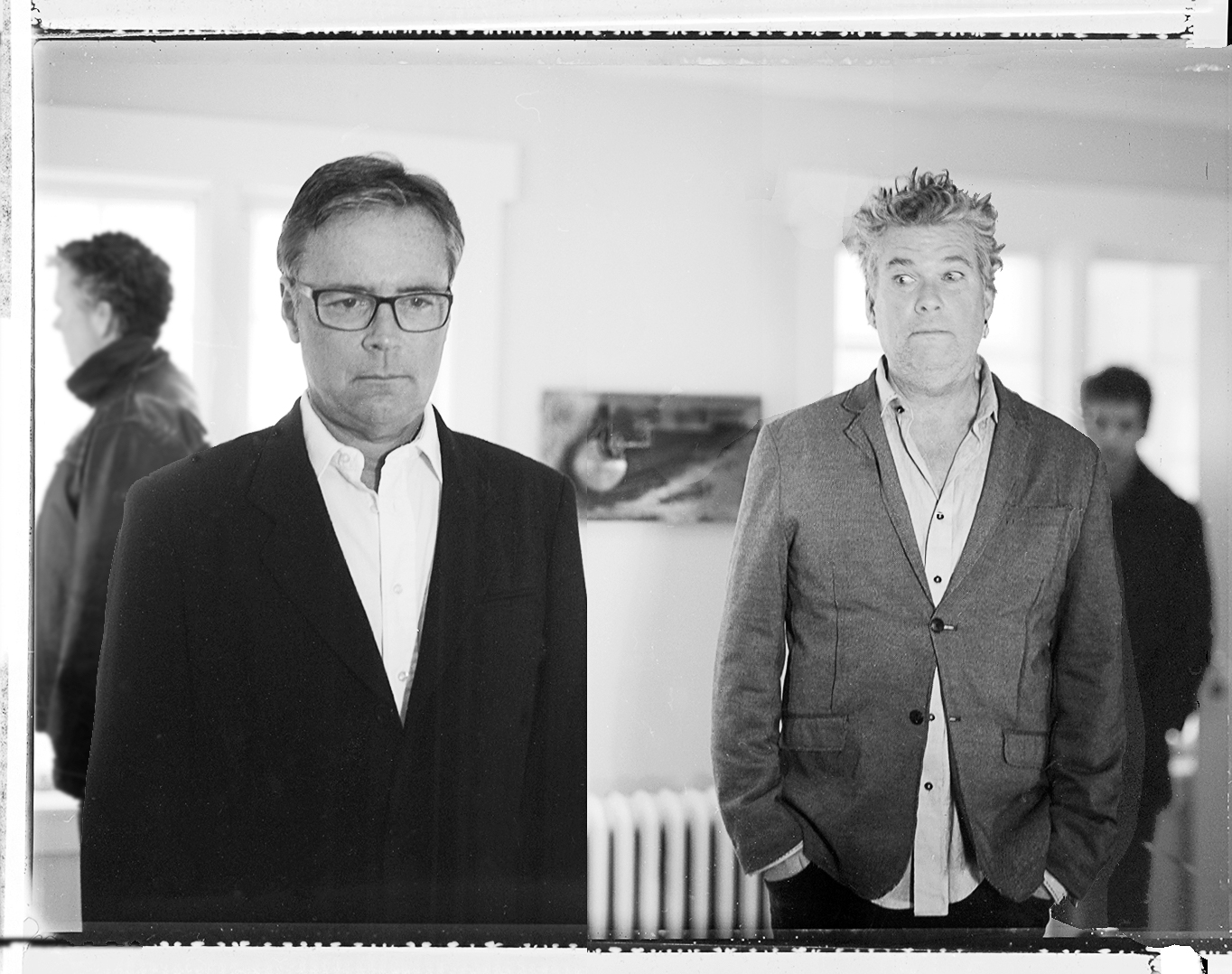
* Pictured above, the Henrys as heard on their new album: (left to right) John Sheard, Don Rooke, Gregory Hoskins and Andrew Downing.

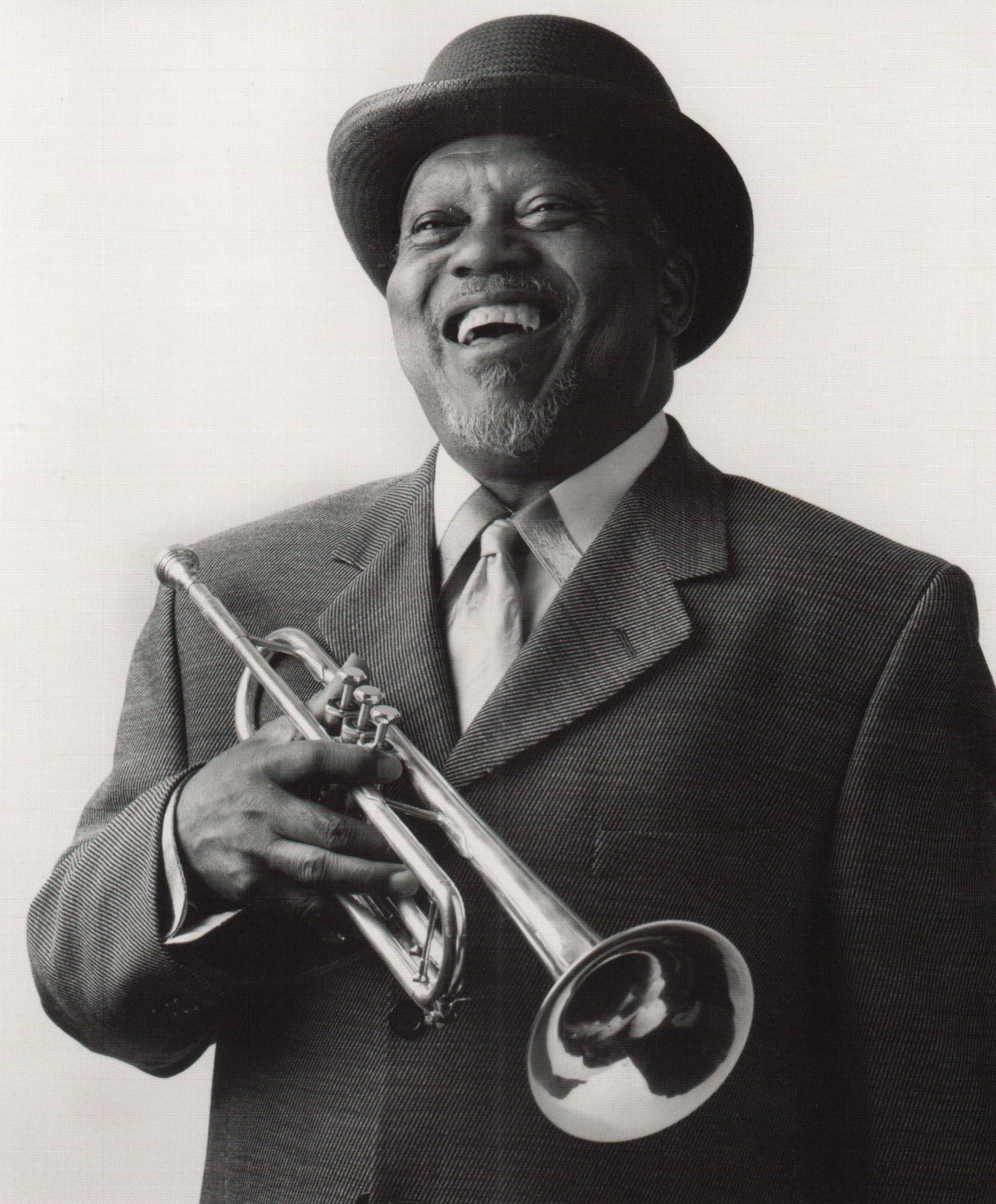
On the tracks of Tina Brooks

Tina BrooksTina is certainly an unusual name for a man. But 50 years ago, in a world including an Ornette and a Thelonious, it didn’t seem all that strange. What mattered was the way Tina Brooks — born Harold, but rechristened with a corruption of Teenie, a childhood nickname — played the tenor saxophone.

Born in North Carolina in 1932, at the age of 12 he moved with his family to New York, where he studied music and took his first gigs with R&B bands in the early 1950s. Subsequently he became one of the many gifted jazz musicians whose lives were blighted, either through early death or prolonged inactivity, by the heroin plague of the post-war years. He died in obscurity in 1974, after more than a decade of silence.

The years of notable activity were brief. The trumpeter Little Benny Harris recommended him to Alfred Lion, Blue Note’s co-founder, and in 1958 he took part in his first session for the label, Jimmy Smith’s The Sermon. Sessions as a sideman with Kenny Burrell, Jackie McLean and Freddie Hubbard would follow. Of his own four Blue Note albums, only one — True Blue — was issued during his lifetime. The others — Minor Move, Back to the Tracks and The Waiting Game — were put on the shelf, for reasons about which we can only speculate. They appeared long after his death, when it had become apparent that a coterie of fans cherished his special qualities.

All those albums are now available together on a two-CD package called Tina Brooks Quintet: The Complete Recordings (Master Takes), released on the Phono label, one of those companies shrewdly taking advantage of music falling out of copyright. To say it represents a bargain is an understatement, and since none of the musicians involved is still alive, I don’t suppose anyone is going to suffer financial duress as a result.

Brooks was a middleweight tenorist, like Hank Mobley or Oliver Nelson, with the fluid inventiveness of the former and the graceful balance of the latter. In terms of substance, his improvising was exceptionally creative. Every solo contained something worth hearing. And, within the hard bop idiom, he was a composer of the highest quality: listen to “Street Singer”, which has the graceful melodic shapes associated with Benny Golson (and is an interloper, being borrowed from the McLean session, in which the quintet became a sextet).

The sidemen chosen for these albums form a roll-call of Blue Note favourites. The trumpeters: Hubbard, Lee Morgan, Blue Mitchell and Johnny Coles. The pianists: Sonny Clark, Duke Jordan and Kenny Drew. The bassists: Doug Watkins, Sam Jones, Paul Chambers and Wilbur Ware. The drummers: Art Blakey, Philly Joe Jones and Art Taylor, who never sounded better in his life, as you can hear on “Street Singer”.

I know of only one piece of film featuring Brooks: a DVD of Ray Charles in São Paulo in 1963 titled O Gênio: Live in Brazil. issued by Warner Music Vision in 2004. He’s in the reed section alongside the altoists Danny Turner and Geezil Minerve, his fellow tenorist Fathead Newman and the baritone-player Hog Cooper. Newman, the band’s music director, gets most of the solo space, but on Quincy Jones’s “Birth of a Band” he’s joined by Brooks, with whom he trades choruses and fours. Clearly new to the band, Brooks appears unsure of the routine, and his more oblique style is somewhat overshadowed by Newman’s robust bluesiness, but you could just about close your eyes and know it’s him. See it here.

I’ve always thought that if I could put together a dream quintet of musicians who fell victim to the infernal plague, he’d be there alongside Dupree Bolton, Dick Twardzik, Albert Stinson and Frank Butler. What a band that would have been. But his own four albums form an imperishable legacy, and I can’t recommend them highly enough.

* One of Tina Brooks’s few pieces of certified good luck was to have found himself in front of the lens of the great Roy DeCarava at the Blue Morocco club in the Bronx one night in 1956, when he shared the stage with Benny Harris. I’ve used one of DeCarava’s shots from that evening at the top of this piece; it’s taken from the Mosaic vinyl box set of complete quintet recordings, compiled by Michael Cuscuna and released 30 years ago this month. If you don’t know DeCarava’s work, look for The Sound I Saw, his classic essay on the jazz life. He put it together in 1962, but had to wait until 2001 — eight years before his death at the age of 89 — to see it published, thanks to the good offices of the Phaidon Press. Here, if you’re interested, is the obituary I wrote for the Guardian.

The Weather Station

The Weather StationIt was the liquid sound of a song called “Way It Is, Way It Could Be” that snagged my attention. The track was featured on one of those monthly-magazine sampler CDs (Uncut, in this case) that force you to take great care not to rip the cover as you remove it, and then leave you with a blob of sticky stuff to dispose of.

This time the stuff that really stuck was the track in question, by something calling itself the Weather Station. This turned out to be a 30-year-old Canadian woman called Tamara Lindeman, a singer and songwriter (and actress) based in Toronto: a new name to me. It seems that the Weather Station was a band once but is now just her, helped by friends such as Afie Jurvanen and Robbie Lackritz, who joined her to co-produce the new album, Loyalty, from which “Way It Is…” is taken.

The sound is nothing unusual, in a sense: light, folk-based, with fluid finger-picked guitars, gently supportive bass and pattering drum. It would be hard to carbon-date with any accuracy. As would Lindeman’s grave, thoughtful voice, which comes from the school of somewhere between Judy Collins and Sandy Denny.

But it had some strange quality about it that didn’t evaporate when the music stopped. I played it again a few more times, and then bought the album. I’m very glad I did. There’s more of the same, but from different trajectories, almost every song exuding a strong and individual musical personality, each one wrapped in a carefully shaped arrangement. A couple of tracks use small groups of woodwind and strings, very discreetly: just a wash of colour.

Those groups are actually just one player each (Jeremy Strachan and Anthony Wallace respectively), overdubbed. Lindeman plays guitars, keyboards, banjo and — for the final note of the album, in a lovely touch — vibraphone. Jurvanen adds drums, bass and more keyboards. And that’s all. The music never sounds cluttered, or even full. Economy of means is a significant factor here.

Then I started catching some of the words and decided that I wanted to know what she was singing about. Her voice, although pure and uninflected, sometimes obscures the lyrics. That may be intentional: like someone who talks softly to get you to lean in. What I could hear sounded interesting. When I started reading the words, my interest in the album redoubled — just like that.

She prints them on the sleeve as if they were prose, and they read like short stories. “You looked small in your coat, one hand up on the window, so long now you’d been lost in thought. No snow on the road — we’d been lucky and it looked like we would be well past Orleans”: that’s how “Way It is…” starts out. Here’s the opening of “Floodplain”: “All spring I was driving. Every river was flooded with rain, every stream a torrent. Over the highway bridges that run high across the plains, flooded. ‘Half the Maritimes,’ they say, ‘is running this way.'”

A little bit of Cormac McCarthy scene-setting, and then you come across something reminiscent of the plain-spoken intimacy of Raymond Carver’s poetry. From “I Mined”: “It started small — a simple thought. That there was something wrong. And if it’s caught I could set it right, or at least I could try.” From “At Full Height”, the song that ends with the single vibraphone chime: “If he don’t mean it, he won’t say it, and I can tell. If I don’t mean it, I can’t say it, and his face fell. But it’s so seldom I believe it — it takes a clear kind of day. Like air so cold it hurts to breathe it. (And the colour comes to my face.)”

That’s how she punctuates them. Punctuation in a song! Doesn’t happen often, even implicitly (I think of the first verses of “Thunder Road” and “The Boys of Summer”). And it works perfectly. These turn out to be short stories in prose-poem form, arranged with great scrupulousness and performed with imaginative sensitivity. At the moment I’m finding it hard to listen to anything else.

Marcus Belgrave 1936-2015

Marcus BelgraveIt would be hard to exaggerate the influence, or indeed the excellence, of the small bands Ray Charles led in the late 1950s and early 1960s. One by one, their members have disappeared. (Rather movingly, three of Charles’s great saxophone players, Hank Crawford, David “Fathead” Newman and Leroy “Hog” Cooper, died within days of each other in January 2009.) Now another one has gone: the trumpeter Marcus Belgrave, who joined Charles in 1958 and stayed five years, playing on the sessions that produced “What’d I Say” and the immortal Genius Sings the Blues album.

I particularly love Belgrave’s playing on Fathead, Newman’s first solo album and the initial release in Atlantic’s “Ray Charles Presents…” series, produced in 1959 by Ahmet Ertegun and Jerry Wexler, with Charles on piano and Crawford, playing baritone, rounding out the three-man front line. It’s a typical and wonderful fusion of R&B feeling with mainstream jazz and bebop structures: completely natural and unaffected music, totally satisfying on every level. The warm-toned trumpet solos are deftly formed and joyously lyrical: it’s no accident that Clifford Brown was one of Belgrave’s early idols.

An excellent obituary by Mark Stryker of the Detroit Free Press (read it here) tells us that Belgrave was born in Chester, Pennsylvania in 1936. His cousin Cecil Payne, one of the handful of the outstanding baritone saxophonists of the bop era, taught him how to play the new music, and he played with Brownie — who was six years older — in a student band in Delaware. It was with Ray Charles that he learned to play fewer notes.

Tired of life on the road, he turned down offers from Duke Ellington, Horace Silver and Charles Mingus and settled in Detroit in 1963. It is said that he played on a few Motown hits of the period, including “Dancing in the Street”, and he certainly became an important figure on the local jazz scene, both as a player and as a teacher. Those he mentored included the pianist Geri Allen (with whom he appeared on several albums) and the saxophonist Kenny Garrett. He was also a guest soloist with Was (Not Was), the great boho-disco band led by Don and David Was in Detroit in the 1980s (that’s him on their classic dancefloor 12-inch “Wheel Me Out”).

Marcus Belgrave was one of those figures who ensured the continuity of the jazz tradition, taking what he had learnt from his elders and passing it on to later generations. He was, by all accounts, much loved in his community: when a thief took his custom-made copper-belled horn from his car earlier this year, the pawn shop in which it was spotted waived the $350 that it would normally have cost him to reclaim it, given that they had not been aware they were acquiring stolen property.

One way to remember him would be to enjoy his contributions to the solo sequences on “Hard Times” and “Weird Beard”, a couple of tracks from Fathead. Just beautiful, I hope you’ll agree.

Lambert & Stamp

Lambert & StampIt amazes me that so many documentary makers fail to heed the principal lesson of Asif Kapadia’s Senna, which is that any relevant archive footage, however scrappy, is more interesting than a talking head. It’s a pity that James D. Cooper didn’t learn it before he started putting together Lambert & Stamp, his film about the two men who managed the Who from their first success in 1964 until the relationship broke down in acrimony 10 years later.

A compelling subject is enough to carry the first half of the film. After that the viewer tires of extended close-ups of Pete Townshend, Chris Stamp and Roger Daltrey sitting in hotel rooms or studios, even when they’re saying interesting things. The archive clips are chopped up and edited fast on the eye, to borrow Bob Dylan’s phrase. Too fast, in fact. The eye wants to rest on them, to be given time to absorb the details. A technique wholly suited to the titles of Ready Steady Go! is not appropriate to this very different project. The exception is a wonderful piece of footage of Stamp and Kit Lambert encountering Jimi Hendrix and Chas Chandler in a London club, possibly the Ad Lib or the Bag O’Nails; we do get to look at that properly, thank goodness.

It’s a story that certainly deserved to be told. Stamp — born in London’s docklands, the son of a tugboat captain — brother of Terence, the male face of ’60s London — almost as good looking but sharp and tough, with more front than Harrods. Lambert — Lancing, Oxford, the Army — the gay son of a celebrated English composer — explaining mod culture to foreign TV interviewers in fluent French and German — empathising immediately with Townshend’s latent talent and Keith Moon’s very unlatent lunacy.

A pretty bruiser and a bruised prettiness: it was a potent combination. “I fell in love with both of them immediately,” Townshend recalls. It’s easy to see how he and, to varying degrees, the other members of the Who were jolted into self-actualisation by the vision and audacity of a pair of energetic wide boys whose real ambition was to get into the film business and who initially saw the music as a vehicle for their ambition.

The viewer does not come away with the impression that the whole truth about the break-up in 1974 has been told, and a few other salient features of the story have gone missing. One is any acknowledgment of Peter Meaden, their first manager when they were still the High Numbers: an authentic mod who helped establish their direction. Another is Shel Talmy, the producer of their first three (and greatest) singles, given only a passing and mildly derogatory mention, without being named.

Lambert died in 1981, aged 45, worn out by his destructive appetites, although the immediate cause of death was a cerebral haemorrhage following a domestic fall. Stamp had conquered his own addictions long before his death in 2012 at the age of 70, having spent many years as a therapist and counsellor. His interviews with the director are used extensively but, lacking the matching testimony of his former partner, his wry eloquence inevitably seems to unbalance the narrative.

At 120 minutes, the film eventually feels bloated. If the first hour passes like a series of three-minute singles, the second is a bit of a rock opera, the occasional interesting fragment separated by long stretches of filler. But, of course, anybody interested in the era should see it.

Taking on the British Invasion

Bobby Comstock

Fifty years ago this month, Bobby Comstock’s version of Bo Diddley’s “I’m a Man” was trying and failing to make it into the US and UK charts. It’s interesting to me not just as a favourite record from an almost freakishly fruitful year but as an example of one response to the British Invasion: an American artist copying a British approach to an American idiom.

Born in 1941 in Ithaca, New York, Bobby Comstock is a singer and guitarist who nibbled at the fringe of the Top 50 in 1958 with a lightly rocked-up treatment of “Tennessee Waltz”. It was released on the Triumph label, started by Herb Abramson after his departure from Atlantic Records, and since the 17-year-old Comstock’s early patrons also included Alan Freed and Dick Clark, it’s a little surprising that he didn’t do better. Five years later, having fallen in with the successful publisher Wes Farrell and the songwriting/production team of Bob Feldman, Jerry Goldstein and Richie Gottehrer, he released “Let’s Stomp” on the Lawn label. Despite climbing no higher than No 57, it became a party favourite and was widely covered over the years. Thanks to his association with Feldman, Goldstein and Gottehrer, he also played guitar on the Angels’ wonderful “My Boyfriend’s Back”, a girl-group classic.

“I’m a Man” is something very different and vastly superior: a raw blue-eyed R&B record with a crunching guitar/bass/drum riff, sinister organ, and lashings of echo on Comstock’s very impressive vocal. I don’t know who plays the eight bars of jagged guitar solo — probably Bobby himself — but it’s as impressive as anything Jimmy Page produced in his days as a teenaged session man over on the other side of the Atlantic.

Comstock grew up in the middle of the doo-wop era, and his earliest heroes included Chuck Berry, but I’d guess that “I’m a Man” sounds the way it does because in the summer of 1964 he and his band, the Counts, had supported the Rolling Stones on a handful of East Coast dates, finishing at Carnegie Hall. As he watched the chart-storming English longhairs delivering their interpretations of hard-core R&B songs to audiences in Pittsburgh, Pennsylania and Harrisburg, West Virginia as well as on Seventh Avenue in New York City, he must have felt he’d been given a licence to try it himself.

The single came out on Ascot Records in the US and United Artists in the UK; the copy I bought back then is pictured above. I had a Saturday job in a record shop at the time, and I guess that’s how I first heard it, while checking out the new releases. It certainly didn’t get much, if any, radio play.

Comstock had no more hits but made a good living for the rest of his career as a performer and backing musician — to artists including Chuck Berry and Bo Diddley — on the rock and roll revival shows promoted by Dick Clark and Richard Nader. He’s now living in retirement in Southern California, leaving the rest of us to carry on listening to “I’m a Man”, a highlight of his 24th year.

Gary Peacock: The place of the bass

Gary PeacockRight from the earliest days of jazz, its musicians have humanised the instruments on which they play, particularly those instruments whose identities were formed in the European classical tradition. If the phenomenon is most obvious with members of the brass and reed families, it is no less true of instruments that do not depend on breath to generate their sound. And next to Charles Mingus and Charlie Haden, the musician who most clearly imbues the double bass with the inflections of the human voice is Gary Peacock, who celebrates his 80th birthday tomorrow.

What is impossible to miss in Peacock’s playing is a profound emotional weight, expressed with a lightness of touch, a lithe, sinewy phrasing and a lyricism reaching far beyond that term’s usual connotations. He has always seemed to be as comfortable playing free jazz with Albert Ayler and Sunny Murray (on the world-changing Spiritual Unity in 1964) as finding new angles on the show tunes and jazz classics he plays with Keith Jarrett and Jack DeJohnette, his fellow members of the long-lived Standards Trio.

He was born in Burley, Idaho on May 12, 1935, and came late to the bass, after studying piano and percussion at music college in Los Angeles. It was with a US Army band in Germany that he first picked it up, aged 21, and — according to a recent interview — “just sort of figured it out” for himself, a remark that gives no hint of the great sophistication of his playing but might explain its prevailing air of naturalness.

In 1962, while still based in Los Angeles, he made his recording debut with the quartet of the trumpeter Don Ellis and the trio of the pianist Clare Fischer. The first time I heard his work was on Tony Williams’s great Life Time album in 1964, where he, Richard Davis and Ron Carter were the three bassists, and he suffered not at all from the comparison. He was on Williams’s equally brilliant follow-up, Spring, alongside Wayne Shorter and Sam Rivers. Then came Spiritual Unity and the quartet Ayler co-led with Don Cherry. With Bill Evans on Trio 64, Peacock confirmed his standing as the natural heir to the late Scott LaFaro, whose dexterity and imagination he shared, and worked for the first time with Paul Motian.

The piano trio has always been the context in which he is most likely to be found, whether with Paul Bley, Masabumi Kikuchi or Marilyn Crispell, the line-up most often completed by Motian until the drummer’s death in 2011. Now This, the new album released to coincide with Peacock’s birthday, is also by a trio, featuring the pianist Marc Copland, a long-time associate, and the drummer Joey Baron.

Recorded in Oslo in the summer of 2014, it includes seven of Peacock’s compositions, some of them familiar from earlier versions. The striking “Moor”, for example, was first recorded with Bley and Motian in 1968, followed two years later by a reading with Kikuchi and the drummer Hiroshi Murakami on an album called Eastward, recorded for CBS/Sony in Tokyo. The restless “Requiem” made its debut in 1971 at a further session in Tokyo with Kikuchi and Murakami, released on an album titled Voices; later it was featured on other albums, including Crispell’s Amaryllis, and with other instrumentations.

I mention those two Japanese albums because they are relatively obscure but outstanding, particularly Eastward. So is a third album recorded during the several years that Peacock spent in Japan: Silver World, in which the trio were joined by the shakuhachi virtuoso Hozan Yamamoto; here’s part of the lovely title track, and here’s a piece called “Stone Garden of Ryoan Temple”.

Perhaps it’s too obvious to suggest that Peacock’s study of Zen philosophy exerted a significant influence on his music, which exudes a wonderful sense of calmness and balance even at its most complex and impassioned. Going back and listening to his pre-Japan records, however, you’d have to say that it was there from the beginning: a defining characteristic of a remarkable musician who still, on the evidence of Now This, has much to say.

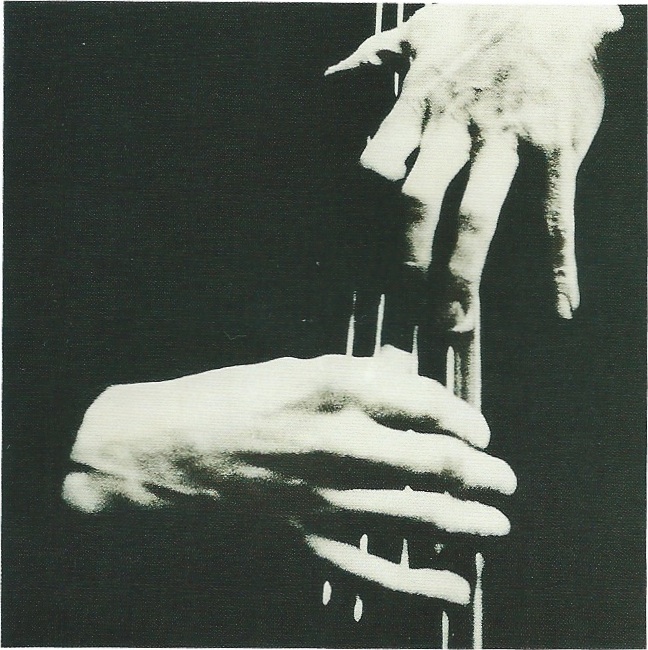
* The photograph of Gary Peacock’s hands is from the sleeve of Eastward, recorded and and first released in 1970. Now This is released tomorrow by ECM Records.

Introducing Anna-Lena Schnabel

OLYMPUS DIGITAL CAMERAAt the end of a long afternoon of listening to German bands at the Jazzahead festival in Bremen last weekend, I heard something that really brought the senses alive: the alto saxophone of Anna-Lena Schnabel, a 22-year-old musician from Hamburg appearing in the Aquarian Jazz Ensemble, a quintet led by the drummer Björn Lücker.

The group was impressive all round, notably the leader’s thoughtful, highly melodic compositions and the restrained lyricism of the trumpeter and flügelhornist Claas Ueberschaer. But it was when Schnabel stepped forward for her first solo that the music really took wing.

There’s a poise to her delivery, a fibrous, pliable quality to her tone and a sustained intensity that remind me a little of the young Mike Osborne. In the context of a half-hour set featuring several tunes, it was interesting to hear how much substance she was able to get into each of her short solos — an endangered art. The varied contouring of her phrases makes you feel as though you’re being taken for a very interesting ride. And on the occasional improvised duets between the two horns, she more than held her own with the experienced Ueberschaer.

The next day I was telling someone about what I’d heard, and he told me a little story about Schnabel. It came from a while ago, when she was a member of the national youth jazz orchestra. They were undertaking a project with one of Germany’s several radio big bands, which are stuffed full of case-hardened professionals, and she was due to be featured on one particular piece. She is, apparently, not the most organised of people, and on this day she got her transport arrangements mixed up and arrived late in a bit of a flurry. My informant mimed the looks of exasperation on the faces of the senior players as they watched this flustered novice unpack her horn. But as soon as the first notes came out, he said, they started taking surreptitious looks over their music stands to confirm that such a stream of eloquence really could be coming from this young woman. Yes, they discovered, it could.

You don’t need to take my word for it: the performance in Bremen was filmed, and here it is. It’s worth a half-hour of anybody’s time, and her longest solo of the set, beginning at 25:50 and climbing out of a lovely ballad with surprising chord changes called “Mellow”, is a particular beauty. I suspect, and very much hope, that we’ll be hearing a lot more from the rather extraordinary Ms Schnabel.

Bernard Stollman and ESP-Disk’

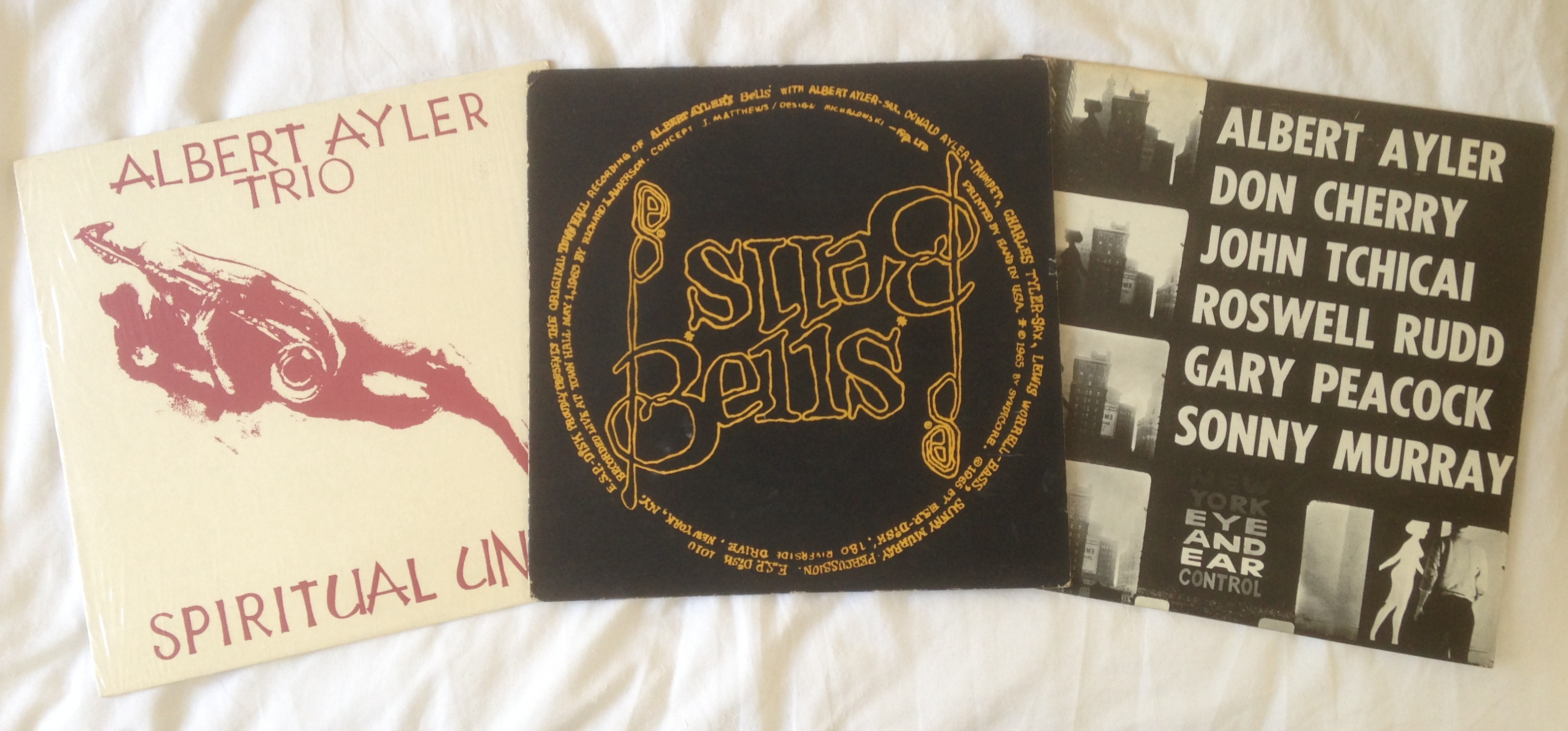
Albert Ayler BellsOn Friday it will be exactly 50 years since Albert Ayler and his musicians appeared at Town Hall in New York City. On May 1, 1965 Ayler’s quintet gave a performance that was released in part on an album titled Bells: a single-sided 12-inch 33rpm disc pressed on transparent plastic, with the title and the artist’s name overprinted in white. The album comprised two untitled pieces together amounting to a few seconds short of 20 minutes. If you wanted to buy it in Britain, not only did you have to pay the considerable premium demanded for records imported from the United States, in this instance you were paying for something that contained half of the standard amount of music. But what music it was.

I bought it by mail order, and I remember the thrill of opening the package. That was the effect of just about any record on ESP-Disk’, the small independent label that issued albums by Ayler, Sun Ra, the New York Art Quartet, Giuseppi Logan, Gato Barbieri, the Fugs, Pearls Before Swine and other names from the New York avant-garde scene. If the visual style of a Blue Note or a Riverside album perfectly reflected the crisp, clean sound of hard bop, the look of an ESP record reflected a wilder sensibility.

Bernard Stollman, the lawyer who founded ESP-Disk’ in 1964, died last week, aged 85. He had run it throughout the 10 years of its original lifetime and then in its subsequent, rather half-hearted, reincarnations. Stollman was a kind of cultural and political idealist — the label’s name came from his belief in the universal language of Esperanto, and he later claimed that ESP was brought down by the US government “because of our opposition to the (Vietnam) war” — but he came in for criticism from musicians who felt he had not properly rewarded them, particularly in terms of royalties.

During the course of an interview with Jason Weiss, the author of Always in Trouble: An Oral History of ESP-Disk’, The Most Outrageous Record Label in America (Wesleyan University Press, 2012), Stollman explained that for each recording he paid $300 to the leader and $50-100 to the other musicians. “They all shared ownership of the album,” he added, and therein, or so one imagines, lay a world of trouble once licensing agreements started to be made with record companies outside the US. He also claimed: “There is no ESP musician today with whom I can’t communicate amicably.”

Some unquestionably resented him for seeming to profit from their art. But Milford Graves, the great drummer who was a member of the New York Art Quartet on their classic ESP album, and who would start his own label (SRP, with the pianist Don Pullen) later in the decade, put an interesting viewpoint to Weiss:

I look at the positives, he said, because I can’t deal with the negatives of Bernard Stollman. I just know one thing: nobody was recording us in the ’60s other than ESP! And the pay that maybe you didn’t get from Bernard, it neutralises itself because if you had to hire a public-relations person, you were going to have to pay him. So you’re still going to come out to zero. It balances out, a plus and a minus. Now, ESP puts you out. What are you going to do after that? Albert Ayler became what, he started putting out — that’s all through ESP. Myself, through ESP, I came out… Look, ESP publicised us all over the planet, so anybody complaining about Bernard, I have to ask people, You’ve got to check yourself out. That’s over, man. Bernard was a businessman — he wasn’t a charitable organisation… With Bernard, you’ve got to say, “Hey, man, you started something, Look, you did what you did.”

ESP albums had a real counter-cultural charisma, and Bells — poorly recorded and bizarrely packaged (the sleeve of my copy has the word “stereo” redacted by someone with a marker pen in the company’s offices) — had more than most. Its sequence of blaring unison themes, wild collective improvisation and emotionally audacious solos by Ayler, his brother Don on trumpet and Charles Tyler on alto saxophone, with Lewis Worrell almost inaudible on bass through the firestorm set up by the astonishing Sunny Murray on drums, retains every ounce of the impact it must have made on the Town Hall audience half a century ago, and certainly on a teenager opening a package a few months later and three thousand miles away.

Love Don’t Love Nobody

As long as Boz Scaggs goes on making records, I imagine I’ll keep buying them. Although his new one, A Fool to Care, has its pleasant moments, it isn’t up there with the very best of his work. And, unusually for Boz, it also contains a serious misstep, one that’s worth noting because of its nature.

It’s a cover version, and when Scaggs chooses to cover a song, you can tell it’s because he loved the original. He never moves far from the way it first fell on his ears. And a man who can deliver a decent cover of something as extraordinary as Mable John’s “Your Real Good Thing (Is About to End)”, as he did on Come on Home in 1997, is not to be disrespected. With one song on the new album, however, he overreached himself before he even got started.

The Spinners’ “Love Don’t Love Nobody” was one of the finest soul records of the 1970s, and still sounds to me like one of the greatest deep-soul ballads of all time. It was written by Charles Simmons and Joseph Jefferson, whose credits appeared on many Philadephia records of the era; the arrangement and production came from the extremely great Thom Bell, who moulded the hits of the Delfonics and the Stylistics as well those of the Spinners. It also has a lead vocal that shows what was lost to the art of soul singing when Philippé Wynne died in 1984 at the age of 43, after suffering a heart attack on stage in Oakland, Calfornia.

Wynne could decorate a song with wonderfully inventive ornamentation which, by contrast with the work of the narcissists of today’s so-called R&B, never called undue attention to itself but was always in the service of the song, the arrangement, and the production. In that respect he was the peer of Ronald Isley and Teddy Pendergrass. And he was at his exalted best on “Love Don’t Love Nobody”: seven minutes and 13 seconds of soul heaven.

The record begins with Bell’s piano, discreetly shadowed by a bass guitar and vibes, quietly commanding attention. There’s gospel in the cadences, but also a grave delicacy in Bell’s keyboard voicings and a pensive elegance in his touch. It’s the sound of introspection, even the sound of sadness itself, setting Wynne up for his entrance with that heart-rending opening verse: “Sometimes a girl will come and go / You reach for love, but life won’t let you know / That in the end you’ll still be loving her / But then she’s gone, you’re all alone…”

As the track builds, Wynne adds his characteristic inventions to the song but firmly resists the temptation to overdo it. He’s listening to Bell’s arrangement, so spare, so subtly sophisticated as it adds strings and backing voices, and he’s making himself a part of it, even when he jams over the long fade.

One other thing. I was doing some remixing at Sigma Sound in 1974 when I fell into conversation with an engineer, and asked him about Thom Bell. When I told him how much I admired “Love Don’t Love Nobody”, he said that he’d worked on that session a year or so earlier. He told me that the rhythm track had been done in a single take, and that Bell had finished it in tears. That knowledge doesn’t make me listen to it in a different way, but perhaps it does help to explain the very deep connection that it can make.

Boz Scaggs does a decent job on a song of which he is obviously very fond. But I can’t help wondering if, had he known about Thom Bell’s tears, he’d still have decided to take it on.